Ningbo Force Auto Parts Co., Ltd.
- joe@forcerigging.com
- +86-18650363763
Ningbo Force Auto Parts Co., Ltd.
You are standing at a loading dock with a Grade 70 chain rated for 6,600 lbs working load limit. Your load weighs 8,000 lbs. The chain has a breaking strength of 26,400 lbs, so it might look like you have plenty of margin. That extra capacity is exactly what the working load limit is designed to protect. Exceeding the WLL, even slightly, creates invisible wear that shortens chain life and can trigger a sudden failure under dynamic load.
This guide explains what working load limit means, how chain grades affect it, and what procurement teams should verify before selecting a chain for cargo securement or lifting. The goal is simple: help you buy the right chain, use it safely, and avoid costly overloading mistakes.
Content
Working load limit is the maximum load that a chain, strap, or rigging device can safely sustain under normal service conditions. It is not a theoretical peak value. It is a practical, tested limit that accounts for real-world factors such as dynamic shock, chain angle, wear, and manufacturing variation.
The relationship between WLL and breaking strength is fundamental. For most chain grades, the safety factor is 4:1, meaning the breaking strength is four times the working load limit. A G70 transport chain that breaks at 26,400 lbs therefore carries a WLL of 6,600 lbs. When the load exceeds WLL, the chain may not fail immediately, but irreversible plastic deformation begins, and the remaining service life drops with every cycle.
When you compare supplier quotes, WLL should be one of the first specifications you verify. A lower-priced chain with a higher breaking strength does not automatically mean a higher working load limit. The safety factor determines how much usable capacity you actually get.
Chain grades tell you the material, heat treatment, and intended application of the chain. Each grade has a standard working load limit for a given diameter. The values below show typical WLL for 3/8 inch chain based on common industry standards.
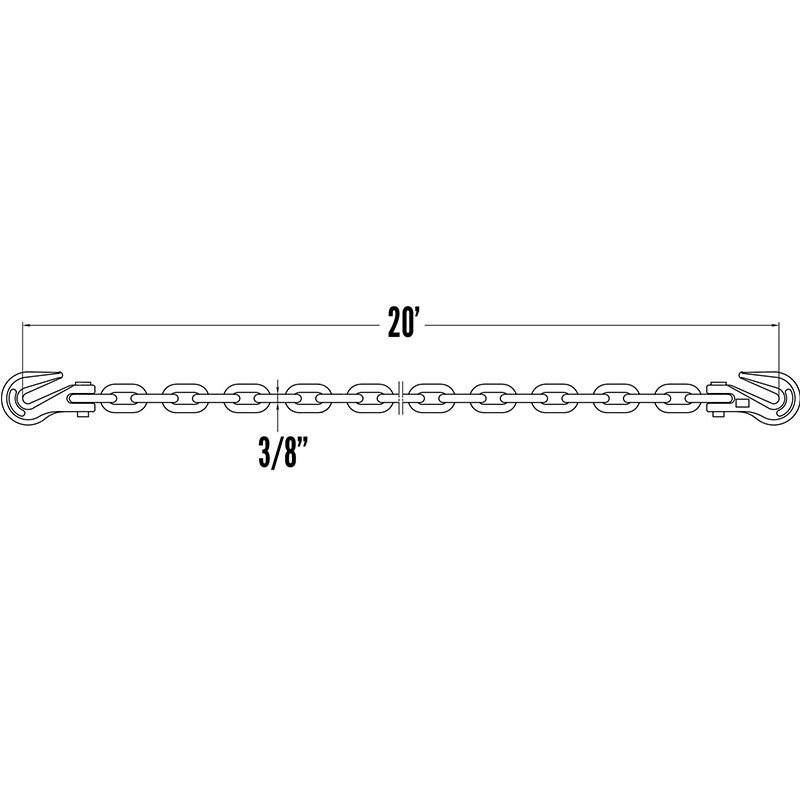 The 3/8" Transport Chain Grade 70*Contact us to learn more about our bespoke offerings.View Product →
| Grade | Chain Type | Material | 3/8 inch WLL (lbs) | Typical Use |
|---|---|---|---|---|
| 30 | Proof Coil | Low-carbon steel | 3,600 | General utility, non-critical |
| 43 | High Test | Carbon steel | 5,400 | Tie-down, towing |
| 70 | Transport | Carbon steel, heat-treated | 6,600 | Cargo securement, flatbed |
| 80 | Alloy | Alloy steel, heat-treated | 7,100 | Lifting, rigging |
| 100 | Alloy | Alloy steel, quenched | 9,000 | Heavy lifting |
| 120 | Alloy | Premium alloy steel | 10,600 | Critical lifts |
The lower grades, such as Grade 30, are fine for static, non-critical applications. Once you move to cargo securement on a flatbed trailer, Grade 70 chain becomes the standard because its combination of strength, ductility, and kink resistance is designed for tie-down duty. For lifting, Grade 80 and higher alloys are required because they offer higher elongation and fatigue resistance.
The safety factor is the ratio between a chain's minimum breaking load (MBL) and its working load limit. For chain used in tie-down applications, the typical safety factor is 4:1. For overhead lifting, standards such as EN 818-2 require higher margins, often 5:1, because a lifting failure has more severe consequences.
When a chain is used at an angle, each leg carries more than half the load. The standard angle factor table gives a clear picture: at 30 degrees from vertical, each leg carries about 87 percent of the rated load; at 45 degrees, it drops to 71 percent; and at 60 degrees, only 50 percent of the WLL remains. A two-leg chain sling at 45 degrees is not twice as strong as a single leg; it is roughly 1.4 times as strong.
Other de-rating factors include chain wear, surface corrosion, kinks, and exposure to elevated temperatures. A chain with visible wear of more than 10 percent on the link diameter should be removed from service. A kinked link reduces the cross-section at the bend and drastically lowers capacity.
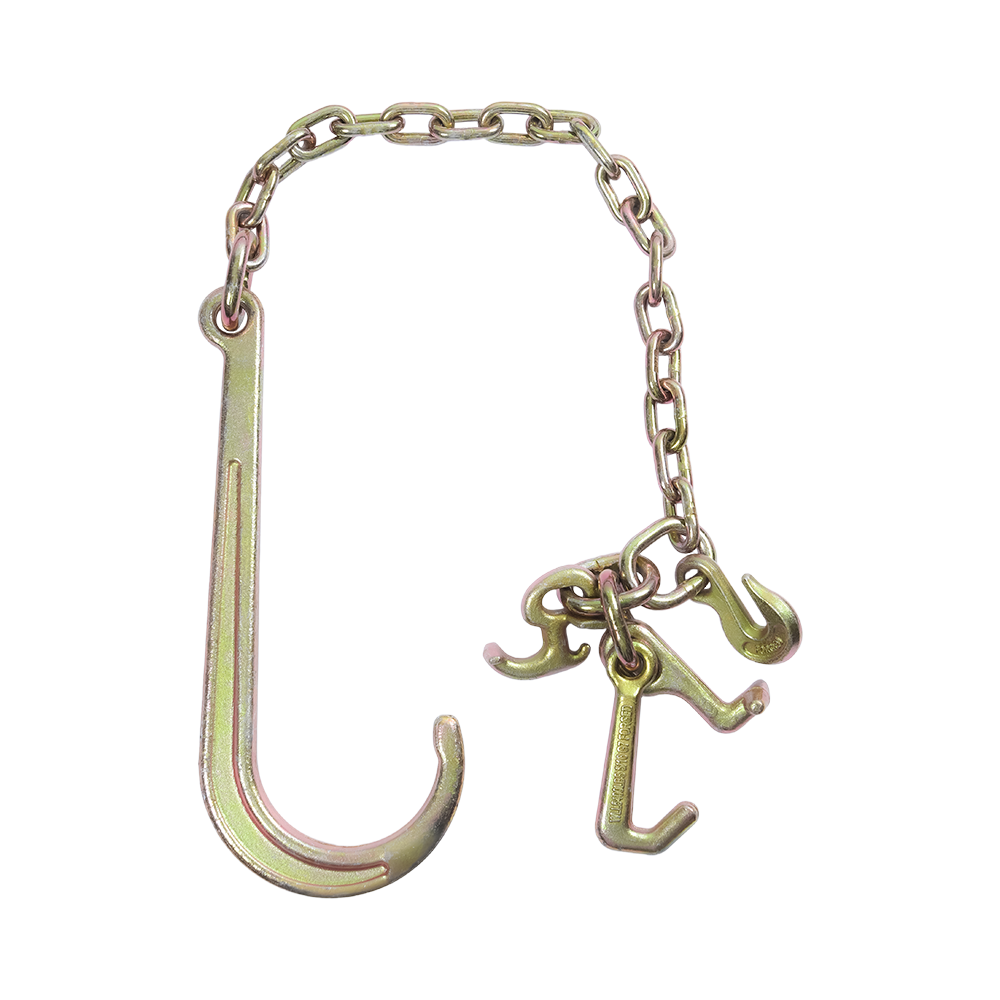
Matching the chain grade to the application is the most important procurement decision. For flatbed trucking and cargo securement, a Grade 70 transport chain is the baseline. It is available in lengths from 10 to 30 feet and is commonly paired with clevis grab hooks on each end. Grade 70 chains offer a good balance of strength, weight, and cost for securing heavy equipment, lumber, and steel coils.
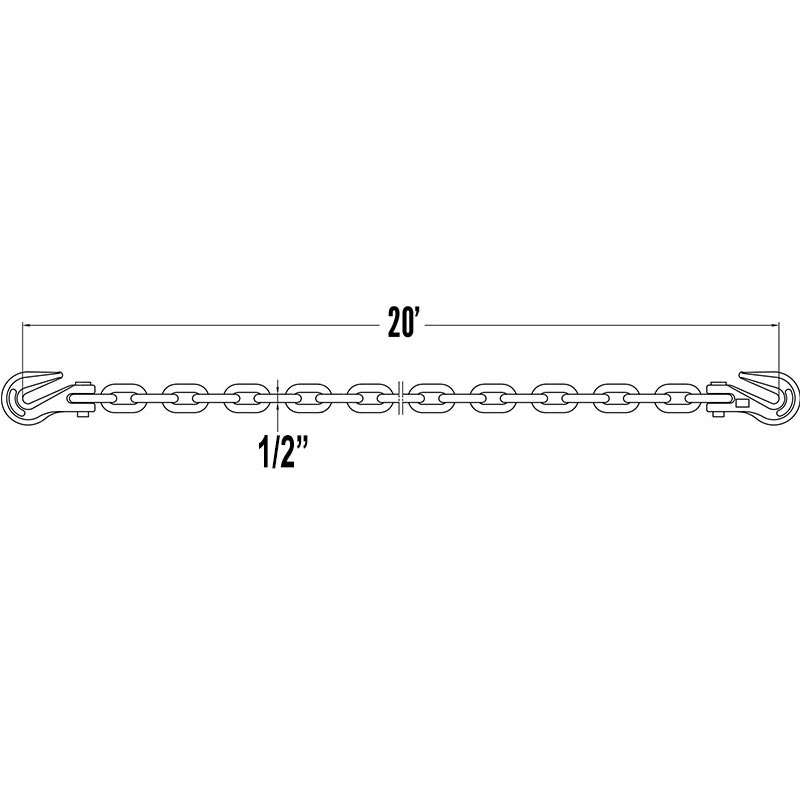 The 12 Tie Down Chain Assembly W Clevis Grab Hooks - Grade 80*Contact us to learn more about our bespoke offerings.View Product →
For lifting and rigging operations, Grade 80 alloy chain is the minimum standard. It undergoes quench-and-temper heat treatment to deliver higher strength and fatigue resistance. Grade 80 chain is often used in sling assemblies, industrial hoists, and construction site lifts. If your operation involves overhead lifting, never substitute a transport chain for a lifting chain.
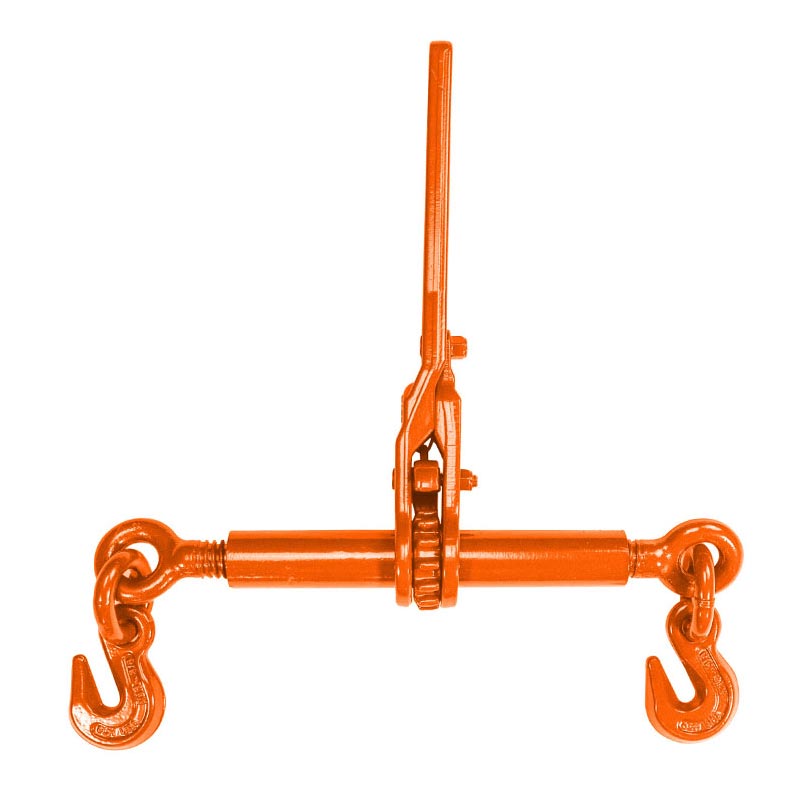
Chain binders are the other half of the securement system. A ratchet binder applies controlled, mechanical tension to the chain, making it much safer than a lever binder in high-vibration environments. The recoilless cam-action lever binder is an example of a design that reduces the risk of handle recoil when tension builds up.
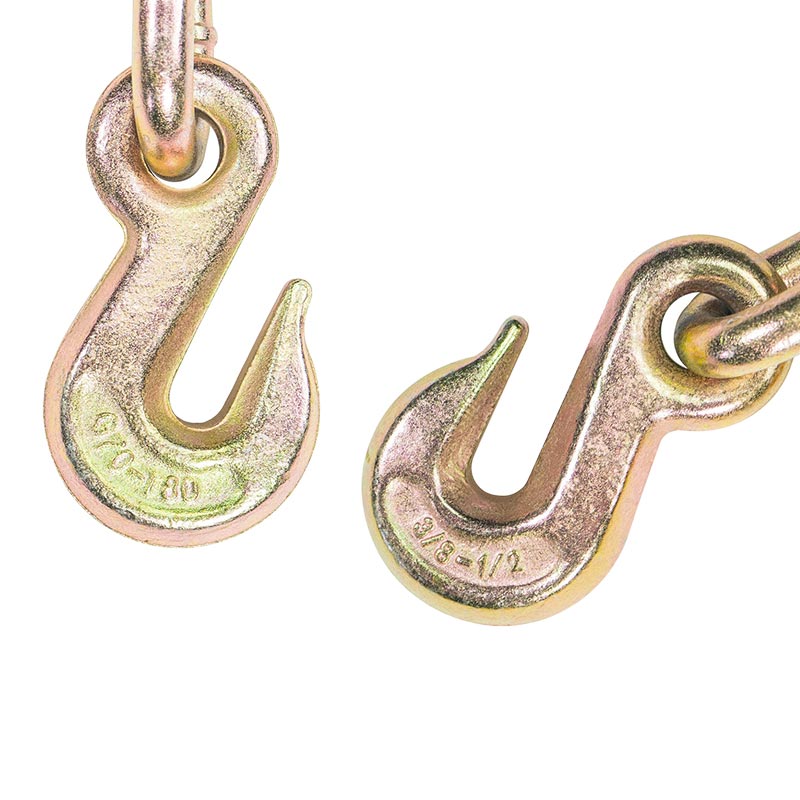 The 3/8" - 1/2" Ratchet Chain Binder*Contact us to learn more about our bespoke offerings.View Product →
For [rigging and lifting applications](/industries/rigging-lifting.html), always specify alloy chain and certified hardware. For [trucking and transportation solutions](/industries/trucking-transportation.html), Grade 70 chain with appropriate hooks and binders is the standard configuration.
By verifying WLL markings, choosing the correct grade, and accounting for angle factors, you avoid the two biggest risks in chain use: overload failure and regulatory non-compliance.
The working load limit is the maximum load a chain can safely handle in normal service. It is determined by dividing the minimum breaking load by the safety factor.
Breaking strength is the point at which the chain fails. WLL is the safe operating limit, typically one fourth of the breaking strength for tie-down chain.
A 3/8 inch Grade 70 transport chain typically has a WLL of 6,600 lbs. The exact value must be printed on the chain per applicable standards.
No. Grade 70 is designed for cargo tie-down, not overhead lifting. Use Grade 80 or higher alloy chain for lifting operations.
As the chain angle increases from vertical, the tension in each leg increases. At 45 degrees, the effective capacity drops to about 71 percent of the rated WLL.
The common safety factor for tie-down chain is 4:1. For overhead lifting, standards recommend 5:1 or more, depending on the regulatory requirement.

The company specialises in the field of logistics transportation,cargo control,lifting and hoisting products.


joe@forcerigging.com
+86-18650363763
No.469, Liansheng Road, Yinzhou District, Ningbo, Zhejiang Province, China.315111
Copyright © 2025 by Ningbo Force Auto Parts Co., Ltd. All Rights Reserved. China Ratchet Straps Manufacturers OEM/ODM Load Binding and Rigging Company


 English
 Español
 عربى
عربى 中文简体
中文简体