Ningbo Force Auto Parts Co., Ltd.
- joe@forcerigging.com
- +86-18650363763
Ningbo Force Auto Parts Co., Ltd.
On a flatbed dock, a rigging crew picks a 5-ton-rated synthetic sling to lift a 4-ton steel casting. The tag says 5 tons, so the lift looks safe — until the sling is rigged in a choker hitch. A choker hitch is rated at only 75 percent of the vertical working load limit, which turns that 5-ton sling into a 3.75-ton sling, below the 4-ton load. The short conclusion: the safe capacity of a synthetic sling is decided by three variables — fiber type, sling construction, and hitch configuration. Change any one of them and the working load limit can drop by more than 25 percent. For most rigging and lifting operations, synthetic slings are still the practical first choice because they are light, flexible, and gentle on loads, but the margin of safety lives in the details.
Content
A synthetic sling is a load-bearing member made from high-strength synthetic fibers — most commonly polyester or nylon — that connects a suspended load to a crane hook, spreader bar, or other lifting point. Where chain bites into the load and wire rope concentrates stress at a single point, a synthetic sling spreads the force across a wide contact band. That is why it is the default choice for machined parts, precast concrete, steel pipe, and any surface that must arrive without scratches.
The construction is simple but precise. A round sling bundles continuous load-bearing yarns inside a tubular woven cover; the yarns carry the weight, and the cover protects them from abrasion, UV, and dirt. A flat webbing sling stacks several plies of woven polyester webbing that are stitched together with load-rated thread. The permanent tag sewn into the body states the fiber type, the working load limit for each hitch, and the manufacturer. ASME B30.9 and EN 1492-1 are the two standards most often referenced for synthetic slings, and both require a legible, permanently attached tag. If the tag is missing, the sling has no verifiable rating and should be retired.
Key fact: Synthetic slings are built with a minimum 5:1 design factor under ASME B30.9 — the average breaking strength is at least five times the working load limit printed on the tag.
Synthetic slings come in three main families. They overlap in capacity, but each one solves a different rigging problem.
The generalists. Their circular body rolls over edges, adapts to irregular shapes, and fits through narrow gaps that a flat sling cannot enter. For a straight vertical lift, a 5-ton round webbing sling is often the fastest rigging setup. The bundled inner yarns also reduce edge-stress concentration compared with a flat sling on a radius.
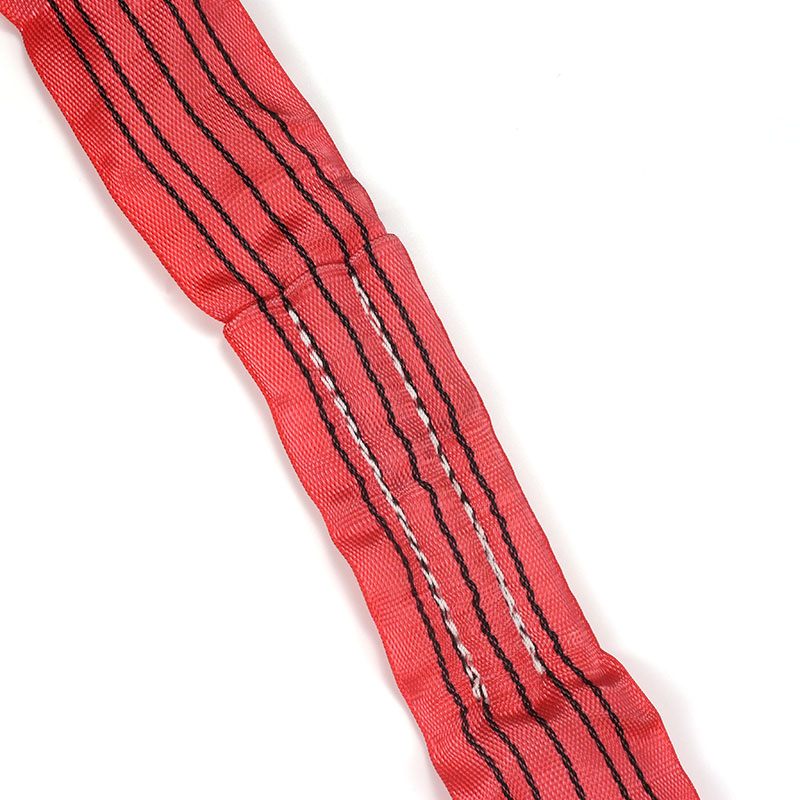 The 5T Round Webbing Sling Belt Suppliers, Company - Ningbo Force Auto Parts Co.Ningbo Force Auto Parts Co., Ltd is China ODM/OEM The 5T Round Webbing Sling Belt supplier and custom company,● Adhere Strictly to Rated ...View Product →
The surface specialists. A flat sling presents a broad, stable band to the load, which helps with crates, panels, and machinery with wide lifting points. It also resists twisting on the hook better than a round sling. A high-tenacity polyester lifting sling with eye ends is the common specification for repeat-production OEM rigging sets.
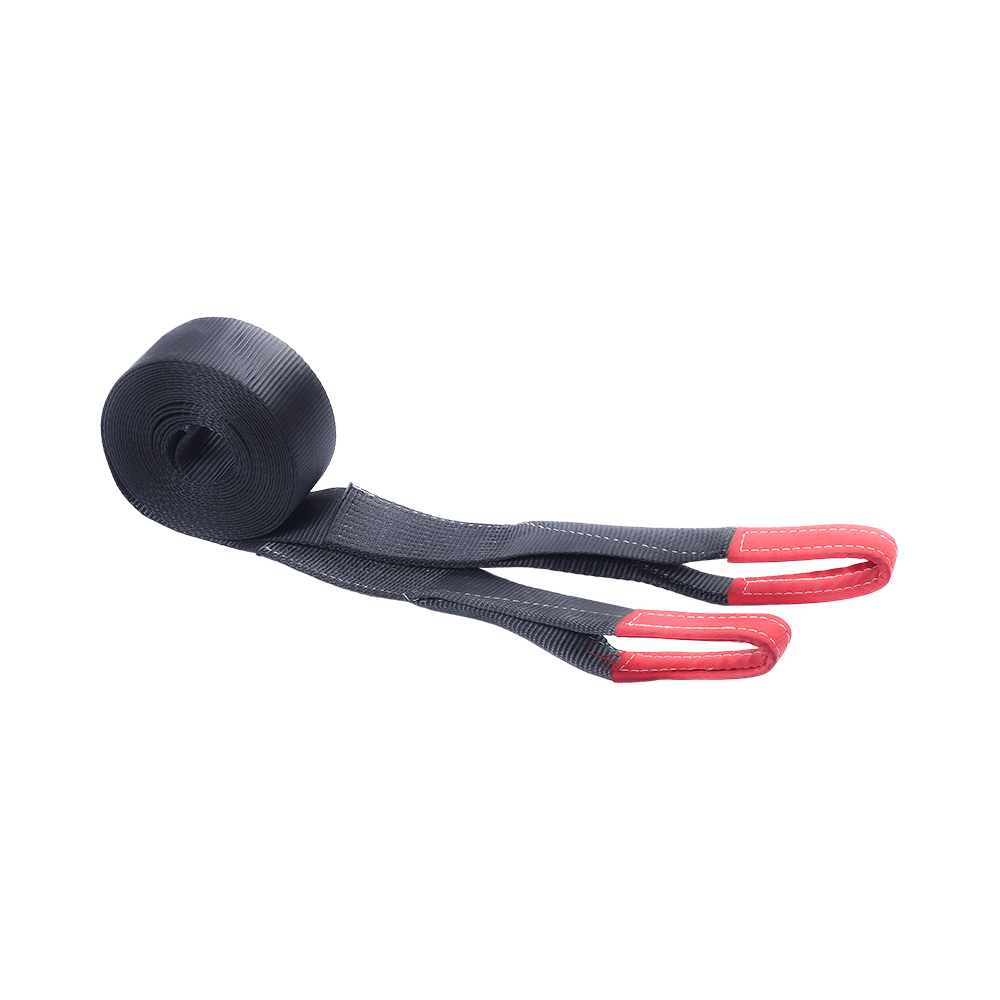 Webbing Sling High Tenacity Polyester Lifting Strap Eyes Strap Suppliers, CompanNingbo Force Auto Parts Co., Ltd is China ODM/OEM Webbing Sling High Tenacity Polyester Lifting Strap Eyes Strap supplier and custom comp...View Product →
The cinch-down loops. One continuous loop with no sewn eyes is ideal for basket and choker hitches because it can wrap around the load without extra hardware. An endless webbing sling for lifting also offers a simple capacity upgrade: double-wrapped as a two-leg basket, the rating doubles as long as the hitch angle stays within the tag limits.
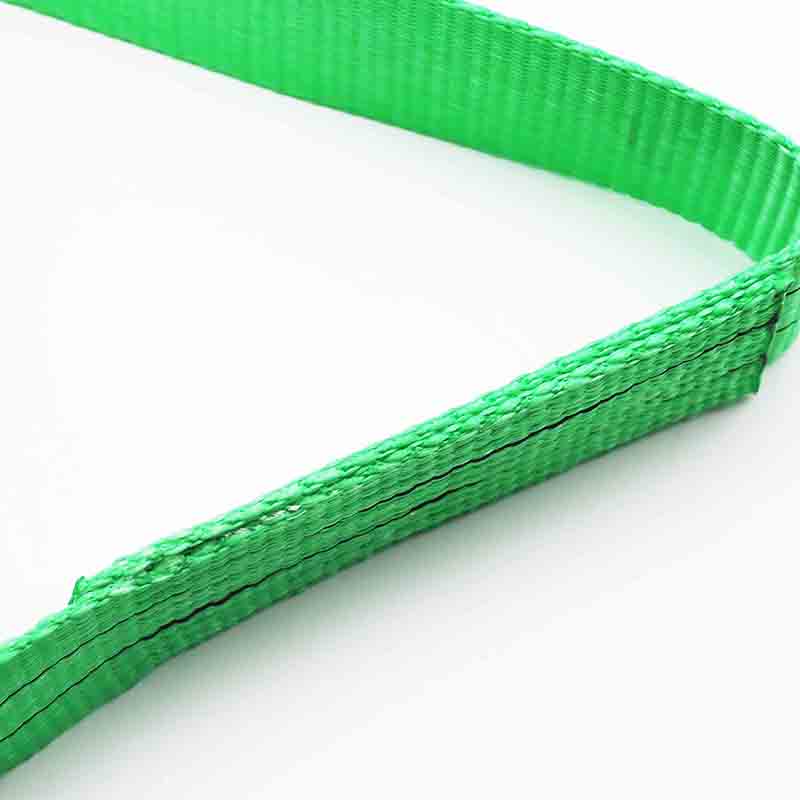 The Endless Type Webbing Slings for Lifting Sling Suppliers, Company - Ningbo FoNingbo Force Auto Parts Co., Ltd is China ODM/OEM The Endless Type Webbing Slings for Lifting Sling supplier and custom company,● Overloa...View Product →
| Feature | Round sling | Flat webbing sling | Endless sling |
|---|---|---|---|
| Body profile | Tubular and round | Flat and wide | Continuous loop |
| Typical capacity range | 1 - 10 t | 5 - 10 t | 1 - 5 t |
| Best application | Odd shapes, narrow slots | Wide contact surfaces | Cinching around a load |
| Surface contact | Moderate | Broad | Variable |
| Choker performance | Good | Good | Excellent, no hardware |
If the difference still seems subtle, our guide on round slings versus flat webbing slings shows where each design fails in practice, not just where it works best.
Fiber choice is the most underrated part of sling selection. It controls stretch, UV life, chemical tolerance, and temperature limits.
Relative scores across five properties (10 = best). Polyester is the balanced generalist, nylon favors shock absorption, and HMPE favors strength.
Typical elongation at break by fiber. Lower stretch gives more predictable lifting but less warning before failure.
For 95 percent of loads on a truck or in a workshop, polyester will not surprise you. It holds its rating in the sun, shrugs off oil and diesel, and keeps enough flexibility to engage a load quickly.
The same sling, used three different ways, has three different working load limits. This is where most on-site rigging errors happen.
Capacity as a percentage of the tag rating for each hitch type.
| Hitch | Capacity (% of tag) | When to avoid |
|---|---|---|
| Vertical | 100% | Loads that can roll or shift out of the sling |
| Choker | 75% | Sharp edges without an edge protector |
| Basket | Up to 200% | Leg angle over 90 degrees, or unstable loads |
Edge protectors are not optional when a synthetic sling touches a sharp corner. A single sharp edge can cut through the cover, reach the load-bearing yarns, and reduce the rating faster than any other field condition.
Cut a round sling at an angle and the structure is obvious: the outer cover is only a protection shell. The weight is carried by the continuous yarn bundle inside. The cover takes the abuse; the yarn takes the load. That is why surface scuffing does not retire a sling, but a cut that reaches the inner yarns does.
Isometric cutaway of a round synthetic sling. The cover can look worn while the yarn core is still sound, but any yarn damage is immediate reason for retirement.
OSHA (29 CFR 1926.251) and ASME B30.9 both expect a visual check before every lift and a documented inspection at least once per year. Remove the sling from service immediately if any of these conditions appear:
Storage matters just as much. Hang slings loosely on a rack, out of direct sunlight, and away from chemicals, weld sparks, and hot surfaces. Never repair a damaged sling with tape or field stitching; repairs belong to the manufacturer or an authorized service facility.
A synthetic sling is a flexible lifting device made from high-strength synthetic fibers such as polyester or nylon. The three main types are round slings, flat webbing slings, and endless slings, and all of them connect a load to a crane hook or lifting point.
Polyester stretches less, resists UV and most chemicals well, and is the standard for general lifting. Nylon stretches more and absorbs shock better, but it is damaged by acids and degrades faster in sunlight.
Working load limits for single slings typically range from 1 ton to 10 tons, and the exact rating is printed on the tag. The final lift capacity must be adjusted by the hitch type and by the angle in multi-leg configurations.
Yes, but the capacity drops to 75 percent of the vertical rating. Always add a purpose-made edge protector when the choker point contacts a sharp corner of the load.
According to OSHA and ASME B30.9, a visual check is required before every lift and a documented inspection at least once per year. Increase the frequency for slings in severe or continuous service.
Working load ratings generally apply from -40 C to 90 C; above that range, contact the manufacturer for a derating calculation. Keep synthetic slings away from hot surfaces, weld sparks, and open flame.
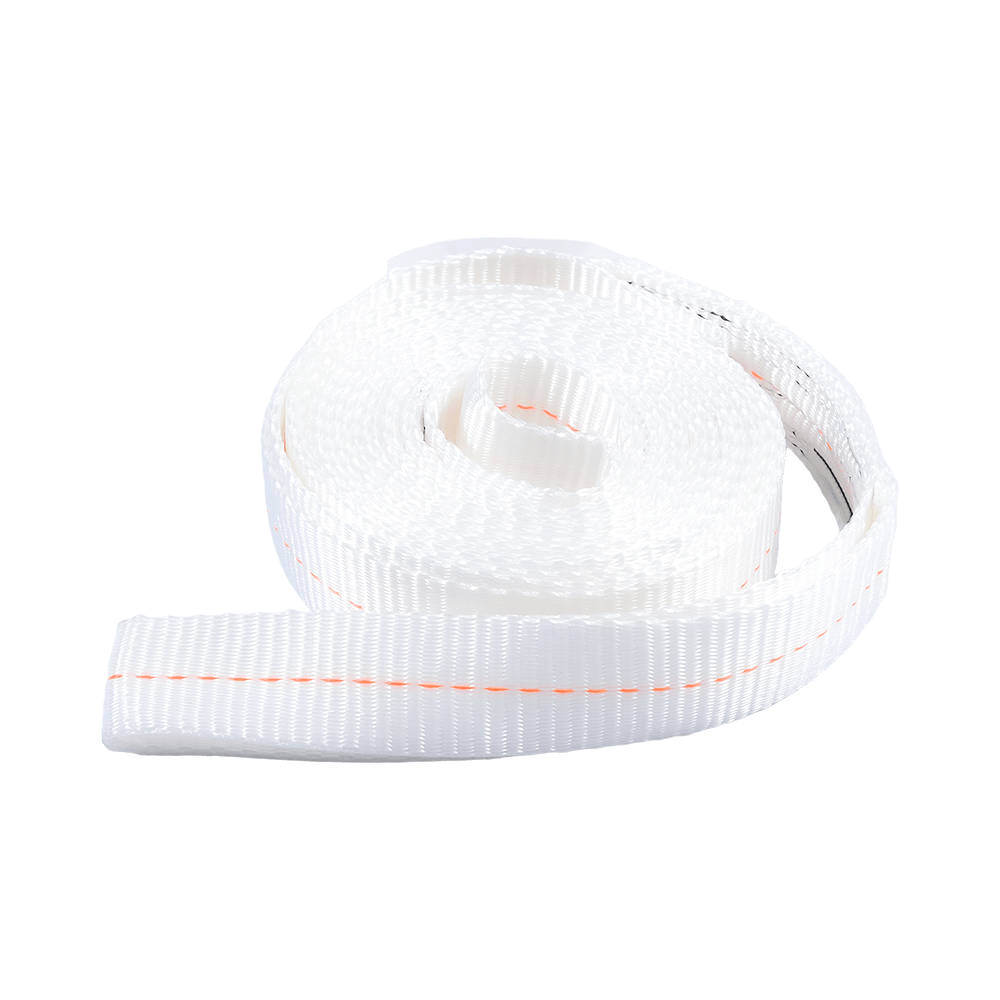
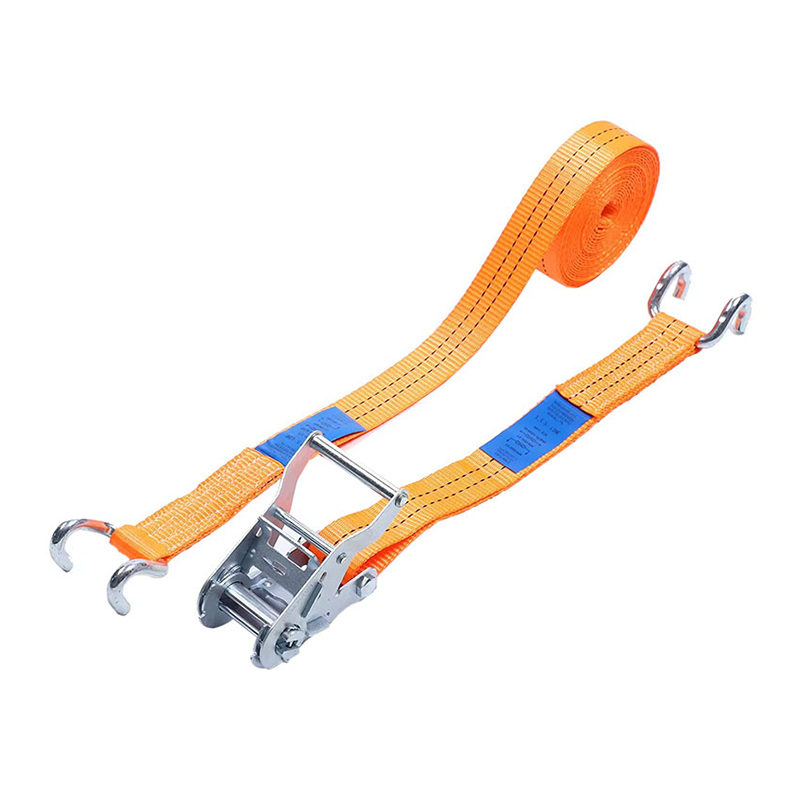

The company specialises in the field of logistics transportation,cargo control,lifting and hoisting products.


joe@forcerigging.com
+86-18650363763
No.469, Liansheng Road, Yinzhou District, Ningbo, Zhejiang Province, China.315111
Copyright © 2025 by Ningbo Force Auto Parts Co., Ltd. All Rights Reserved. China Ratchet Straps Manufacturers OEM/ODM Load Binding and Rigging Company


 English
 Español
 عربى
عربى 中文简体
中文简体