Ningbo Force Auto Parts Co., Ltd.
- joe@forcerigging.com
- +86-18650363763
Ningbo Force Auto Parts Co., Ltd.
Picture a flatbed trailer carrying a 6 ft steel channel, a pallet of cement bags, and a compact track loader. Every driver who stares at that mixed deck asks the same thing: how many straps do i need to secure a load like this? The short answer is two straps minimum, plus one more for every 10 ft beyond the first 10 ft. The complete answer also depends on cargo weight and the working load limit printed on each strap. Here is the calculation, straight from FMCSA rules, so you can make the call before the trailer leaves the yard.
Content
The Federal Motor Carrier Safety Administration (FMCSA) applies two rules together, and the higher number wins. The count rule (49 CFR 393.110) sets the floor: at least 1 tie-down for an article 5 ft or shorter that weighs 1,100 lb or less; 2 tie-downs for an article 5 ft or shorter that weighs more than 1,100 lb; 2 tie-downs for any article longer than 5 ft but under 10 ft, regardless of weight; and 1 additional tie-down for every 10 ft of cargo length after that. The 50% rule (49 CFR 393.106) sets the strength: the combined working load limit of all tie-downs must be at least half of the cargo's total weight.
Example: a 14 ft steel load weighing 6,000 lb. Count rule: 2 straps for the first 10 ft, plus 1 for the remaining 4 ft, equals 3 straps. 50% rule: 6,000 lb divided by 2 equals 3,000 lb of working load limit needed. Two 2-inch straps already give about 6,666 lb, but you still use three because of the length count. The count rule on longer loads is the reason experienced drivers say "when in doubt, add the extra strap."
The table below summarizes the minimum count. Treat it as a legal floor, not a comfort level. Loads that are top-heavy, have high windage, or shift weight under braking warrant an extra strap beyond the numbers shown.
| Load length | Load weight | Minimum tie-downs |
|---|---|---|
| 5 ft or shorter | 1,100 lb or less | 1 |
| 5 ft or shorter | More than 1,100 lb | 2 |
| Longer than 5 ft, under 10 ft | Any weight | 2 |
| 10 ft up to 20 ft | Any weight | 3 |
| 20 ft up to 30 ft | Any weight | 4 |
| 30 ft up to 40 ft | Any weight | 5 |
Minimum straps by load length: two for the first 10 ft, then one more per 10 ft
Notice the pattern: length controls the number of straps, while weight controls the strength of each strap. A 4 ft crate at 1,200 lb takes two straps. A 25 ft beam at the same weight takes four. People who count only by weight end up under-secured on long freight, which is exactly where FMCSA inspectors look first.
Working load limit (WLL) is the highest force a strap should carry in normal service. For polyester tie-down webbing, WLL is normally about one third of the breaking strength. A 2-inch ratchet strap with 10,000 lb breaking strength is typically rated near 3,333 lb WLL. That label number is what the 50% rule uses, not the breaking strength and not the visual thickness of the webbing.
The chart below shows the combined WLL required for common cargo weights. A 12,000 lb load needs 6,000 lb of combined WLL, which means two 3,333 lb straps pass while one very heavy strap with a 4,000 lb WLL does not. In a fully enclosed trailer the walls provide some restraint, but on a flatbed you run this calculation every time.
Required combined working load limit equals 50% of cargo weight (49 CFR 393.106)
When the aggregate strength falls short, upgrade the strap size or add one more unit. The price of an extra 2-inch strap is a fraction of the cost of a roadside violation, a shifted machine, or a cargo claim.
A tie-down is most efficient when it works as close to vertical as possible, because only the vertical component of the tension presses the load down against the deck. At 30 degrees from horizontal, a strap delivers only about 50% of its rated WLL vertically. At 45 degrees it delivers about 71%, and at 60 degrees about 87%.
At 30 degrees a strap holds only half of its rated WLL vertically
This is why cross-angle securement works in practice: straps that run diagonally from the top of the load to opposite trailer corners hold the cargo against forward and side forces while still keeping a useful vertical component. Keep your anchor points close enough to hold the angle above 45 degrees whenever the geometry allows.
Typical flatbed arrangement: cross straps, edge protection, and secure anchor points
Every strap has a working load limit that matters more than its width. A 1-inch cam-buckle strap is convenient for a motorcycle but useless on a 6,000 lb machine, while a 4-inch winch strap is overkill for a pallet of empty boxes. Match the strap class to the load class:
| Strap type | Typical WLL | Best use |
|---|---|---|
| 1-inch cam-buckle or light ratchet | About 1,000 lb | Motorcycle, ATV, light furniture |
| 2-inch ratchet | About 3,300 lb | General flatbed cargo, pallets, light machinery |
| 3-inch ratchet | About 5,400 lb | Heavy equipment, dense loads |
| 4-inch winch strap | About 6,600 lb | Coils, pipes, tracked machines |
For general flatbed work, 2-inch ratchet straps with 10,000 lbs breaking strength are the practical default. Two of them cover a 6,600 lb load by the 50% rule, and three cover a load up to roughly 19,000 lb, which makes them the most flexible tool in the truck. Flatbed trailer operators who haul construction materials every day usually standardize on this size and add chains or winches for special jobs; the trucking and transportation page shows how these components work together as a full securement system.
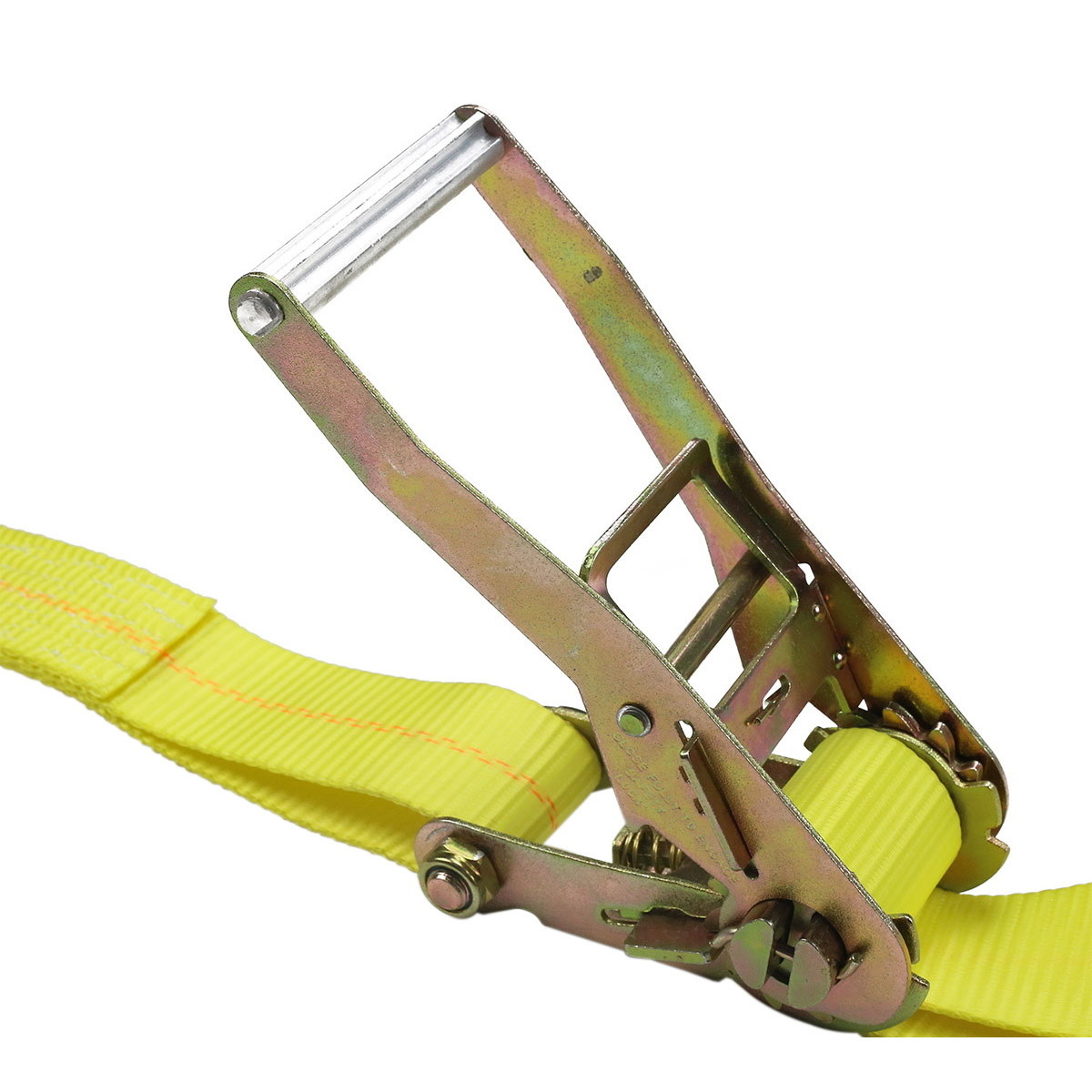 2inch 10000lbs Ratchet Straps for Efficient Cargo Securement Suppliers, Company Ningbo Force Auto Parts Co., Ltd is China ODM/OEM 2inch 10000lbs Ratchet Straps for Efficient Cargo Securement supplier and custom compan...View Product →
Edge treatment is not a detail. A strap that rubs against a raw steel flange can lose much of its capacity in the first few miles. Keep a box of plastic corner protectors that snap over sharp edges in every trailer; they cost almost nothing, add negligible weight, and protect both the strap webbing and the cargo surface.
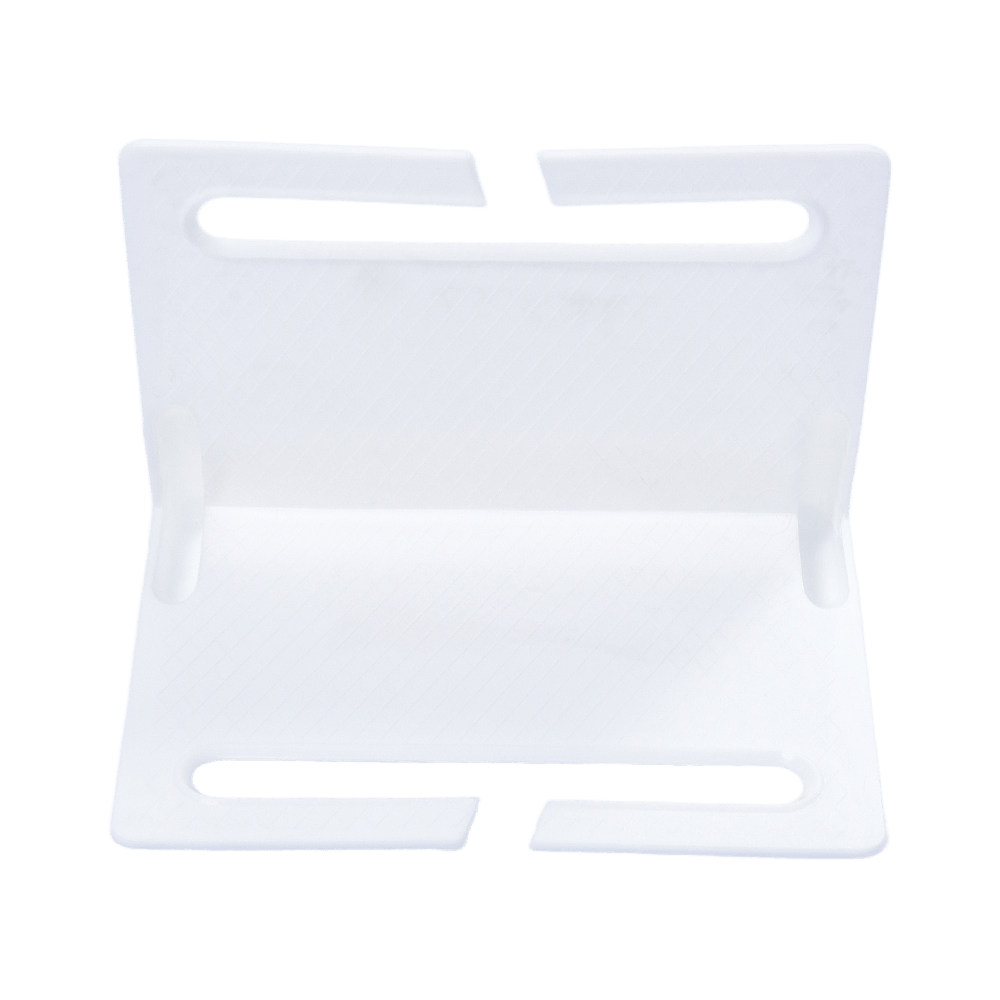 4' White Angle Corner Protector Cargo Edge Tool Suppliers, Company - Ningbo ForcNingbo Force Auto Parts Co., Ltd is China ODM/OEM 4' White Angle Corner Protector Cargo Edge Tool supplier and custom company,● Ensure th...View Product →
Certain cargo classes carry their own FMCSA rules on top of the general count: steel coils, vehicles, logs, concrete pipe, and intermodal containers all have dedicated sections. A tracked excavator must be secured at the manufacturer's tie-down points with tracks blocked; a steel coil needs V-shaped supports plus straps or chains resisting both forward and lateral movement. The general strap count is only the starting point for these specialized loads.
When the load is dense and heavy, 4-inch winch straps with flat hooks distribute the force over a wide contact area and pull with a mechanical advantage that keeps the load planted. They are the usual choice for coils, pipe bundles, and tracked machines. If your fleet regularly mixes long pipe, heavy equipment, and general freight, run the securement plan past ask our engineering team through the contact page before the trailer rolls; a correct strap plan costs nothing and prevents the most expensive mistakes.
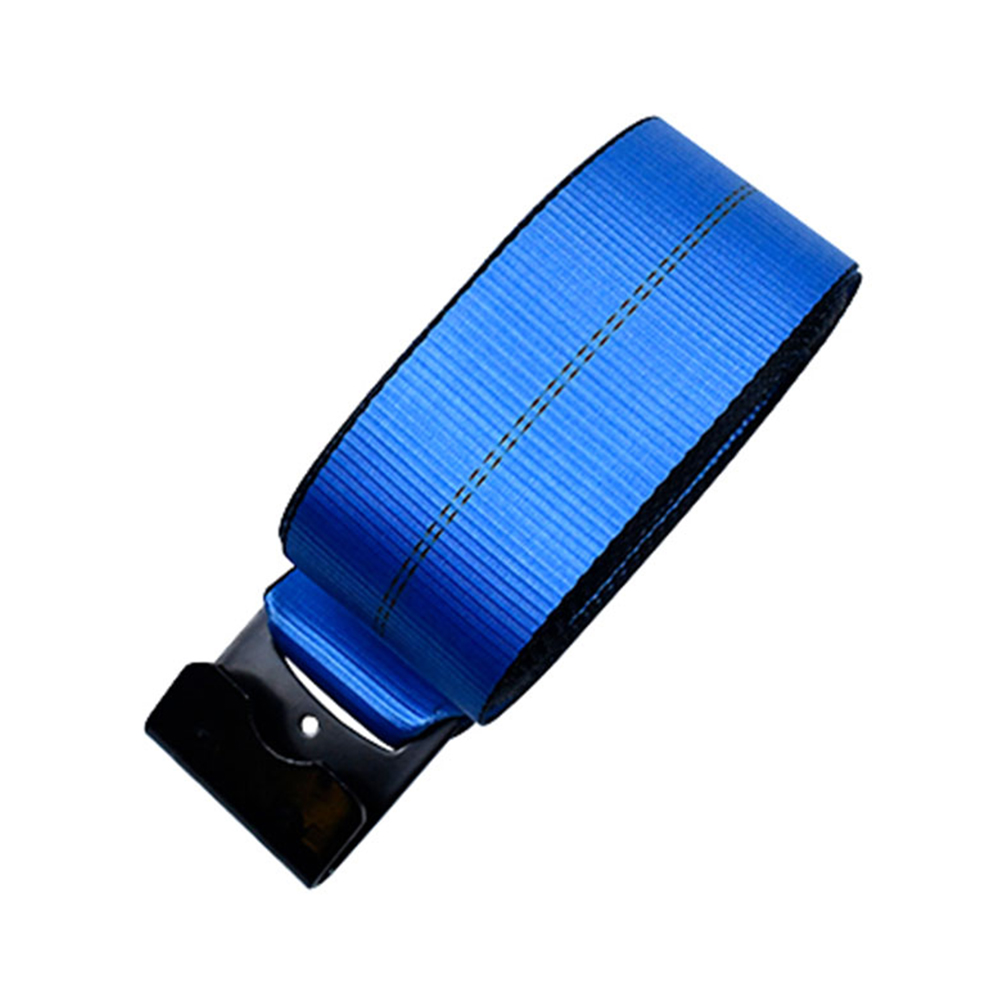 4 X 27' Winch Strap With Flat Hook Suppliers, Company - Ningbo Force Auto Parts Ningbo Force Auto Parts Co., Ltd is China ODM/OEM 4 X 27' Winch Strap With Flat Hook supplier and custom company,● Pre-use inspection: Co...View Product →
Three minimum by the FMCSA count rule: two for the first 10 ft and one more for the second 10 ft. Then confirm the 50% rule with the working load limit printed on your straps.
Under 49 CFR 393.106, the combined working load limit of all tie-downs must equal at least half of the cargo weight.
A standard 2-inch polyester strap rated at 10,000 lb breaking strength has a working load limit near 3,333 lb. Premium 2-inch straps can be rated higher, so always read the label.
By the 50% rule you need 5,000 lb of combined WLL, so two 2-inch straps are the mathematical minimum. Most fleets use three to cover the count rule and load shift under braking.
Yes. A cut in the webbing can cut strap strength substantially, and FMCSA inspectors actively cite unguarded sharp edges where webbing is under tension.
FMCSA expects a check within the first 50 miles of a trip. Re-tension after that first short stop, then inspect again at every break and after any hard braking event.
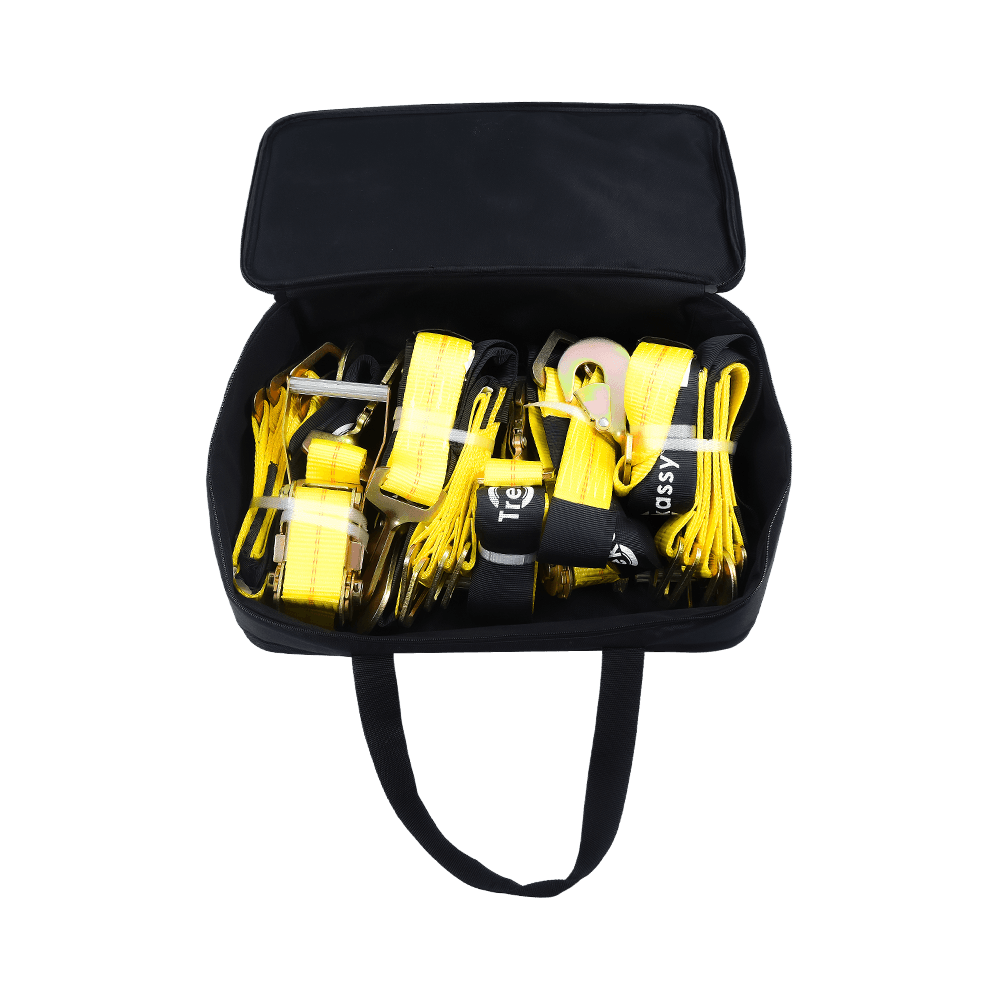

The company specialises in the field of logistics transportation,cargo control,lifting and hoisting products.


joe@forcerigging.com
+86-18650363763
No.469, Liansheng Road, Yinzhou District, Ningbo, Zhejiang Province, China.315111
Copyright © 2025 by Ningbo Force Auto Parts Co., Ltd. All Rights Reserved. China Ratchet Straps Manufacturers OEM/ODM Load Binding and Rigging Company


 English
 Español
 عربى
عربى 中文简体
中文简体