Ningbo Force Auto Parts Co., Ltd.
- joe@forcerigging.com
- +86-18650363763
Ningbo Force Auto Parts Co., Ltd.
Content
A flatbed driver who assumes that two 5,000 lb rated straps are enough for a 12,000 lb machine is about to fail a roadside inspection. The aggregate working load limit (AWLL) rule in 49 CFR Part 393 does not work that way: the aggregate working load limit is the sum of the working load limits of every tiedown used to secure a load, and that sum must reach at least half the weight of the cargo. For a 12,000 lb load, the minimum aggregate WLL is 6,000 lb. Because a tiedown anchored from the vehicle to the cargo counts at one-half of its marked WLL toward that sum, two 5,000 lb direct tiedowns contribute only 5,000 lb — below the requirement.
The same logic applies across commodity types. The eCFR text for cargo securement states, for example, that the aggregate working load limit of all tiedowns on a group of pipes must not be less than half the total weight of the pipes. The 50 percent benchmark is the ordinary starting point for load securement planning in North America.
Minimum aggregate WLL equals 50% of cargo weight regardless of how many tiedowns are used.
The working load limit is the maximum force a component may be subjected to in normal service. It is the value stamped or sewn into the label, and it is the number regulators count. Breaking strength is the force at which the component fails. For polyester webbing tie-downs, manufacturers commonly design to a 3:1 ratio: a strap with a 30,000 lb breaking strength is typically marked with a 10,000 lb WLL. In Europe, EN 12195-2 uses lashing capacity (LC), marked in daN, which plays the same role as WLL.
| Term | Definition | Role in AWLL calculation |
|---|---|---|
| Working load limit (WLL) | Maximum force in normal service, marked on the tiedown label | Counts at full value for over-the-top tiedowns, half for direct tiedowns |
| Breaking strength | Force at which the component fails | Never used in AWLL math; a design benchmark only |
| Lashing capacity (LC) | EN 12195-2 equivalent of WLL, marked in daN on EU lashing straps | Used for lashing calculations the way WLL is used under FMCSA |
| Chain grade and binder rating | G70 or G80 chain grade plus the binder's own WLL | The lowest WLL in the assembly governs |
Keep the distinction straight: when an inspector, a load plan, or a bill of lading says aggregate working load limit, only WLL and LC values count. Breaking strength is for engineering review, not for compliance arithmetic.
The FMCSA definition is precise. The aggregate WLL is the sum of one-half the WLL of each tiedown that goes from an anchor point on the vehicle to an attachment point on the cargo, plus the full WLL of each tiedown that is attached to the vehicle at both ends and passes over the cargo. An over-the-top strap presses the load into the deck and restrains it in both directions; a direct strap pulls from one side and restrains mainly in that direction, so regulators discount it by half.
The same two tiedowns produce very different aggregate WLL values depending on how they are routed.
Example: 12,000 lb cargo with two over-the-top 2-inch ratchet straps, each marked 3,333 lb WLL, gives an aggregate of 6,666 lb — above the 6,000 lb minimum. Reuse the same straps as direct tie-downs, and the aggregate drops to 3,333 lb because each counts at 1,666.5 lb. The hardware did not change; the anchor arrangement did.
Under 49 CFR 393.106(b), the aggregate working load limit of the tiedowns on any article of cargo must be at least 50% of the total weight of that article. This is the working number behind every load plan in trucking and transportation operations.
FMCSA also sets a floor on quantity: at least one tiedown for an article 5 feet or shorter that weighs 1,100 lb or less, and at least two for anything longer or heavier. The number of tiedowns must also be enough to satisfy the aggregate WLL requirement. A heavy machine may need four straps not because the rule says four, but because four are required to reach the 50% aggregate.
Specific cargo classes add their own requirements. Pipes, metal coils, concrete pipe, vehicles, and heavy equipment all have dedicated sections in 49 CFR Part 393. The pipe rule, for instance, repeats the half-weight benchmark, while coil rules require additional restraint against forward movement and the use of friction or blocking. Check the commodity section before building the load plan.
Typical marked WLL values. Always confirm on the physical label before counting a tiedown.
If a specification is unclear — the cargo weight, the tiedown type, or the anchor layout — ask the manufacturer's engineering team directly. Sending a load plan before purchase is cheaper than explaining it after a failed inspection.
The aggregate WLL is not only a compliance concept; for buyers it is a purchasing specification. Choosing market-standard products with clear, permanent WLL markings makes the math predictable from the first load.
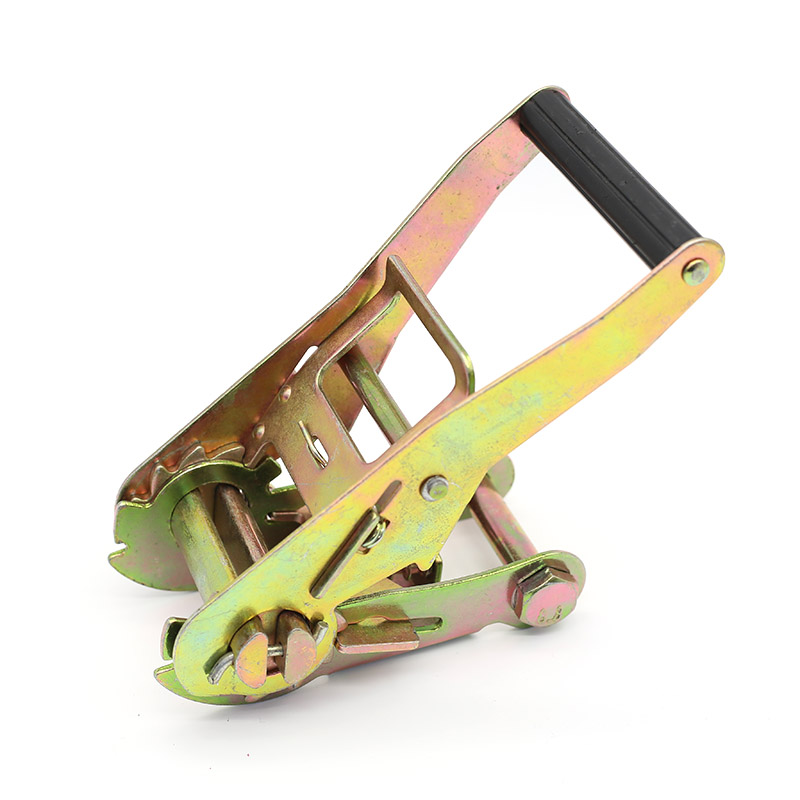
Flatbed fleets running under 49 CFR work with straps whose WLL is marked on the label. A 2-inch US-style assembly with a 10,000 lb breaking strength typically carries a 3,333 lb WLL, and an over-the-top routing lets the full value count. For fleets building these load plans, our 2-inch 10,000 lb ratchet straps for cargo securement are built for repeated tensioning with clear rating labels.
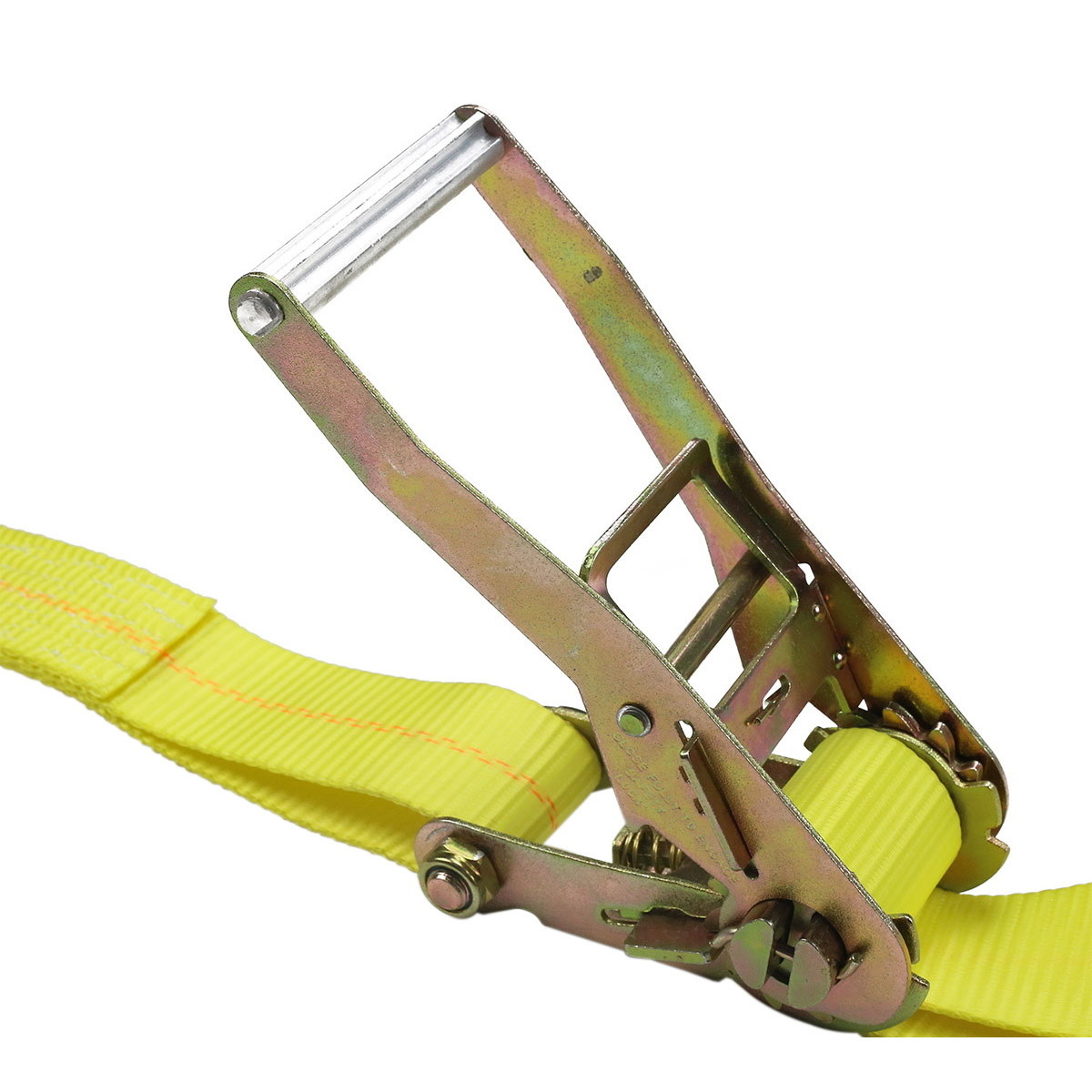 2inch 10000lbs Ratchet Straps for Efficient Cargo Securement Suppliers, Company Ningbo Force Auto Parts Co., Ltd is China ODM/OEM 2inch 10000lbs Ratchet Straps for Efficient Cargo Securement supplier and custom compan...View Product →
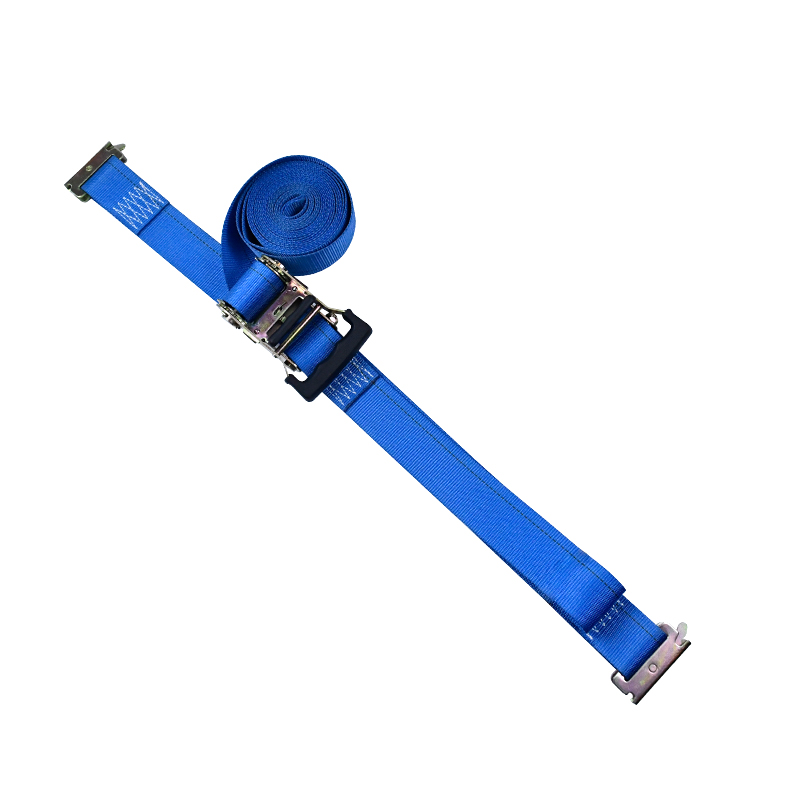
Shippers working under EN 12195-2 read lashing capacity in daN. A 50 mm strap with a 5,000 daN LC contributes roughly 11,000 lb of restraint in an over-the-top lashing arrangement, which is why heavy transport fleets prefer wide lashing straps. The 50 mm 5 t heavy-duty transport lashing strap is a practical example of a high-LC assembly with the marking needed for EN-based documentation.
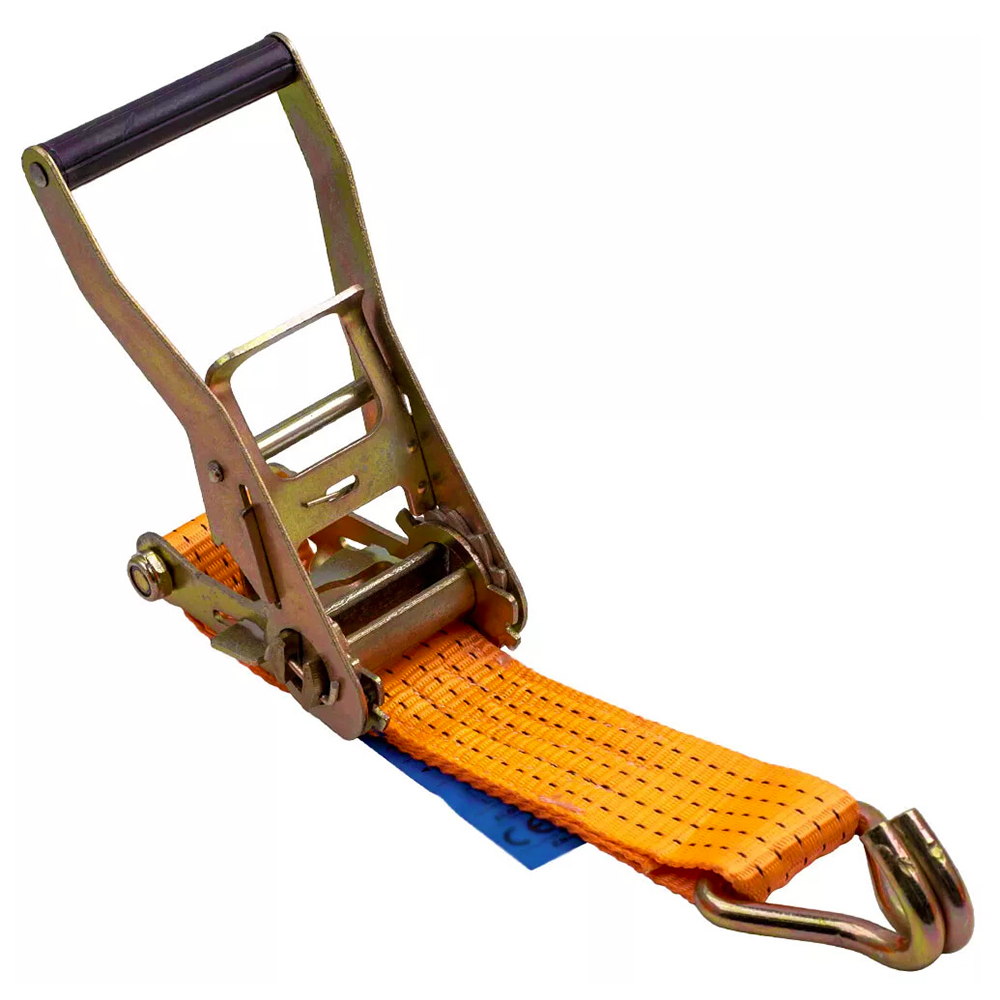 50mm 5t Heavy Duty Transport Truck Polyester Cargo Lashing Load Belt Suppliers, Ningbo Force Auto Parts Co., Ltd is China ODM/OEM 50mm 5t Heavy Duty Transport Truck Polyester Cargo Lashing Load Belt supplier and custo...View Product →
For loads that demand chain, the aggregate calculation follows the weakest component: the chain, the hook, or the binder. A 5/16-inch Grade 70 chain typically has a 4,700 lb WLL, and pairing it with a matched binder preserves that value. Our 5/16-inch and 3/8-inch ratchet chain binders are designed for Grade 70 transport chain, so the assembly WLL stays consistent from end to end. The same ratings discipline applies in rigging and lifting applications, where WLL markings are the basis of every lift plan.
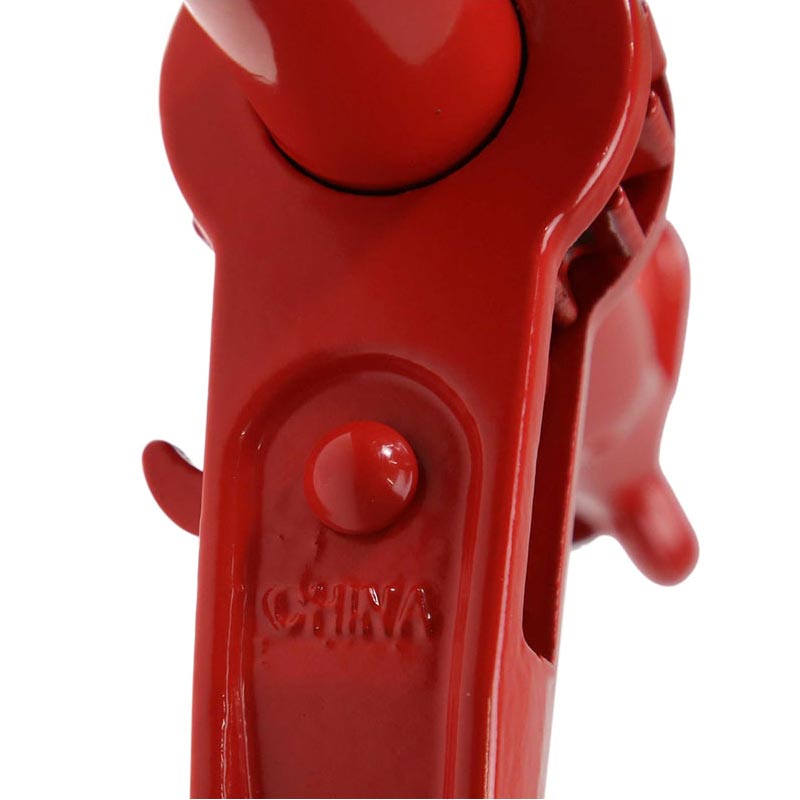 The 5/16' - 3/8' Ratchet Chain Binder Suppliers, Company - Ningbo Force Auto ParNingbo Force Auto Parts Co., Ltd is China ODM/OEM The 5/16' - 3/8' Ratchet Chain Binder supplier and custom company,To ensure maximum saf...View Product →
WLL is the maximum force a component can carry safely in normal service; breaking strength is the force at which it fails. Polyester web tie-downs are typically designed at a 3:1 margin, so a 30,000 lb breaking strength usually means a 10,000 lb WLL. Only the marked WLL counts toward aggregate WLL.
On the label sewn into the webbing or attached to the assembly. FMCSA requires tiedowns used in interstate commerce to be marked with their WLL. If the label has worn away, retire the strap.
A direct tiedown runs from a vehicle anchor to a cargo attachment point and resists movement mainly in one direction. FMCSA accounts for that geometry by counting one-half of its WLL toward the aggregate. Over-the-top tiedowns count at full WLL because both ends anchor to the vehicle.
At least two tiedowns for an article longer than 5 feet or heavier than 1,100 lb, and the aggregate WLL must be at least 5,000 lb. Apply the direct/over-the-top rule to each strap, sum the values, and confirm the total before dispatch.
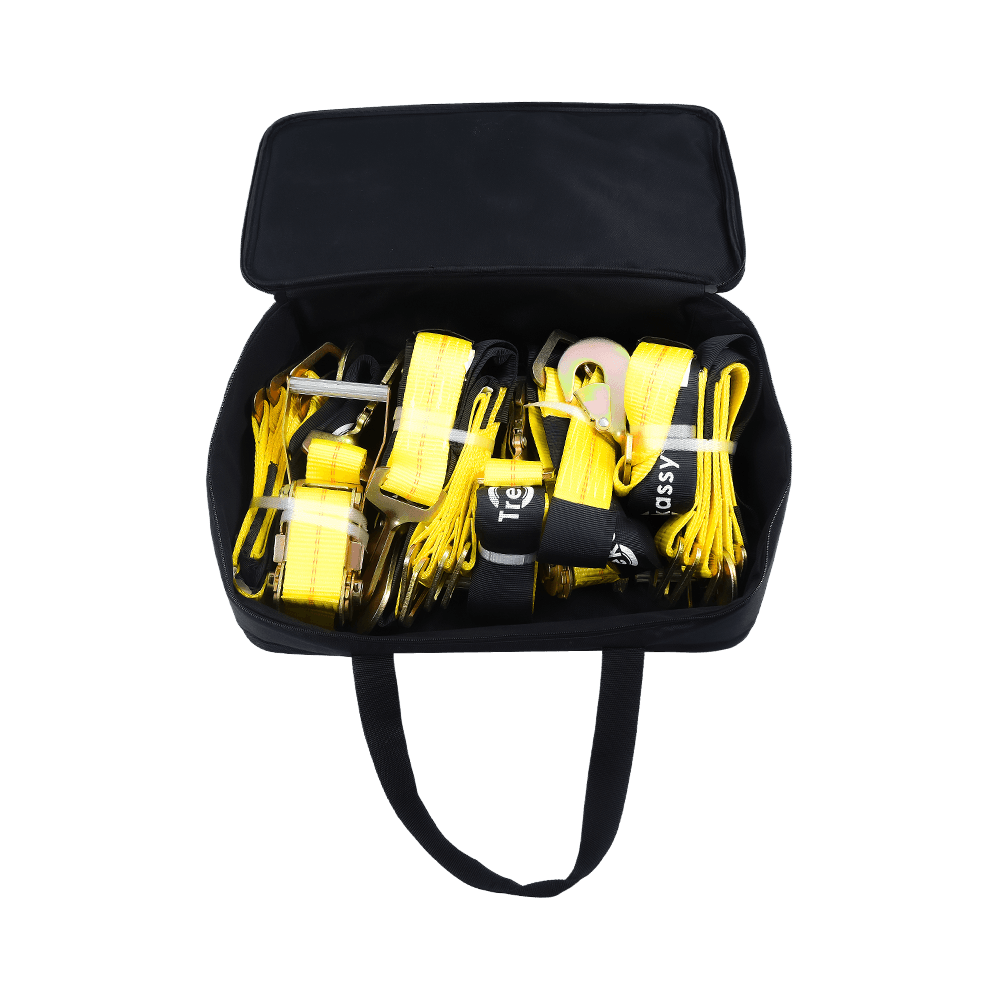

The company specialises in the field of logistics transportation,cargo control,lifting and hoisting products.


joe@forcerigging.com
+86-18650363763
No.469, Liansheng Road, Yinzhou District, Ningbo, Zhejiang Province, China.315111
Copyright © 2025 by Ningbo Force Auto Parts Co., Ltd. All Rights Reserved. China Ratchet Straps Manufacturers OEM/ODM Load Binding and Rigging Company


 English
 Español
 عربى
عربى 中文简体
中文简体