Ningbo Force Auto Parts Co., Ltd.
- joe@forcerigging.com
- +86-18650363763
Ningbo Force Auto Parts Co., Ltd.
Content
If you only remember one thing from this e track system buying guide, remember this: the rail is only as strong as its weakest fitting, its weakest weld point, and its weakest mounting screw. A cargo trailer tie down system is a chain of parts working together, and buyers who focus only on the steel rail while ignoring the fittings, the mounting hardware, and the wall backing often end up with a setup that looks solid but fails under real load.
Before purchasing, confirm five things: the rated load capacity per point, the rail gauge thickness, the slot spacing compatibility with your existing straps and accessories, whether you need wall, floor, or ceiling mounting, and whether the supplier can support ongoing accessory availability. Every other decision in this guide builds on these five checkpoints.
The sections below walk through load ratings, sizing, mounting placement, installation steps, material considerations, and how an e-track based trailer tie down system compares with L-track alternatives, so you can make a decision based on how the trailer will actually be used rather than on assumptions.
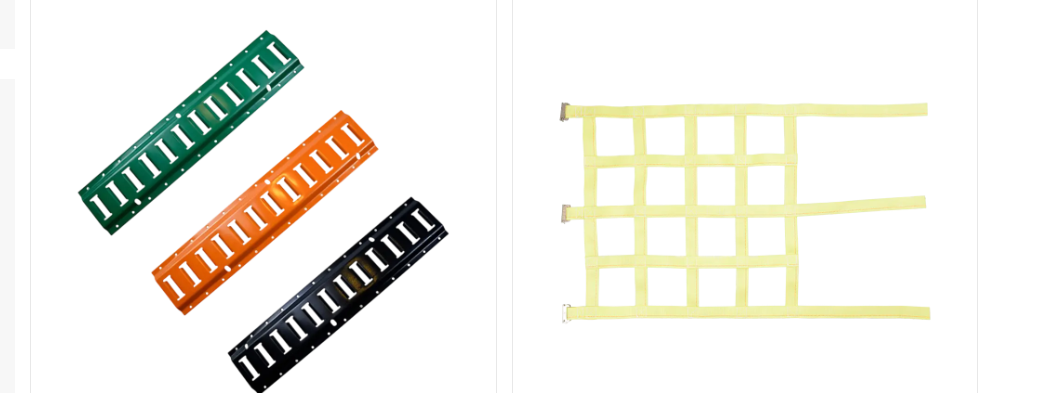
An e-track system is built around a formed steel rail with a row of standardized oval slots spaced at regular one inch intervals along its length. The oval shape is intentional. Fittings such as O-rings, single studs, D-rings, and ball fittings are designed with a matching oval head that slides into the slot and then locks into position with a quarter turn, giving a tool free connection point that can be repositioned anywhere along the rail.
Because every slot along the rail is identical, an operator can add, remove, or slide an anchor point without needing to drill new holes or carry extra hardware. This is what separates a true e-track based cargo trailer tie down system from fixed D-ring anchors bolted at set locations. The flexibility to reposition anchor points is one of the main reasons fleets and moving companies standardize on e-track rather than single-purpose tie down points.
E-track shows up most often in enclosed trailers, utility trailers, moving trailers, and general cargo transport vehicles. Each application uses the same rail and slot standard, which is part of why e-track has become a de facto standard across the trailer and van conversion industry rather than a proprietary system tied to one type of vehicle.
When comparing options, most buyers weigh the same handful of factors, just in different orders depending on how the trailer is used. The chart below reflects a general priority ranking used by fleet buyers and trailer builders when scoring an e-track setup on a ten point scale across the criteria that matter most in day to day cargo handling.
Illustrative buyer priority scoring, ten point scale, based on common trailer fleet purchasing criteria.
Load capacity and rail steel quality consistently rank highest because they determine whether the system survives repeated loading cycles rather than just the first few uses. Accessory compatibility ranks close behind, since a rail that cannot accept a wide range of fittings limits how the trailer can be used over its lifespan.
Rated capacity is expressed per attachment point, not per rail, and it depends on the fitting type, the rail gauge, and how the load is angled against the rail. Manufacturers commonly reference a per point rating in the range of roughly 1,667 pounds for a single fitting used in a straight pull, rising toward a heavier rating when load is spread across a reinforced section or multiple points working together, with many industrial grade rails rated to support up to 5,000 pounds per mounting point when installed correctly into solid backing.
Commonly cited industry reference figures for standard steel e-track rated per attachment point.
These figures assume the rail is bolted into solid framing or plywood backed wall studs. A rail mounted into thin aluminum skin with short screws will not reach its rated figure regardless of the steel gauge printed on the rail itself. Buyers should treat published capacity numbers as the ceiling for a correctly installed rail, not a guarantee for every installation method.
| Mounting Condition | Typical Rating | Best Suited For |
|---|---|---|
| Sheet metal only | Reduced rating | Light interior goods |
| Plywood backed wall | Standard rating | General cargo trailers |
| Steel frame member | Full rated capacity | Heavy equipment transport |
A short trailer with two or three secured points can be enough for light cargo, but longer trailers hauling multiple items need more distributed anchor points to prevent shifting during turns and braking. The line chart below shows a general planning guideline for the number of tie down points recommended relative to trailer length, useful when scoping a rail layout before installation begins.
General planning reference for minimum recommended tie down points as trailer length increases.
These numbers represent a planning floor rather than a fixed rule, since cargo weight, shape, and stacking height all change how many anchor points a specific load actually needs. Odd shaped or top heavy cargo generally needs extra points regardless of trailer length.
L-track is a related rail system with an L shaped slot rather than an oval one, and it is generally associated with aviation cargo and specialized transport where fittings need to resist pull from a wider range of angles. For most cargo trailer applications, e-track remains the more practical trailer tie down system choice because of its broader accessory availability and simpler tool free fitting design.
Editorial comparison, blue area represents e-track, orange area represents l-track, ten point scale.
L-track fittings lock in more directions along the slot, which is useful for cargo that pulls at sharp angles, but this comes with narrower accessory availability and generally higher installation complexity. For general purpose enclosed trailers and utility trailers, e-track based systems remain the more accessible option for most buyers researching an e track system buying guide before making a purchase decision.
Rail width is standardized at two inches across nearly all e-track products, which is what allows fittings from different production runs to remain compatible with each other. Length, however, is typically sold in fixed increments or cut to custom order depending on trailer interior dimensions.
| Rail Length | Slot Spacing | Rail Width | Common Gauge |
|---|---|---|---|
| 2 feet | 1 inch | 2 inches | 12 to 16 gauge |
| 4 feet | 1 inch | 2 inches | 12 to 16 gauge |
| 8 feet | 1 inch | 2 inches | 12 to 16 gauge |
| 10 feet | 1 inch | 2 inches | 12 to 16 gauge |
| Custom cut | 1 inch | 2 inches | 10 to 16 gauge |
Buyers outfitting a full enclosed trailer track system often mix rail lengths, running long horizontal sections along side walls and shorter vertical drops near doors and corners, so measuring actual usable wall length before ordering avoids wasted material and uneven anchor spacing.
Placement affects how usable the rail is in daily operation. Wall mounted rails, typically installed at two heights along the side walls, support strap based securing of stacked cargo. Floor mounted rails handle heavier palletized loads and equipment with wheels or feet. Ceiling mounted rails are less common but are used for overhead securing of long or lightweight items.
Simplified isometric view of typical wall, floor, and ceiling e-track rail placement in an enclosed trailer.
A trailer used mainly for boxed goods and moving furniture benefits most from wall mounted rails at roughly waist and shoulder height, since most straps run horizontally across stacked items. A trailer regularly hauling equipment or machinery benefits more from floor mounted rails, since low anchor points keep straps closer to the item's center of gravity and reduce shifting during transport.
Installation quality determines whether published load ratings apply in practice. The steps below outline a standard wall mounted installation sequence.
For a full enclosed trailer track system covering multiple walls, working from front to back in one continuous pass keeps rail heights consistent and avoids the uneven spacing that happens when sections are installed separately over time.
Rail steel gauge affects both rated capacity and long term durability, particularly in trailers exposed to road salt, moisture, or outdoor storage. Thicker gauge steel resists deformation under repeated loading and holds fastener threads more reliably over years of use.
Relative strength rating by steel gauge, ten point scale, thicker gauge indicated by lower number.
Beyond raw gauge thickness, the surface finish determines how well a rail resists surface rust in humid or coastal conditions. Powder coated and zinc treated finishes are commonly used across corrosion resistant e-track rail because they add a protective barrier without changing the dimensional tolerances that fittings depend on to lock properly.
The value of an e-track rail comes largely from the range of fittings it accepts. A well stocked heavy duty e track system should support the following accessory types without needing tools for installation or removal.
| Accessory | Primary Function | Mounting Method |
|---|---|---|
| O-ring fitting | General strap anchor point | Snaps into oval slot |
| Single stud fitting | Ratchet strap attachment | Snaps into oval slot |
| D-ring fitting | Chain and sling connection | Snaps into oval slot |
| Ball fitting | Quick strap attachment | Snaps into oval slot |
| Spring E-fitting | Tool free adjustable anchor | Snaps into oval slot |
| Track divider bar | Separates cargo sections | Spans between two rails |
With 360 degree rotating fittings, straps can be angled to match the actual pull direction of the load rather than being forced into a fixed geometry, which reduces wear on both the strap webbing and the fitting itself over repeated use.
Since e-track is a shared industry standard, compatibility across brands is generally strong, but rail thickness, coating quality, and fitting tolerance still vary between an e-track system manufacturer and the next. Buyers sourcing at volume, whether for fleet retrofits or new trailer production lines, typically evaluate a supplier on production capacity, consistency across batches, and the ability to support custom e track system requests for non standard rail lengths or mounting configurations.
Ningbo Force Auto Parts Co., Ltd. has grown from a smaller production facility in 2008 into a larger modern manufacturing base producing millions of pieces annually, supplying tie down straps, hardware, lifting slings, and related trailer securing components alongside e-track rail and fittings. As an e track supplier serving transportation, agriculture, construction, and energy sectors, the company works with OEM and ODM partners looking for a wholesale e track system source that can scale with production needs rather than a single small batch order.
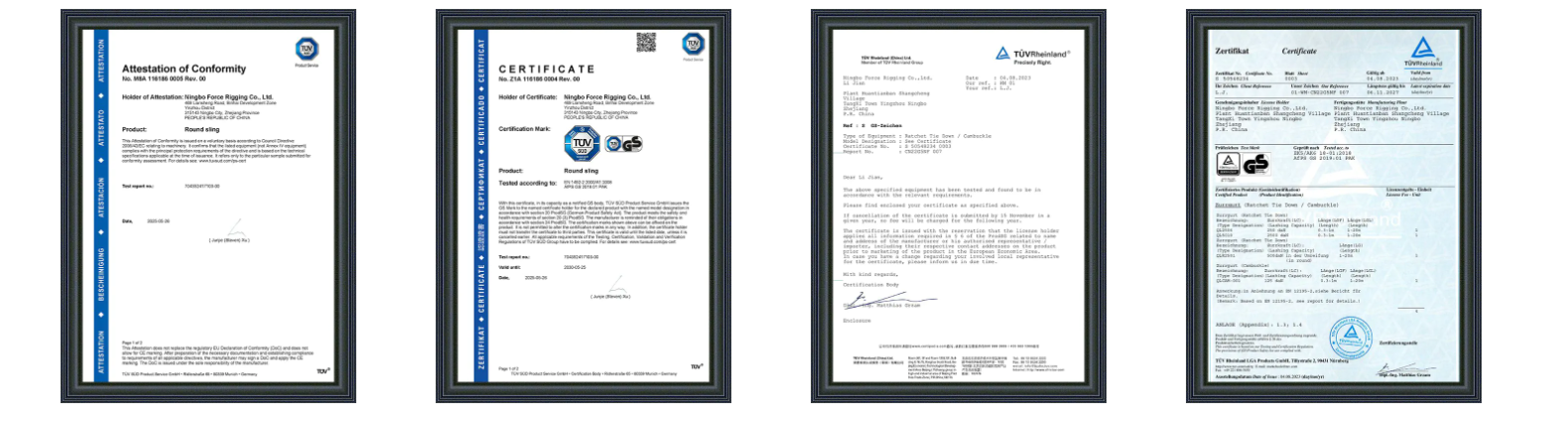
An e-track system is a steel rail with evenly spaced oval slots that accept tool free fittings, used to create flexible, repositionable anchor points inside a cargo trailer or vehicle.
It is used to secure cargo in enclosed trailers, utility trailers, moving trailers, and general transport vehicles by giving straps, hooks, and dividers a strong, movable attachment point.
Fittings with an oval head slide into any slot along the rail and lock in place with a quarter turn, letting operators reposition anchor points anywhere along the rail without drilling new holes.
Rail is fastened into wall studs or frame members using pre drilled pilot holes and properly sized bolts or screws, keeping the rail level along its full length for even fitting engagement.
Common placements include side walls at waist and shoulder height for general cargo, floor level for heavier equipment, and occasionally ceiling mounted for long or lightweight items.
Yes, wall mounted vertical and horizontal e-track installation is one of the most common configurations, provided the rail is fastened into solid backing rather than thin skin alone.
Capacity depends on the fitting and mounting method, with single point ratings commonly around 1,667 pounds and multi point, properly reinforced sections rated up to around 5,000 pounds per point.
Rail width is standardized at two inches, so the main sizing decision is length, which should be measured against usable wall or floor space and ordered in standard or custom cut lengths.
E-track uses an oval slot and generally offers broader accessory availability, while L-track uses an L shaped slot that can resist pull from more angles but has narrower accessory options.
Wholesale e track system sourcing is typically done directly through an e track manufacturer that supports OEM or ODM orders and can scale rail and accessory production to project volume.




The company specialises in the field of logistics transportation,cargo control,lifting and hoisting products.


joe@forcerigging.com
+86-18650363763
No.469, Liansheng Road, Yinzhou District, Ningbo, Zhejiang Province, China.315111
Copyright © 2025 by Ningbo Force Auto Parts Co., Ltd. All Rights Reserved. China Ratchet Straps Manufacturers OEM/ODM Load Binding and Rigging Company


 English
 Español
 عربى
عربى 中文简体
中文简体