Ningbo Force Auto Parts Co., Ltd.
- joe@forcerigging.com
- +86-18650363763
Ningbo Force Auto Parts Co., Ltd.
Content
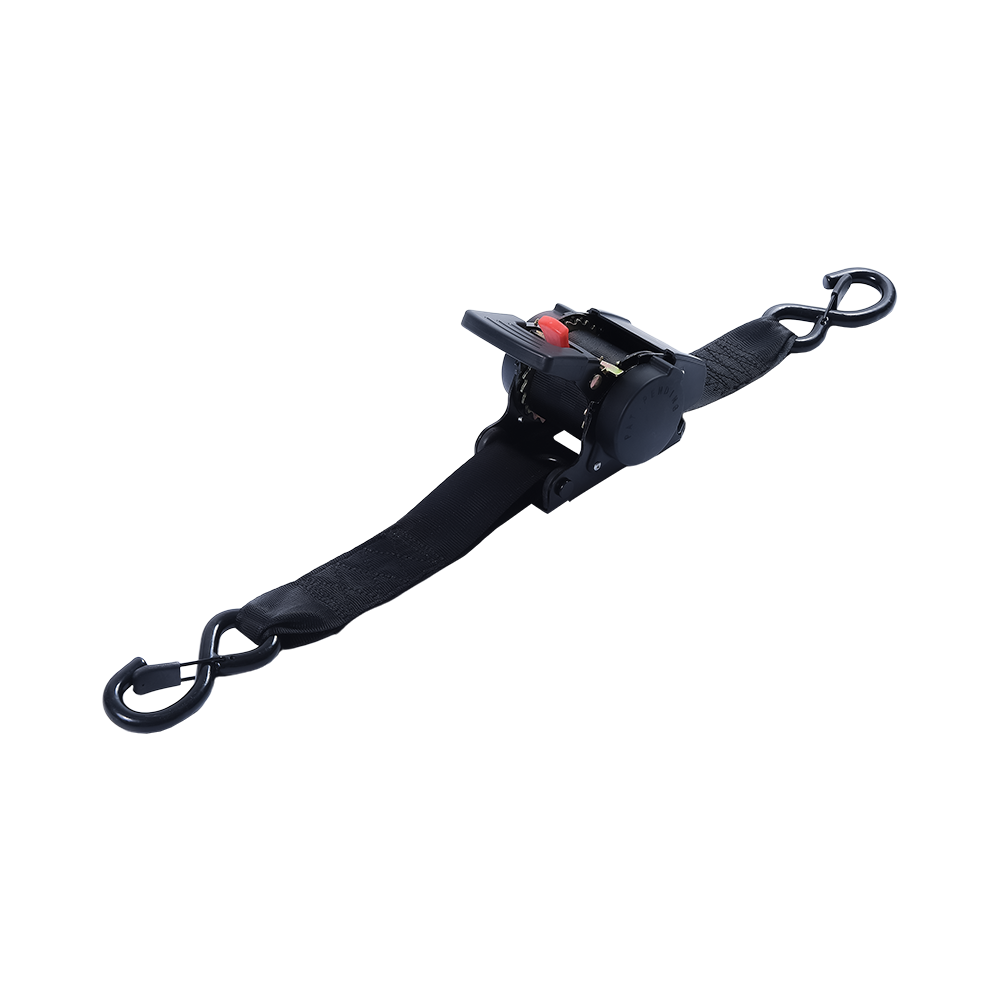
An automatic retractable ratchet strap is a cargo tie down strap built around a spring-loaded reel and ratchet mechanism that pulls the webbing back into the housing and keeps working tension on a load without a driver or rider cranking a handle by hand. The strap tightens as the operator feeds webbing through the hook end, and the internal spring keeps drawing in any slack that shows up from vibration, bouncing, or a small shift of the load during transport. That single difference is what separates it from a standard hand ratchet strap, and it is the reason this hardware is also listed as an automatic ratchet strap or automatic tie down straps inside the cargo control category.
Because the reel keeps managing tension on its own, the loose tail of webbing that normally has to be tucked, tied, or taped down on a manual strap is mostly gone. This one feature is the most common reason buyers move from manual hardware over to automatic retractable ratchet straps for daily loading routines.
The terms automatic ratchet strap, automatic tie down straps, and automatic retractable ratchet straps are used fairly interchangeably across the tie down hardware market, and they all point back to this same reel based design rather than a separate style of product.
The mechanism inside an automatic retractable ratchet strap pairs a coiled spring reel with a ratchet pawl. Webbing sits wound around the reel at rest, and pulling on the free end draws webbing out against light spring resistance. Once the hook is anchored and the webbing is routed over or through the load, releasing the pull lets the spring reel back in every bit of slack until the webbing sits snug against the cargo. A small ratchet gear then locks the reel at that tension point, which is what holds the load steady rather than the spring alone.
The part that gives this hardware its name is what happens after that initial lock. As a vehicle moves, webbing tension can ease slightly from road vibration or a load settling. On a manual strap this loosening is only corrected if someone stops to re-crank the handle. On an automatic retractable ratchet strap, the spring keeps drawing webbing back in on its own, so the strap continues taking up small amounts of slack for as long as the ratchet stays engaged.
Simplified sequence inside an automatic retractable ratchet strap reel
This auto compensating behavior is also why the straps are marketed as automatic tie down straps rather than simply spring assisted straps. The spring is not just helping with initial tightening, it is continuing to manage tension for the full length of the trip.
Automatic retractable ratchet straps are commonly built from 1 inch, 1.5 inch, or 2 inch polyester webbing, and the working load limit tends to rise with width because a wider strip of webbing spreads tension across more fiber. Actual capacity still depends on stitching pattern, the ratchet gear, and reel spring design, not width alone, so the figures below should be read as general reference ranges rather than a spec sheet for one specific item.
Typical working load limit reference range by webbing width
| Webbing Width | Typical Working Load Limit | Common Application |
|---|---|---|
| 1 inch | 500 to 1500 lb | Motorcycles, small furniture, light crates |
| 1.5 inch | 1500 to 3000 lb | Moving loads, general freight, ATVs |
| 2 inch | 3000 to 5000 lb | Construction materials, heavy equipment, industrial freight |
Buyers looking at heavy duty retractable ratchet straps for construction materials or industrial freight generally lean toward the 2 inch webbing tier, while lighter loads such as motorcycles or small furniture pieces are usually well matched to the 1 inch tier.
A manual ratchet strap needs both hands and a full crank cycle to reach working tension, and the extra webbing tail is usually looped, folded, or tied off separately. An automatic retractable ratchet strap reaches tension in a single pull and draws the extra webbing back into the housing on its own, which tends to shorten loading time and keeps the working area tidier. The comparison below is a general pattern seen across common tie down hardware rather than a rating tied to one exact product line.
Automatic retractable ratchet strapManual ratchet strap
| Category | Automatic Retractable Strap | Manual Ratchet Strap |
|---|---|---|
| Setup Motion | Single pull, spring assisted | Full crank cycle, hand operated |
| Hands Needed | Generally one hand | Usually both hands |
| Slack Management | Reel keeps drawing in slack | Loose tail folded or tied off |
The reel based design shows up across a wide mix of settings because the one-hand operation and self tensioning behavior save time whenever loads are secured repeatedly through the day. The chart below reflects a general usage pattern across common tie down applications.
General distribution pattern of automatic tie down strap use by setting
Interest in automatic retractable ratchet straps has generally trended upward over recent years, following a few practical shifts. Parcel and freight volumes handled through smaller delivery vehicles have grown, motorcycle and powersport transport has expanded, and warehouse teams have leaned harder on tools that shave seconds off repeated tasks. The line below illustrates this general upward pattern rather than a figure pulled from a single named study.
Illustrative relative interest index for automatic retractable ratchet straps, 2019 to 2025
This pattern lines up with a broader shift toward tools that reduce repetitive manual steps. A ratchet strap load capacity that matches the job, paired with hardware that manages its own tension, tends to reduce how often a driver needs to stop and recheck a load mid route.
Setting up automatic retractable ratchet straps follows a simple order, though the exact anchor points and routing path will vary by vehicle and cargo shape.
Checking the anchor points and webbing path before setting off helps keep tension distributed evenly across the load rather than pulling from one corner. For taller or irregular cargo, running two straps at slightly different angles generally holds a load steadier than a single strap centered on one side. Periodically wiping down the ratchet housing keeps grit from building up around the pawl, which helps the automatic retraction move freely.
Ningbo Force Auto Parts Co., Ltd. has grown from a 1,000 square meter workshop in 2008 into a 30,000 square meter production base by 2025, producing around 12 million pieces a year across its tie down hardware lines. The company operates as a China based automatic retractable ratchet straps manufacturer and works on an OEM and ODM basis, building product runs around a customer's own specifications, packaging, and branding needs.
Beyond ratchet straps, the product range spans tie down hardware, lifting slings, tarps, and corner protectors, supporting buyers across transportation, agriculture, construction, and energy sector supply chains. As a member of WSTDA, the company keeps close contact with industry practice around web sling and tie down design, and it maintains a dedicated research and development team focused on reel mechanisms, webbing treatment, and hardware finishing.
This mix of scale, in house R&D, and a broad tie down hardware catalog is generally what buyers check for when comparing an automatic ratchet strap production partner for either private label programs or direct wholesale supply.
It is a tie down strap with a spring loaded reel and ratchet gear that pulls webbing back in on its own, keeping tension on a load without repeated hand cranking.
Ratchet strap load capacity generally ranges from about 500 lb on narrower 1 inch webbing up to around 5000 lb on wider 2 inch webbing, depending on construction.
Safe cargo straps depend on correct anchoring and routing more than the mechanism alone, though the auto compensating reel does help keep tension from dropping between checks.
Yes, many models use UV treated webbing and corrosion resistant housings, which is why they are often listed as outdoor tie down straps for jobsite and open trailer use.
Anchor one hook, route the webbing over or through the load, attach the second hook, then let the reel draw in slack until the ratchet locks the tension in place.
Industrial tie down solutions built on this reel design are common across transportation, construction, agriculture, moving services, and recreational vehicle transport.

The company specialises in the field of logistics transportation,cargo control,lifting and hoisting products.


joe@forcerigging.com
+86-18650363763
No.469, Liansheng Road, Yinzhou District, Ningbo, Zhejiang Province, China.315111
Copyright © 2025 by Ningbo Force Auto Parts Co., Ltd. All Rights Reserved. China Ratchet Straps Manufacturers OEM/ODM Load Binding and Rigging Company


 English
 Español
 عربى
عربى 中文简体
中文简体