Ningbo Force Auto Parts Co., Ltd.
- joe@forcerigging.com
- +86-18650363763
Ningbo Force Auto Parts Co., Ltd.
Picture a 48-foot flatbed loaded with an 11-ton steel coil. The driver wants to know whether one 3/8 inch Grade 70 chain will hold it. It will not, and the reason comes down to a single number: the working load limit.
For 3/8 inch Grade 70 transport chain, that number is 6,600 lb (2,994 kg). It comes from the NACM (National Association of Chain Manufacturers) tables that US chain makers, importers and DOT inspectors all work from, and it applies to a new chain in a straight pull.
The catch is that 3/8 inch is a diameter, not a rating. The same link size is sold in five grades, and the working load limit runs from 2,650 lb to 8,800 lb depending on which one you buy. The grade decides whether the chain can secure a load on a flatbed, drag a vehicle out of mud, or lift it over your head.
What follows is the grade-by-grade breakdown, the safety factors behind those numbers, the regulatory math that decides how many chains a load needs, and the inspection points that decide when a chain comes off the truck.
Content
All five grades share the same 3/8 inch nominal diameter, and most will physically fit the same hook. The ratings are nowhere near each other, so the grade marking matters far more than the size when you place an order.
| Grade | Working load limit | Minimum breaking strength | Design factor | Typical use |
|---|---|---|---|---|
| Grade 30 proof coil | 2,650 lb (1,202 kg) | 7,950 lb | 3:1 | General utility and farm work, not cargo securement |
| Grade 43 high test | 5,400 lb (2,449 kg) | 16,200 lb | 3:1 | Towing, logging, general pulling |
| Grade 70 transport | 6,600 lb (2,994 kg) | 26,400 lb | 4:1 | Tie-down and cargo securement |
| Grade 80 alloy | 7,100 lb (3,220 kg) | 28,400 lb | 4:1 | Overhead lifting slings |
| Grade 100 alloy | 8,800 lb (3,992 kg) | 35,200 lb | 4:1 | Heavy overhead lifting |
Buyers often ask for the breaking strength first, sometimes calling it the ultimate strength. It is the wrong number to size with. The working load limit is the maximum load a chain should ever see in service, and the design factor is the cushion that sits between the two.
For 3/8 inch Grade 70, that cushion is 4:1: 26,400 lb of breaking strength divided by 6,600 lb of working load limit. Grade 80 and Grade 100 alloy chains use the same 4:1 factor, which is how a 3/8 inch Grade 100 chain reaches 8,800 lb without getting any thicker.
Utility chain is built differently. Grade 30 proof coil and Grade 43 high test use a 3:1 factor, so 3/8 inch Grade 43 breaks at 16,200 lb but is only rated 5,400 lb. A shorter cushion means less tolerance for wear, corrosion and shock loading.
Two practical consequences follow. First, never compare two chains on breaking strength alone, because a 3:1 chain with a high breaking load can still carry a lower working load limit than a 4:1 chain. Second, never halve a breaking strength and treat the result as safe. The published working load limit already accounts for the design factor, dynamic loading and normal in-service wear.
A 3/8 inch link in each grade looks almost identical on a workbench. The finish and the stamps are what separate them, and using the wrong grade is the most common compliance failure on flatbed loads.
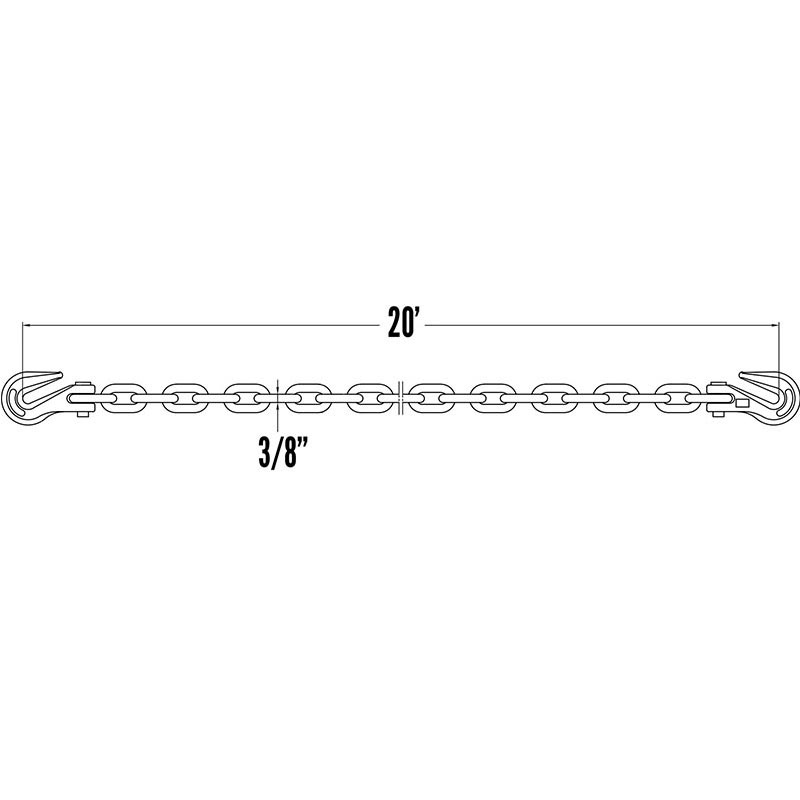 3/8-Inch Grade 70 Transport Chain for Cargo SecuringGrade 70 binding chain in 3/8-inch size for flatbed load securement; verify grade markings and DOT compliance before quoting.View Product →
If a customer asks for "3/8 high test chain" for a flatbed load, confirm whether they mean Grade 43 or Grade 70 before quoting. The two are not interchangeable under DOT rules, and the difference only shows up when an inspector checks the tag.
The 6,600 lb figure assumes a straight, vertical pull on a new chain. Change the geometry or the condition and the effective limit drops, even though the tag on the chain does not change.
None of this is a reason to guess. If a load needs three chains in a straight pull, it usually still needs three after you account for the hitch.
The US cargo securement rule, 49 CFR 393.110, answers this with two separate requirements. The aggregate working load limit of all tiedowns must be at least 50 percent of the weight of the cargo, and there must be enough tiedowns to satisfy the minimum count for the length of the article.
Run the numbers for the coil from the opening: 22,000 lb of cargo means at least 11,000 lb of aggregate working load limit. One 3/8 inch Grade 70 chain provides 6,600 lb, so a single chain fails the math. Two chains provide 13,200 lb and clear the threshold, assuming the anchor points and the deck are rated for the load.
A lighter example is closer to daily work. A 9,000 lb skid steer on a 20-foot flatbed needs 4,500 lb of aggregate working load limit. One 3/8 inch Grade 70 chain at 6,600 lb satisfies the 50 percent rule, but the minimum count rule usually pushes the answer to two tiedowns, one forward and one aft, to stop the machine rotating in a hard brake.
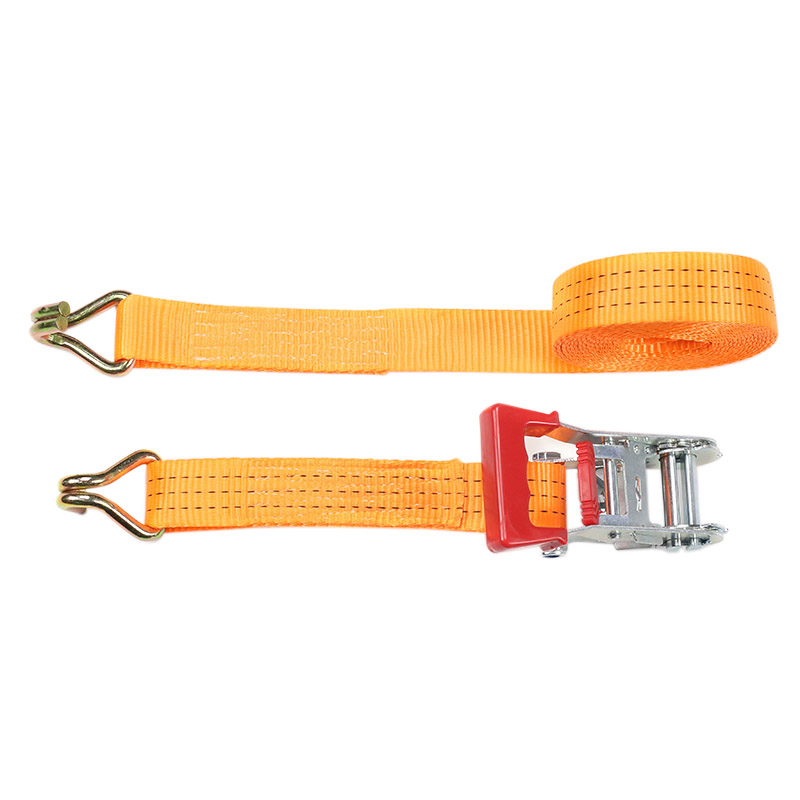
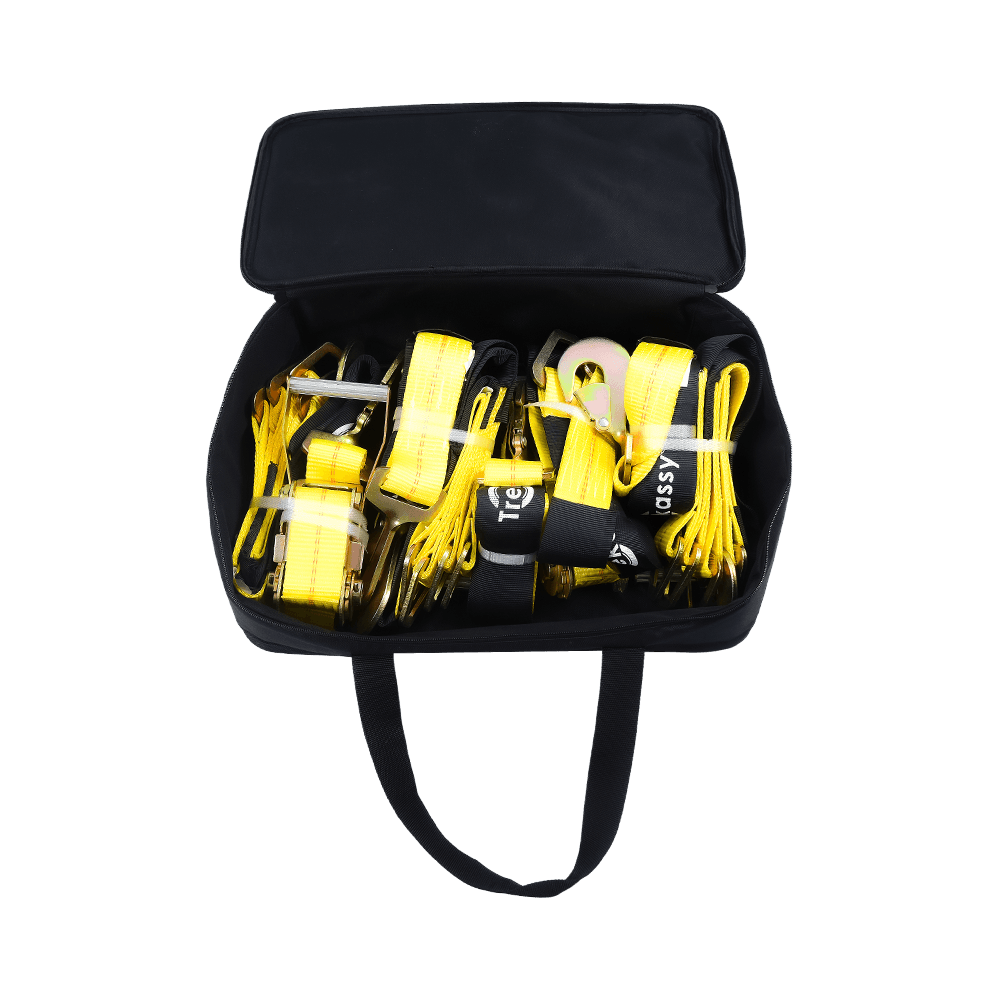
For fleets carrying mixed cargo, those figures belong on a loading card rather than in a driver's memory. The same logic applies to the straps, tracks and edge protectors that typically work alongside chain on a flatbed, which is the space our trucking and transportation product range is built around.
Chain is only as strong as the assembly around it. A 3/8 inch Grade 70 chain paired with a 5/16 inch binder or an under-rated hook brings the whole tiedown down to the weakest component, and that is what the inspector will measure.
Ratchet binders are the safer default for transport chain. They hold tension with a pawl and a ratchet wheel rather than friction and leverage, so a load that settles in transit does not let the handle snap open. A 3/8 to 1/2 inch ratchet binder is the usual match for a 3/8 inch chain.
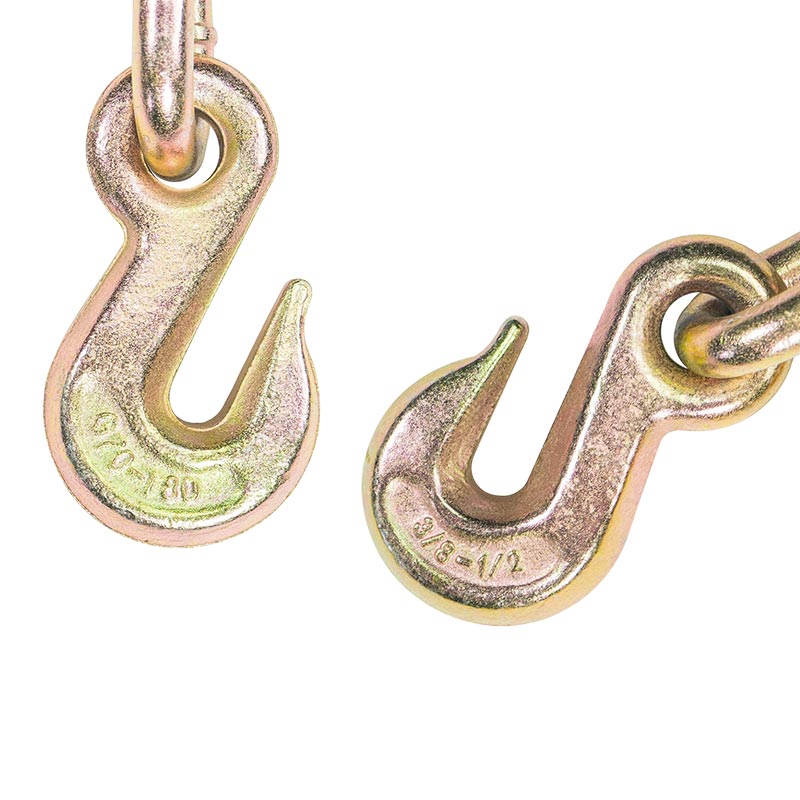 3/8 to 1/2 Inch Ratchet Chain Binder for TransportRatchet binder for 3/8-inch Grade 70 or 1/2-inch Grade 43 chain, offering controlled tensioning for heavy transport loads.View Product →
Lever binders are faster and remain common on logging and heavy equipment hauling, but they demand discipline. They rely on an over-center cam, so the handle has to be secured independently and never extended with a cheater bar. Recoilless designs cut the kickback risk when the handle is released under load. Whatever the type, the binder's working load limit must equal or exceed the chain's, and the hooks should be the same grade as the chain.
If you are still weighing ratchet against lever designs for your fleet, our guide on selecting and using a load binder covers the release sequence and the storage habits that keep binders working season after season.
A chain gives very little warning before it fails. Inspection is a visual check against a short list of conditions, and any single one of them is enough to pull the chain from service.
Put the inspection interval into the fleet maintenance schedule instead of leaving it to the driver. For transport chain in daily service, a documented visual check before each trip plus a recorded inspection at least quarterly is a workable baseline.
It depends on the grade. Grade 70 transport chain is rated 6,600 lb, Grade 80 alloy 7,100 lb, Grade 100 alloy 8,800 lb, Grade 43 high test 5,400 lb, and Grade 30 proof coil 2,650 lb.
No. Breaking strength is the load at which the chain fails. A 3/8 inch Grade 70 chain breaks at roughly 26,400 lb, which is four times its 6,600 lb working load limit.
No. Grade 70 is a transport grade only. OSHA 1910.184 and ASME B30.9 require alloy chain, Grade 80 or Grade 100, for any overhead lifting application.
About 1.5 lb per foot for Grade 70 transport chain, so a 20-foot chain adds roughly 30 lb to the truck. Alloy grades are close to the same figure.
At least two in most cases. Cargo securement rules require aggregate working load limit of 50 percent of the cargo weight, or 5,000 lb. One Grade 70 chain meets that, and a second tiedown is normally added to control rotation.
Grade 70 usually carries a gold chromate finish and grade stamps. Grade 43 is bright zinc or self-colored with 3:1 markings, and Grade 80 alloy is black or painted with periodic grade marks. Check the tag and the stamp, not the colour alone.
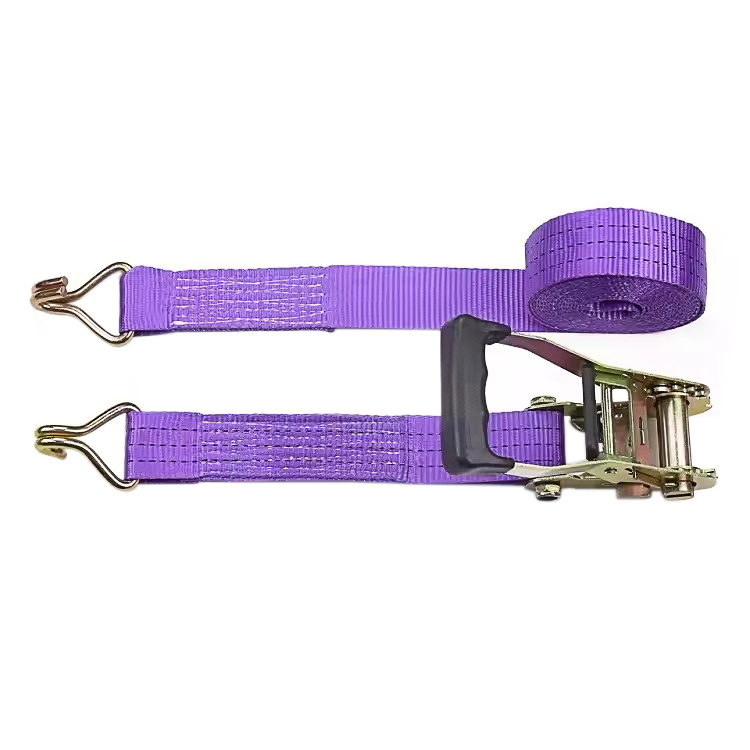
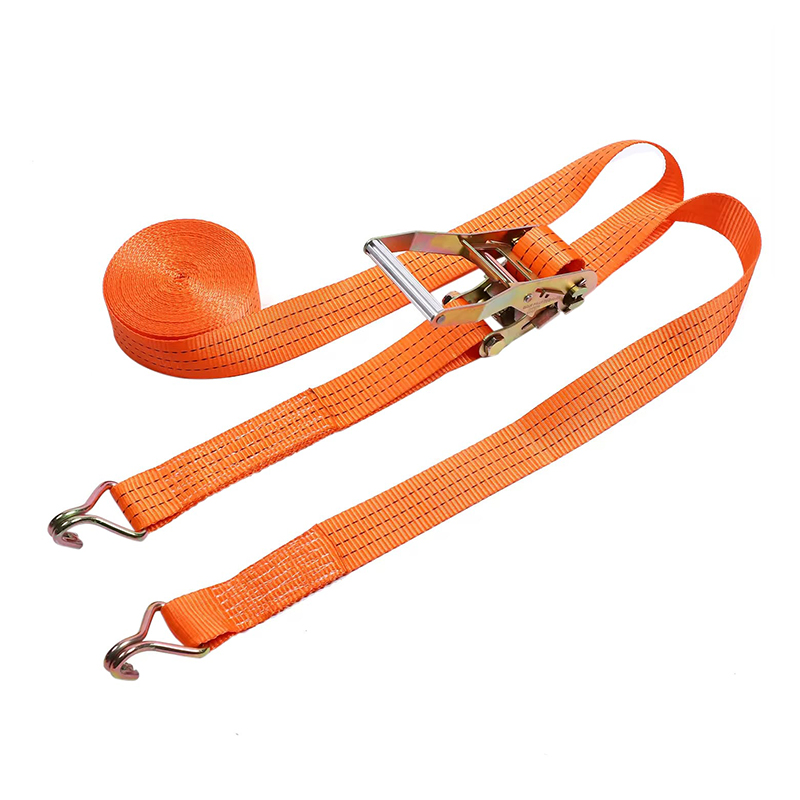



The company specialises in the field of logistics transportation,cargo control,lifting and hoisting products.


joe@forcerigging.com
+86-18650363763
No.469, Liansheng Road, Yinzhou District, Ningbo, Zhejiang Province, China.315111
Copyright © 2025 by Ningbo Force Auto Parts Co., Ltd. All Rights Reserved. China Ratchet Straps Manufacturers OEM/ODM Load Binding and Rigging Company


 English
 Español
 عربى
 中文简体