Ningbo Force Auto Parts Co., Ltd.
- joe@forcerigging.com
- +86-18650363763
Ningbo Force Auto Parts Co., Ltd.
A 2-inch nylon sling and a 2-inch polyester ratchet strap can leave the factory with the same 10,000 lb rating, the same orange colour and almost the same price per unit. Put both on a flatbed through a Texas summer and they stop behaving like the same product: one holds the tension set at the loading dock, the other needs re-tensioning at the first fuel stop and shows sun-bleached yarn by autumn.
Here is the conclusion first. For cargo securement — flatbed tie-downs, trailer lashing, E-track and L-track loads — polyester webbing is the right default. Nylon earns its place in a narrower band of work: shock-loaded loads, tow and recovery straps, and applications where stretch that absorbs energy plus high abrasion resistance matter more than dimensional stability.
The rest of this guide covers where the two fibres differ, what those differences cost in the field, and how to specify webbing so you do not pay nylon prices for a job polyester does better.
Content
Both fibres are strong enough that raw breaking strength is rarely the deciding factor. What separates them on the road is behaviour after tensioning: elongation, elastic recovery, and how each material handles weather.
Polyester stretches less and returns to its original length less readily. On a static load that is a feature. A low-stretch strap holds the tension the driver puts into it, so a load that barely settles stays secure without a re-tensioning stop every few hours. Polyester also takes up almost no water, resists ultraviolet light far better, and does not creep under constant load.
Nylon is the tougher fibre in a physical sense. It stretches further, absorbs more energy before breaking, recovers strongly, and shrugs off abrasion from rough decks and steel edges better than polyester does. That is why tow straps, recovery straps and many lifting slings are built from nylon.
The failure mode to avoid is putting a high-stretch strap where a static one is required. Under a steady load nylon relaxes, tension drops, and the load can shift — exactly the outcome a tie-down is meant to prevent.
 High-Strength Polyester Webbing Strap for SecuringPolyester webbing is suited to static securing tasks where nylon relaxation can cause tension loss; customizable widths, lengths, weaves, and colors.View Product →
The table below summarises the fibre-level differences behind everything else in this article. These are typical ranges taken from standard textile property references, not guarantees for a specific strap — weave density, yarn denier, heat setting and finish can move real performance significantly.
| Property | Nylon (PA 6-6) | Polyester (PET) |
|---|---|---|
| Tensile strength, dry | Very high; typically 8–9 g/denier | High; typically 7–8 g/denier |
| Elongation at break | Roughly 15–25% | Roughly 10–15% |
| Elastic recovery | Excellent; springs back after stretch | Moderate; lower stretch, better dimensional stability |
| Moisture regain at 65% RH | About 4.0–4.5% | About 0.4% |
| Strength when wet | Drops roughly 10–15% | Essentially unchanged |
| UV resistance | Moderate; degrades faster in prolonged sun | Good; retains strength and colour longer |
| Abrasion resistance | Excellent | Good |
| Melting point | About 250 °C (482 °F) | About 255 °C (491 °F) |
| Typical best fit | Tow and recovery straps, shock-loaded slings, abrasion-heavy contact | Cargo tie-downs, trailer lashing, E-track systems, outdoor storage |
Read the table as a starting point for specification, not as a verdict. A well-built polyester strap with dense warp yarns can beat a cheap nylon strap on breaking strength, and a nylon strap with a loose weave can stretch more than the fibre alone suggests. Ask for the fibre, the denier, the weave count and the finish before you compare prices.
Elongation is the practical dividing line between the two materials. Nylon webbing stretches noticeably more at the same load, and that stretch is useful when the load itself moves: a tow strap needs to absorb the jolt of a snatch, and a sling benefits from a little give. Polyester stays closer to its original length, which is what a cargo strap needs.
Regulation pushes in the same direction. EN 12195-2, the European standard for lashing straps used on road vehicles, limits elongation at lashing capacity to 7% for a standard lashing strap. A high-stretch construction struggles to meet that limit; a low-stretch polyester weave meets it naturally. In North America, the WSTDA recommended practice for synthetic webbing tie-down assemblies treats rated capacity as a property of the complete assembly rather than the webbing alone, which puts the same emphasis on matching fibre to hardware and stitching.
Elongation at break (%), typical fibre-level ranges. Finished webbing elongation depends on weave, denier and finish.
One more consequence: because nylon keeps stretching and recovering, a nylon strap on a static load slowly loses tension as the fibre relaxes. If a driver has to re-tension every few hours, the strap is simply mismatched to the job — it is not failing, it is behaving exactly as the fibre dictates.
 EN12195-2 Polyester Ratchet Tie Down LashingPolyester webbing retains strength when wet and resists moisture uptake, making this EN-compliant ratchet lashing suitable for open-trailer cargo securing.View Product →
Moisture is the clearest split. Nylon takes up roughly 4% of its weight in water at normal humidity; polyester takes up well under 1%. A wet nylon strap is heavier, slower to dry, more prone to mildew when coiled in a truck box for weeks, and weaker — textile references commonly put the wet strength loss at around 10–15%. Polyester's strength is essentially unchanged when wet, which matters for anyone who leaves straps on an open trailer.
Sunlight breaks down both polymers, but at different rates. Polyester is widely reported to retain strength and colour longer under prolonged UV exposure, while nylon yellows and loses strength sooner. For fleet operators who keep straps on the deck from March to November, that gap shows up as replacement cost rather than a dramatic roadside failure.
Abrasion goes the other way. Nylon's toughness makes it the better choice where webbing drags across a rough deck or rubs against steel, which is why it dominates tow and recovery work. In cargo applications, though, most wear happens where the strap meets the load edge — and there, edge protectors, sleeves and correct routing do more for strap life than a change of fibre.
Qualitative comparison on a 1–5 scale, based on the fibre property ranges in the table above.
Two straps made from the same fibre can differ far more than a nylon strap differs from a polyester one. Weave construction explains why. Warp yarns run the length of the strap and carry the rated load; weft yarns cross them, lock the weave and give the material its body. Increase the warp yarn count and you raise breaking strength without changing the fibre at all; loosen the weave and you gain stretch at the cost of stability.
Warp yarns run lengthwise, weft yarns cross them; heat setting stabilises the finished weave.
Hardware decides the rest. An assembly is rated by its weakest component, so 10,000 lb webbing paired with a lighter hook or buckle delivers the lower number, not the higher one. Ratchet buckles suit high-tension cargo work, cam buckles suit lighter loads such as motorcycles and small equipment, and the hook style has to match the anchor point on the trailer.
Stitching deserves the same attention. Match the thread to the webbing fibre — polyester thread on polyester webbing — because different fibres shrink and stretch at different rates, and a mismatched seam can work loose over hundreds of load cycles. Reinforced end folds, bartack density and stitch pattern all influence how a strap behaves at the buckle.
For fleets running flatbeds, container chassis and curtain-siders, this combination of low-stretch webbing and correctly matched hardware is what keeps loads predictable, which is the core of our trucking and transportation product range.
 3-Inch High-Tensile Polyester Ratchet Tie Down StrapLow-stretch polyester webbing and double J-hooks provide predictable heavy-cargo securing for flatbeds, container chassis, and curtain-siders, with 5400 lbs working load limit.View Product →
Most specification mistakes happen when one material is used everywhere. A short guide by application:
If you run a mixed fleet, standardising on polyester for cargo and keeping nylon strictly for towing simplifies spares, inspection and training. Two materials, two clearly different jobs, far fewer arguments at the loading dock.
Polyester for almost every cargo ratchet strap. It stretches less, so the strap keeps the tension you set on a static load, and it resists UV and moisture far better over a season outdoors. Choose nylon only when the strap itself has to absorb shock.
At fibre level, nylon typically elongates 15–25% before breaking, against roughly 10–15% for polyester. Weave density and yarn denier shift those figures, but the ranking does not change: nylon gives noticeably more.
You can, but expect a shorter working life. Nylon takes up around 4% of its weight in moisture, loses roughly 10–15% of its strength while wet, and yellows under prolonged sunlight. Straps that live on an open trailer are better made from polyester.
Polyester barely changes — its moisture regain is about 0.4%, so wet strength is essentially the same as dry. Nylon absorbs several percent of its weight in water and can lose around 10–15% of its strength while wet, recovering as it dries.
For a standard lashing strap, EN 12195-2 limits elongation at lashing capacity to 7%. That requirement is one reason polyester webbing dominates European cargo lashing: a low-stretch weave meets the limit without extra construction.
Polyester, in most field comparisons. UV breaks down both polymers, but polyester generally keeps a higher share of its breaking strength and holds its colour, while nylon fades and degrades sooner. Inspect either material at least once a year if it is stored outdoors.
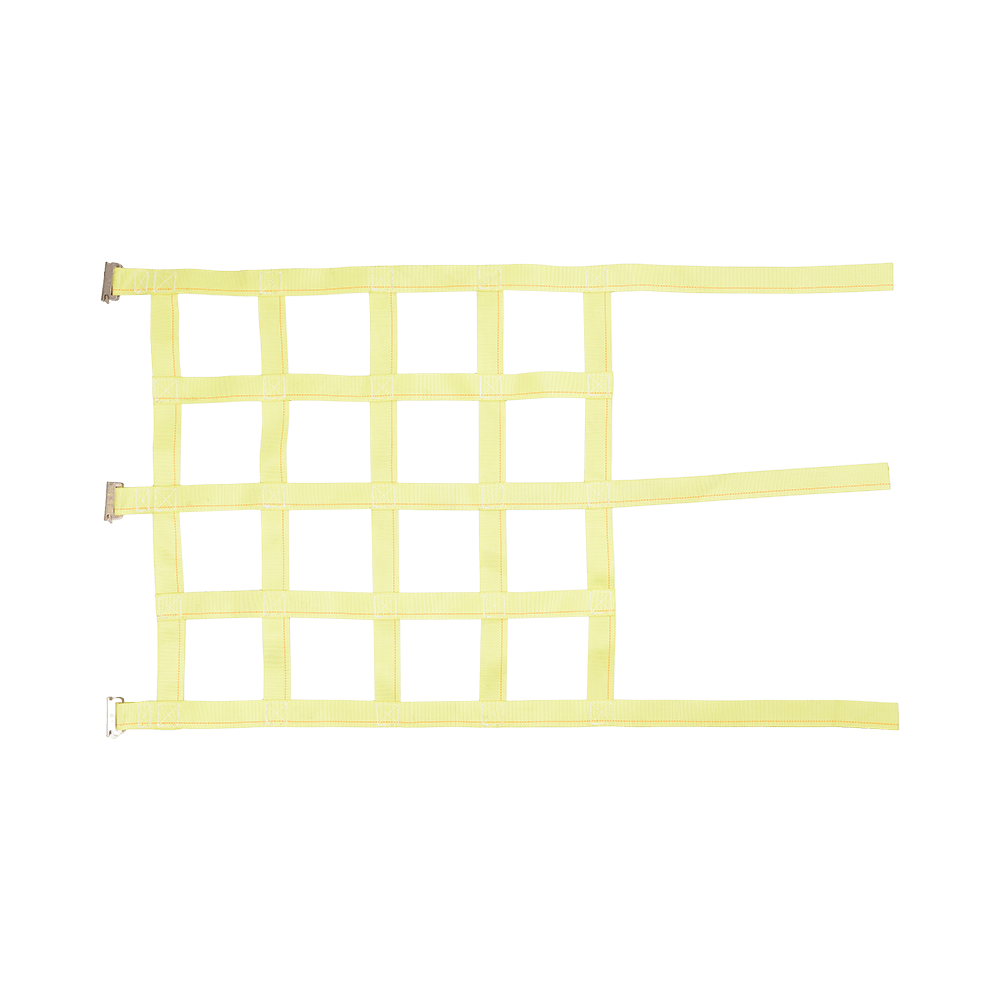
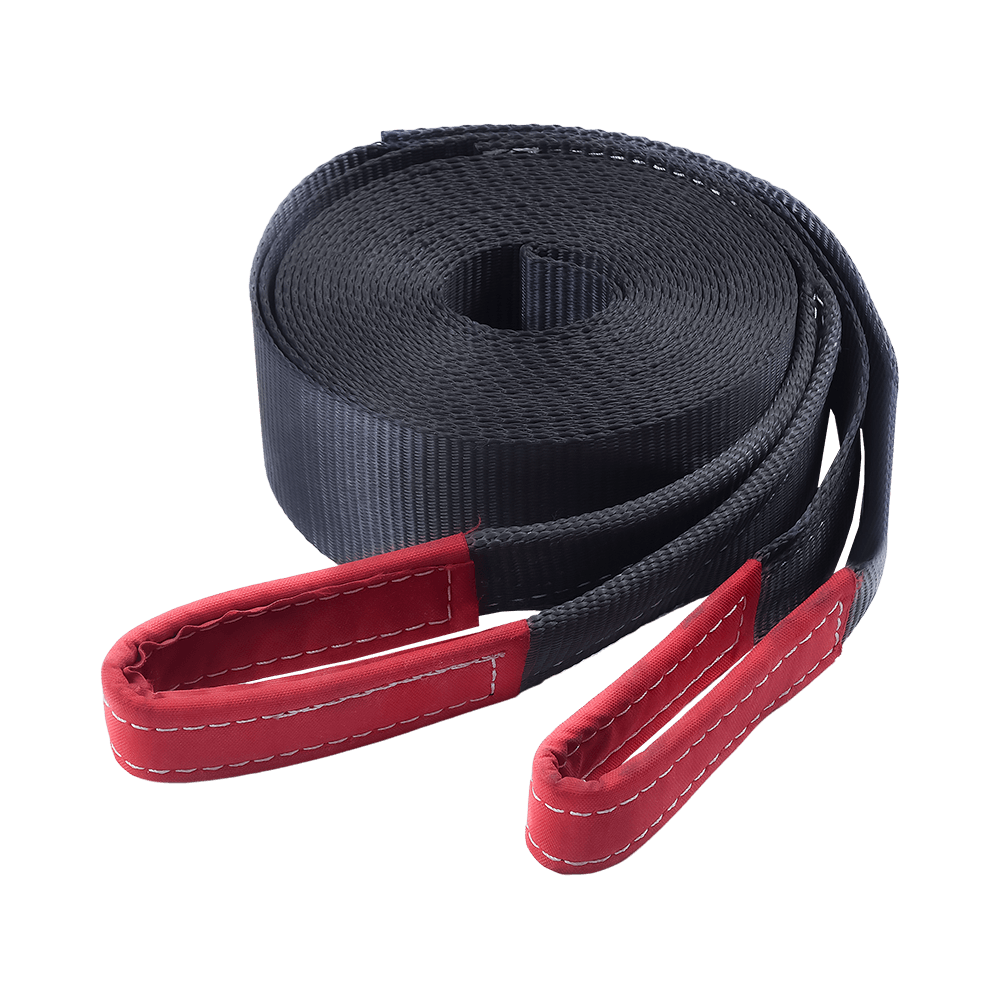
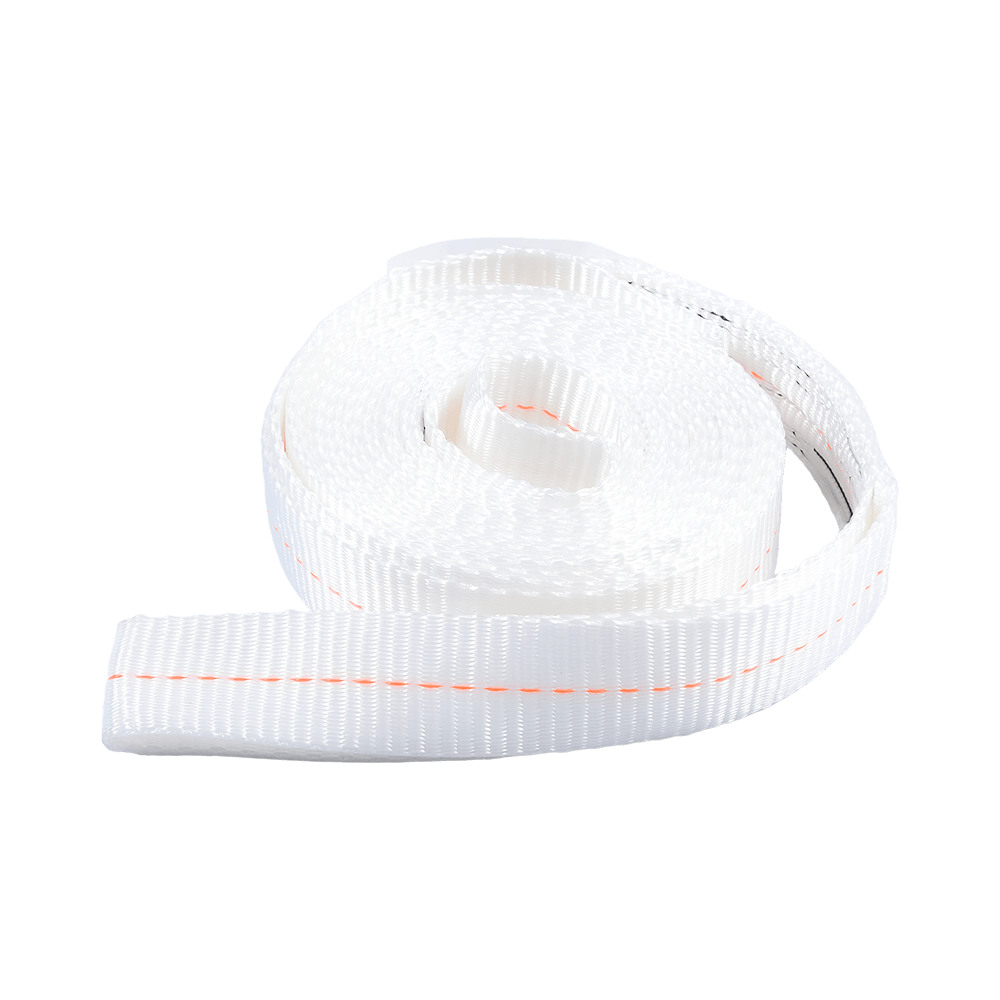
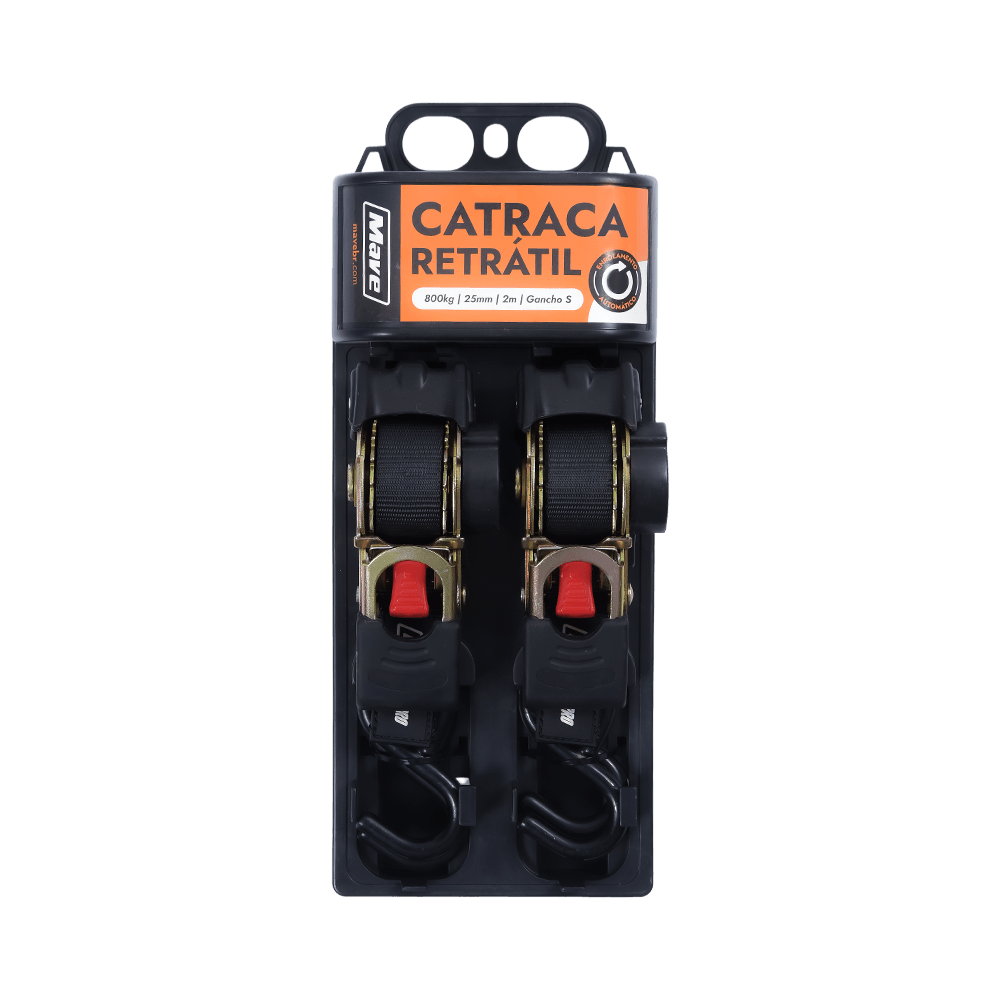


The company specialises in the field of logistics transportation,cargo control,lifting and hoisting products.


joe@forcerigging.com
+86-18650363763
No.469, Liansheng Road, Yinzhou District, Ningbo, Zhejiang Province, China.315111
Copyright © 2025 by Ningbo Force Auto Parts Co., Ltd. All Rights Reserved. China Ratchet Straps Manufacturers OEM/ODM Load Binding and Rigging Company


 English
 Español
 عربى
 中文简体