Ningbo Force Auto Parts Co., Ltd.
- joe@forcerigging.com
- +86-18650363763
Ningbo Force Auto Parts Co., Ltd.
A flatbed driver once asked why the 2-inch straps marked "10,000 lb" on his trailer could not be used to lift a 10,000 lb machine off the deck. Nothing was wrong with the straps. The problem was the word "strength" doing two different jobs: the number printed on the webbing comes from a pull test that ends in fracture, while the load a strap carries every day has to stay far below the point where the webbing stops recovering.
That gap has a name in materials engineering, and it is measured by two properties: yield strength and tensile strength. Knowing where each one sits on a stress-strain curve is what separates a safe lashing plan from a label that gets misread.
Content
Yield strength is the stress at which a material stops behaving elastically and begins to deform permanently. Below that point, a strap stretches under load and returns to its original length when the load is released. Above it, part of the stretch stays.
Tensile strength, more precisely ultimate tensile strength (UTS), is the highest stress the material reaches in a tensile test. Once the curve passes that peak, the specimen necks down and then fractures.
The practical rule: yield decides whether a part still fits and still holds tension, tensile decides whether it breaks, and the safety factor is the distance a designer keeps between the two.
A tensile test pulls a specimen at a controlled rate and records stress (force divided by the original cross-section) against strain (extension divided by original length). The curve has three recognisable stages.
Two conventions matter when you read supplier data. Metals without a sharp yield point, including most aluminium alloys and many steels, are assigned a 0.2% offset yield strength: the stress at which the curve has departed 0.2% strain from the elastic line. And the drop after the peak is partly geometric, because engineering stress is calculated on the original area even as the real area shrinks.
Designers keep service stress below yield for anything that must keep its shape: trailer frames, anchor brackets, E-track rails, hooks. A hook that has yielded once has changed geometry and an unknown load path, which is why deformation is treated as damage rather than normal wear.
Textiles behave differently. Polyester webbing has no clean yield point; yarns creep and stiffen under repeated loading, and suppliers publish breaking strength and elongation at lashing capacity instead of a yield figure. The principle still lands on the road: webbing run repeatedly beyond its elastic range grows longer, the ratchet pawl loses preload, and the driver has to stop and retension. That is yield strength showing up as a schedule problem instead of a broken part.
Ultimate tensile strength is a maximum, not an allowance. It marks the end of useful load carrying, and in ductile materials it arrives with visible warning: the strap elongates, paint cracks, a chain link stretches. In brittle materials such as some castings and hardened hardware, yield and tensile strength sit close together, so there is almost no warning at all, which is why those items carry wider safety factors and periodic inspection requirements.
Tensile data only travels reliably when the test method travels with it. Tensile testing of metals follows ASTM E8 or ISO 6892-1, while webbing is tested to the relevant product standard such as EN 12195-2 for lashing straps. Comparing a breaking strength quoted to one method with a rating derived from another is a common procurement error.
| Question | Yield strength | Tensile strength |
|---|---|---|
| What it measures | Stress at the onset of permanent deformation | Maximum stress recorded before fracture |
| Position on the curve | End of the elastic line | Peak of the curve, before necking |
| Typical relationship | Lower value in ductile materials | Higher value; the reserve between them is ductility |
| Failure if exceeded | Stretch, sag, lost preload, misalignment | Necking and eventual break |
| How it is used | Keeps parts in shape and lashings tensioned | Divided by a standard safety factor to set a rating |
| Where you see it | Brackets, rails, hooks, frame steel | Webbing, slings, chain and strap labels |
No product standard lets a user work at tensile strength. Each standard fixes a ratio between the breaking strength of the component and the rating printed on the label, and that ratio is where material data meets procurement.
For lashing straps under EN 12195-2, the marked lashing capacity (LC) may not exceed half the strap's breaking strength, and the label also carries the standard tension force (STF) that hand tensioning should not exceed. A 50 mm polyester strap marked LC 2,500 daN therefore has a breaking strength of at least 5,000 daN. In North America, WSTDA guidance works with a 3:1 design factor, which is why a 2-inch strap advertised at 10,000 lb breaking strength is normally rated around 3,333 lb working load.
On the manufacturing side, high-tenacity polyester webbing is chosen precisely because it delivers more breaking strength per gram of yarn, which keeps a strap light while leaving headroom above its lashing capacity. A heavy-duty 3-inch strap in that construction is a good example of a product where the label, the test report and the standard should all agree.
 3-Inch Polyester Ratchet Tie-Down Strap with Double J-HooksA 3-inch high-tenacity polyester strap with double J-hooks, 27 ft length, 5,400 lb working load limit, and 16,200 lb breaking strength for heavy cargo securing.View Product →
A lashing assembly is only as strong as its load path. Force enters through the webbing or chain, passes through the buckle, hook or shackle, and leaves through the anchor point on the vehicle or the crane hook. Every interface redistributes stress, and sharp edges concentrate it, which is a daily consideration in trucking and transportation work.
Webbing is the most sensitive element in that chain. Yarns carry load along their length, so a cut, an abrasion patch or a UV-degraded section reduces the effective cross-section and with it the margin above the working rating. Edge and corner protectors exist for the same reason: they turn a line contact into an area contact and stop webbing from being cut below its rated strength.
Lifting hardware follows the same logic with wider ratios. Polyester flat and round slings under EN 1492-1 are rated at 7:1, so a 5-tonne working load limit is backed by roughly 35 tonnes of breaking strength. Flat webbing slings are the most common choice for general rigging because they spread load over a wide contact area and give clear warning before failure.
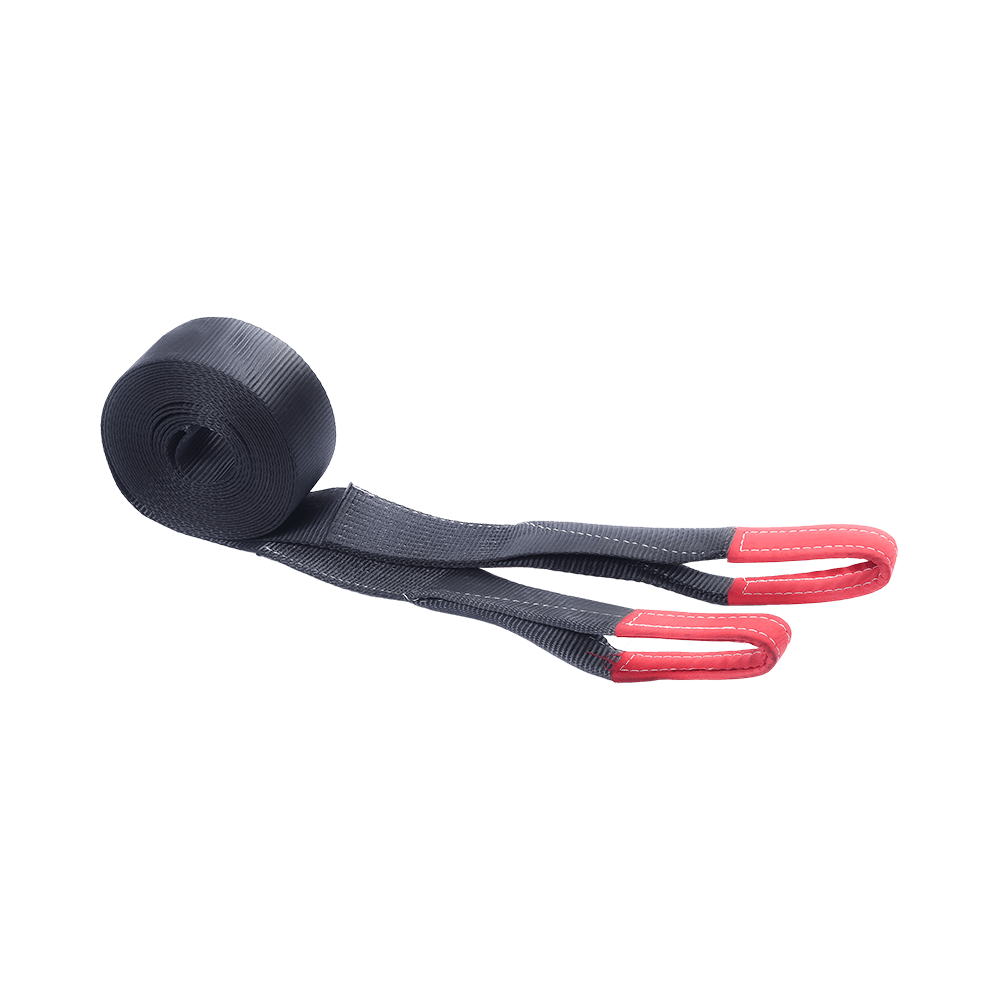 High-Tenacity Polyester Flat Webbing Lifting SlingA 6 m, 75 mm black endless flat sling with an 8 T working load limit and 13.7 T breaking strength for heavy industrial lifting.View Product →
Chain follows a similar but tighter pattern. Grade 80 chain slings under EN 818-4 are rated at 4:1 and are proof load tested before delivery. Because a forged link shows very little plastic warning before fracture, chain users rely on inspection intervals, discard criteria and traceability rather than on visual stretch.
 Grade 80 Alloy Steel Hoisting and Tie-Down ChainA Grade 80 alloy steel chain with clevis grab hook, offered in multiple sizes for towing, rigging, and load securing in industrial and agricultural work.View Product →
Tensioning technique matters as much as material data. A strap tightened past its STF wears faster and loses preload sooner, which is covered in our guide to using ratchet straps correctly.
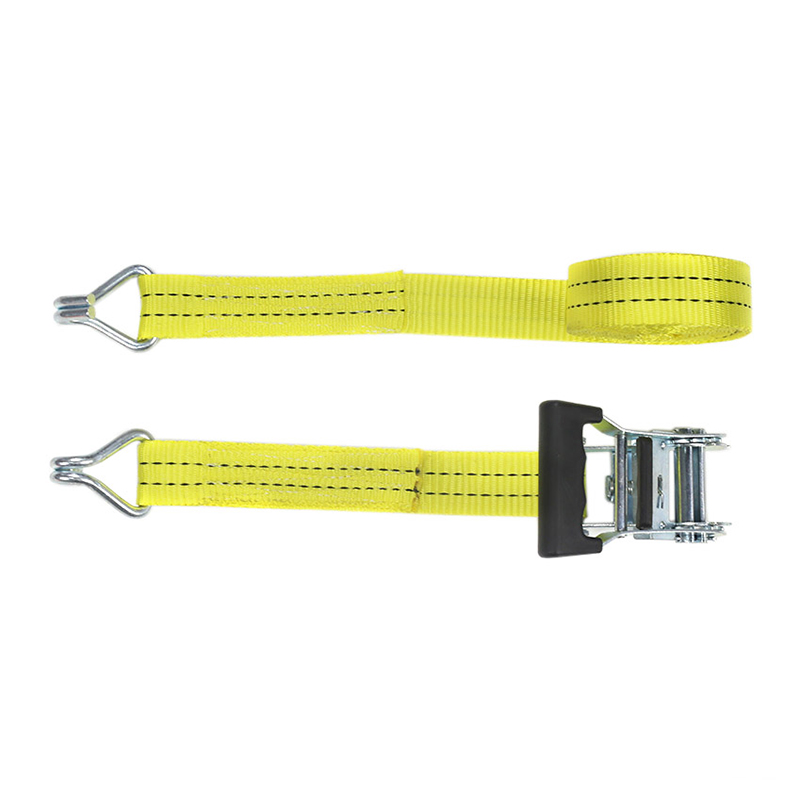
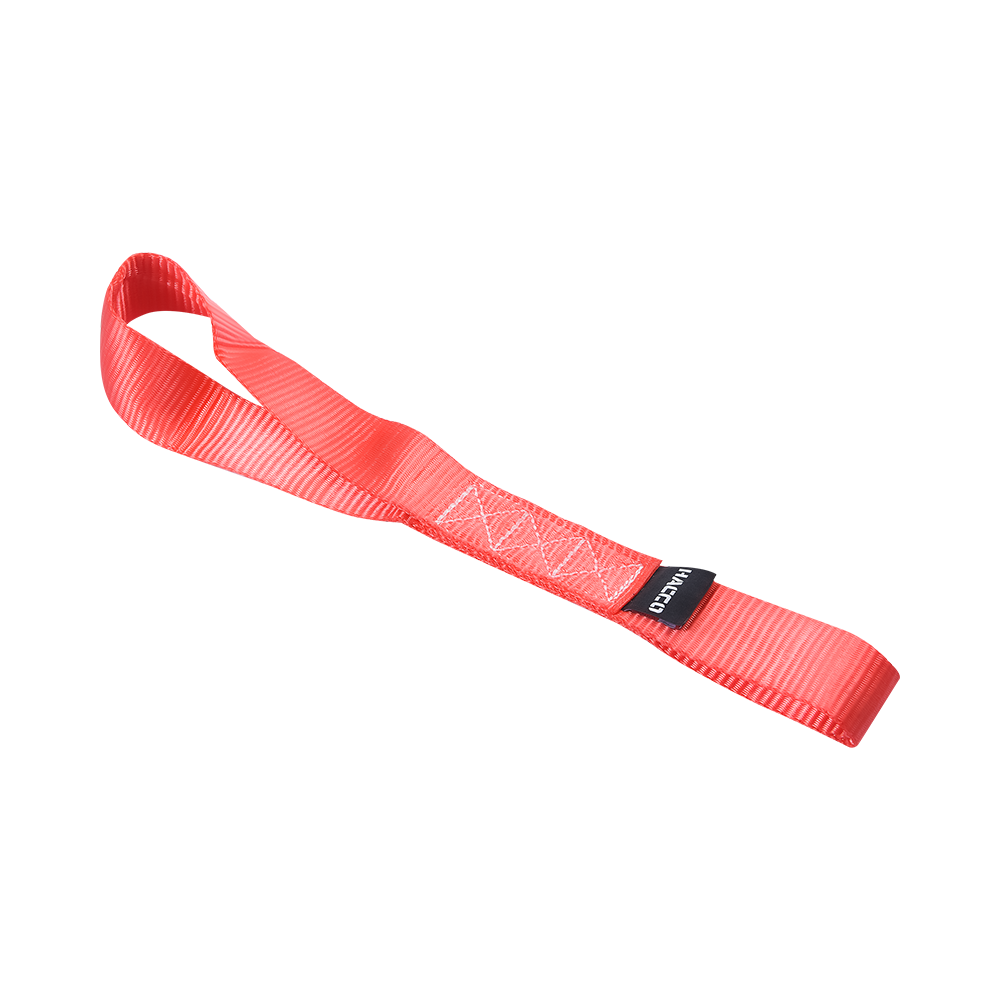
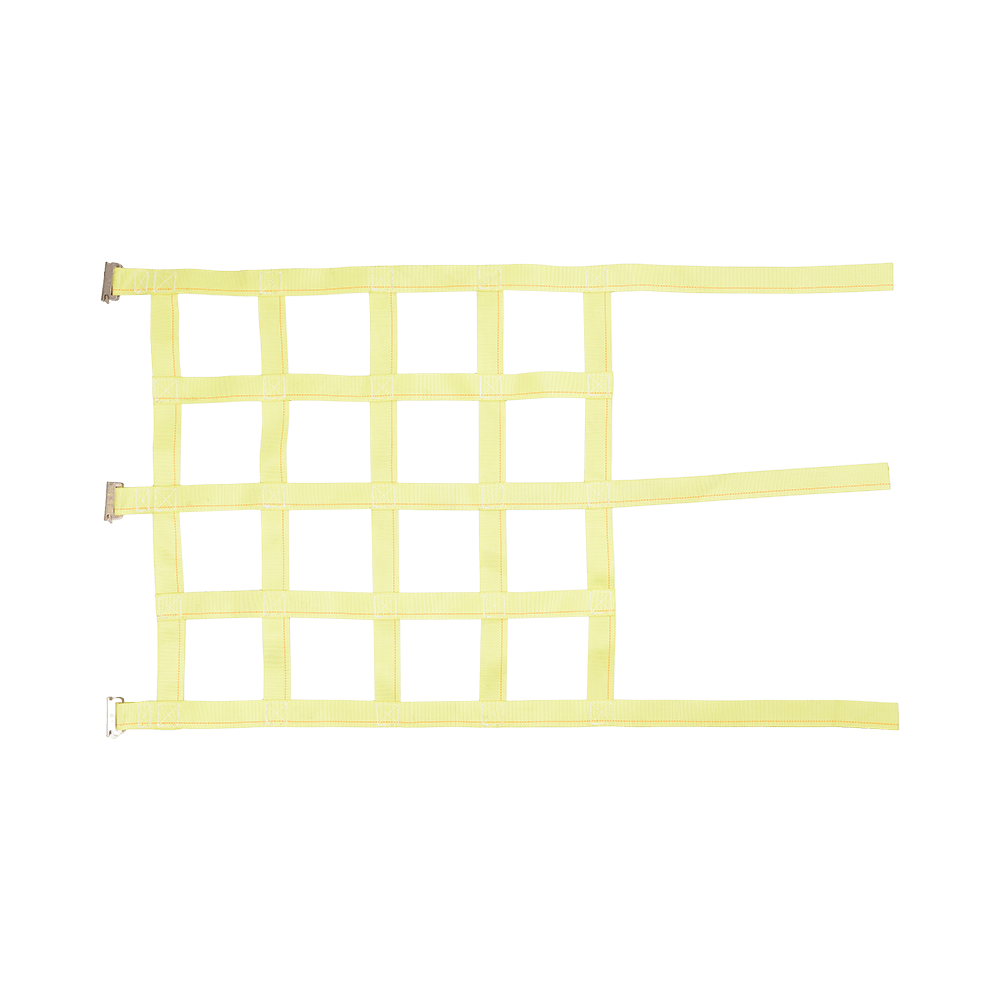
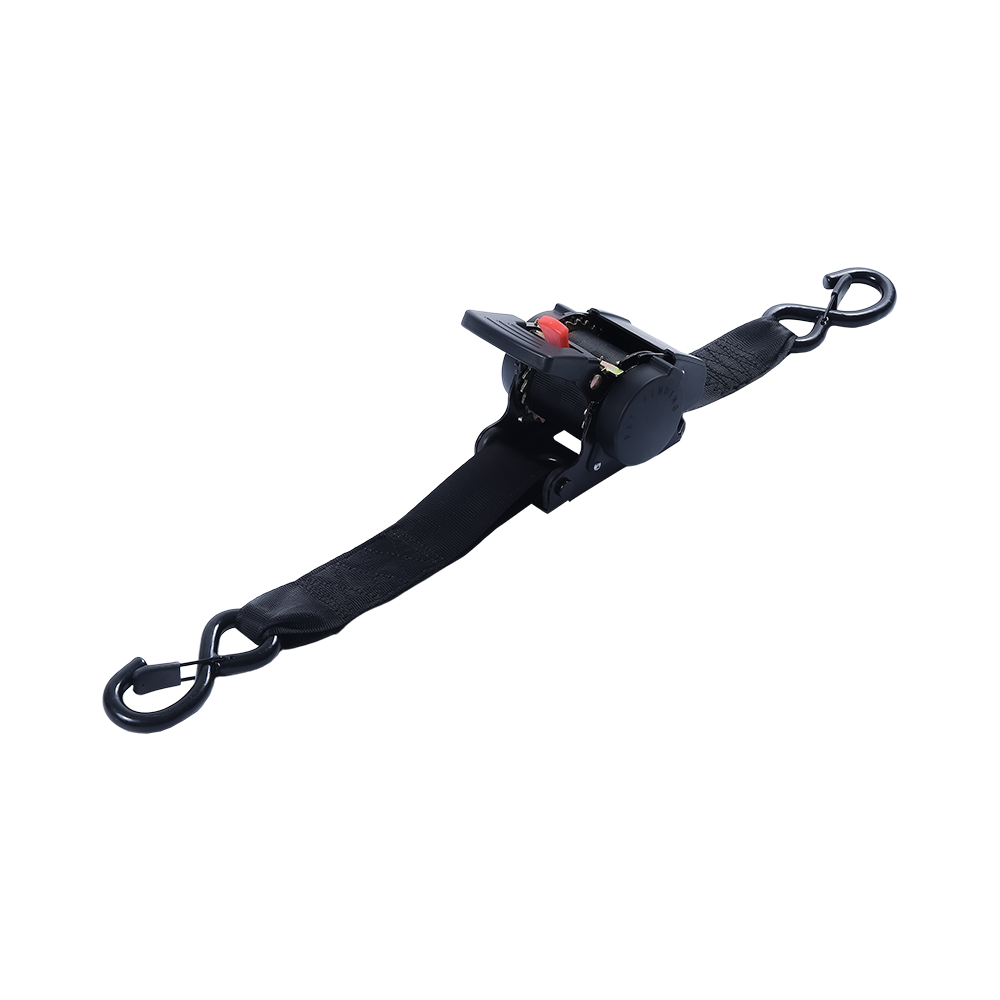

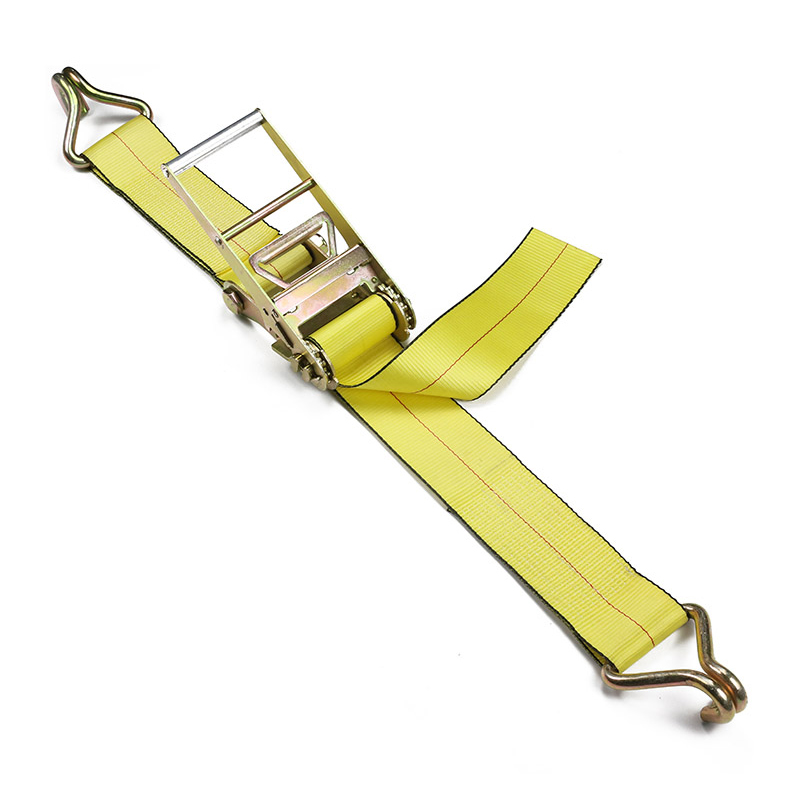

The company specialises in the field of logistics transportation,cargo control,lifting and hoisting products.


joe@forcerigging.com
+86-18650363763
No.469, Liansheng Road, Yinzhou District, Ningbo, Zhejiang Province, China.315111
Copyright © 2025 by Ningbo Force Auto Parts Co., Ltd. All Rights Reserved. China Ratchet Straps Manufacturers OEM/ODM Load Binding and Rigging Company


 English
 Español
 عربى
 中文简体