Ningbo Force Auto Parts Co., Ltd.
- joe@forcerigging.com
- +86-18650363763
Ningbo Force Auto Parts Co., Ltd.
Two 25 mm cam buckle straps hooked onto the handlebars will hold a 120 kg dirt bike on a flatbed all day. Fit the same pair to a 280 kg touring bike, drive 600 km at highway speed, and the first fuel stop will show both straps hanging slack. Motorbike straps are not one product: the buckle is only the first of several decisions that decide whether the bike arrives upright or leaning against the trailer rail.
Conclusion first. Build a four-point system, keep the front wheel in a chock, use 25 mm webbing for machines up to roughly 200 kg and 35 mm or wider above that, choose cam buckles for light bikes on short trips and ratchets for anything that spends hours at highway speed, and fit soft loops wherever a hook would touch aluminium or painted plastic. Everything below explains why those choices matter, where motorbike straps actually fail in service, and what a buyer should verify before ordering them by the thousand.
Content
A cam buckle locks webbing with a spring-loaded toothed cam: you pull the loose end by hand and the teeth bite. A ratchet uses a geared lever and a pawl, which multiplies hand force by roughly three times and holds tension with almost no effort. That single mechanical difference explains nearly every practical advantage and drawback of the two families.
On a motorcycle, the failure that matters is rarely a strap that breaks. It is a strap that over-compresses a fork and forces oil past a seal, or a strap that goes slack because the suspension settled after the first pothole. Cam buckles are gentler on the second problem; ratchets are better at holding what you set. Choose by the weight of the machine and the length of the journey.
| Feature | Cam buckle strap | Ratchet strap |
|---|---|---|
| Tensioning method | Direct pull by hand | Geared lever, about 3:1 advantage |
| Typical lashing capacity on 25 mm webbing | 150 to 250 daN | 250 to 400 daN |
| Setup and release speed | Fast, usually one hand | Slower, two hands |
| Risk of over-compressing the fork | Low | Higher when used carelessly |
| Holding tension over long distances | Adequate when re-checked | Best |
| Typical use | Dirt bikes, scooters, short trips | Touring bikes, long haul, vibration-heavy routes |
For light machines the cam buckle route covers most dirt bike, scooter and quad applications, which is why the 25 mm cam buckle design remains the volume seller in motorcycle tie-downs. The webbing grade matters as much as the buckle: high-tenacity polyester holds its length better than economy yarn and resists UV ageing on an open trailer.
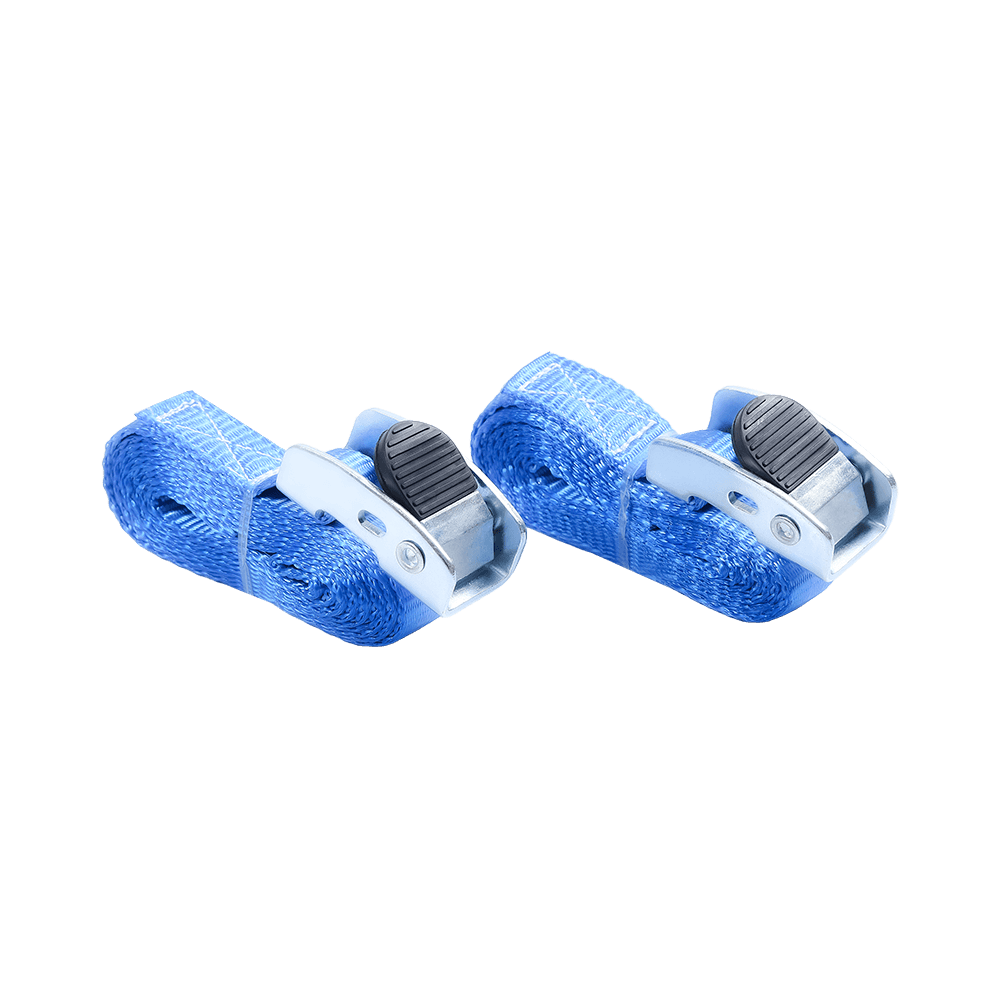
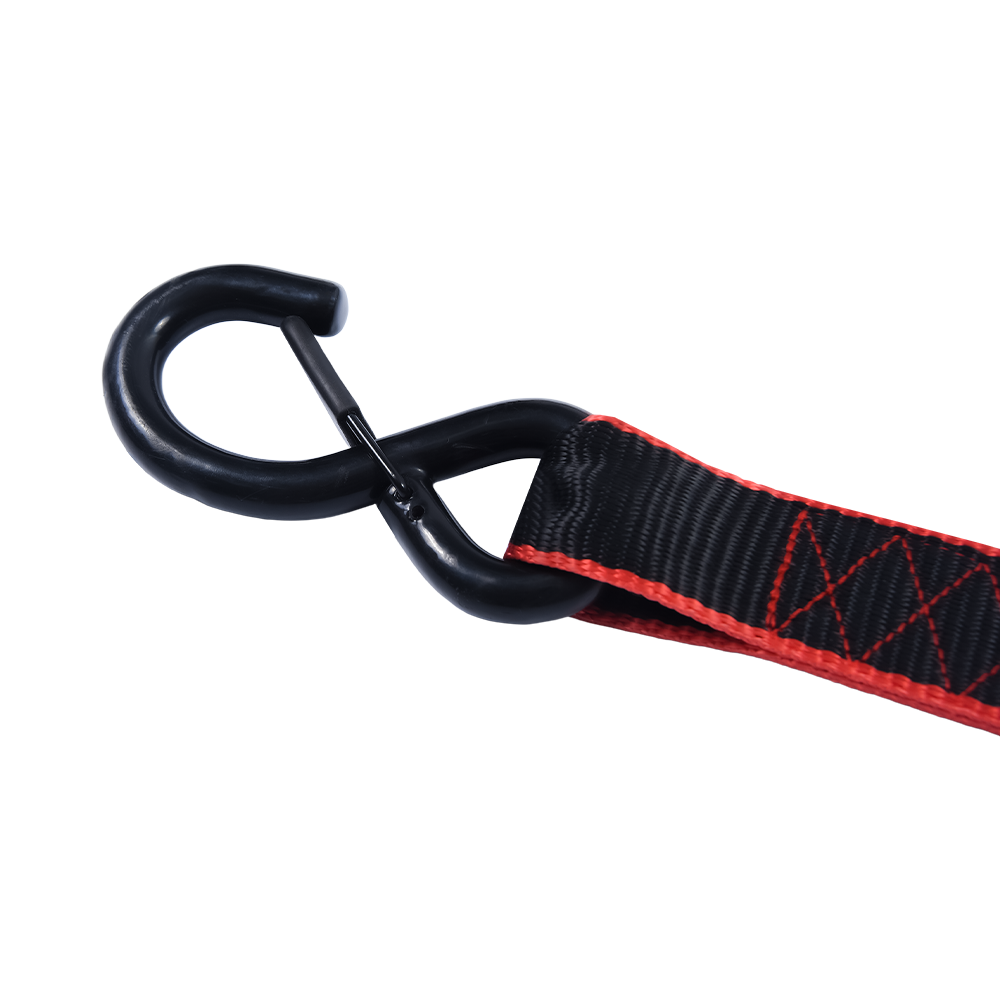 Customizable Durable Motorcycle Cam Buckle Tie Down Strap with Safety S Hook*Contact us to learn more about our bespoke offerings.View Product →
Tie-downs made to EN 12195-2 carry a lashing capacity in decanewtons and are tested to at least twice that figure. North American products usually print a working load limit set at one third of the break strength, so the same physical strap can appear as 250 daN in one catalogue and 750 lb in another. Neither convention is wrong, but they are not interchangeable and should never be mixed inside a single load.
Adding up capacity is not enough, because geometry steals part of it. A strap pulling at 45 degrees to the deck delivers only about 70 percent of its tension in the direction that resists movement. Four straps at 400 daN sound generous against a 250 kg bike, but only the two opposing any given direction do real work, and each loses a share to the angle.
Polyester webbing also elongates under load while the suspension compresses underneath it. Plan on stopping after the first 10 to 20 km to re-tension, whatever the buckle type.
Two straps on the handlebars hold a bike down; they do not hold it back. A hard brake application lets the rear step sideways and the whole load falls on the front chock. Four points arranged front and rear remove that single failure path.
Fork compression is the point riders argue about most. The purpose is to stop the bike bouncing, not to clamp it rigid: a common working guideline is to pull the front suspension down by about one third of its travel, which keeps the springs working without bottoming them out. Where a heavier machine needs more holding force than a cam buckle can deliver, a short 25 mm ratchet strap on the front pair is the usual compromise.
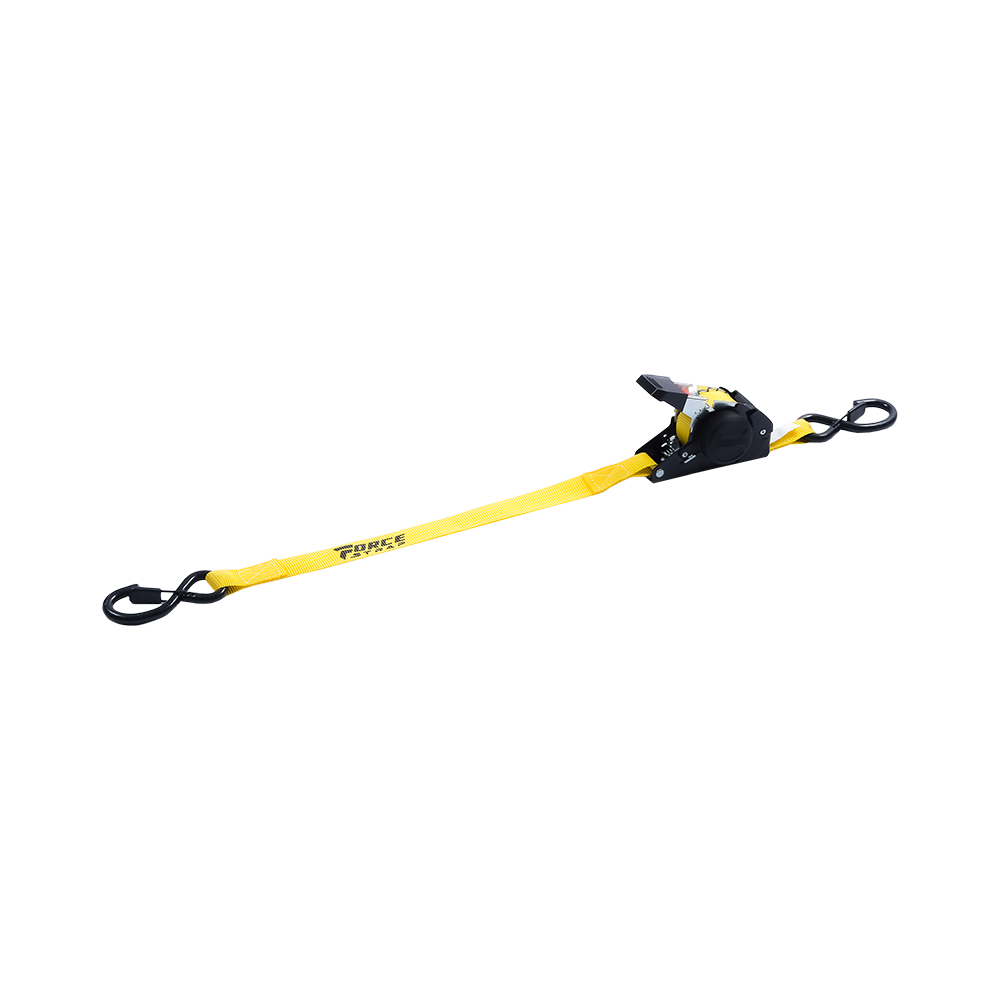
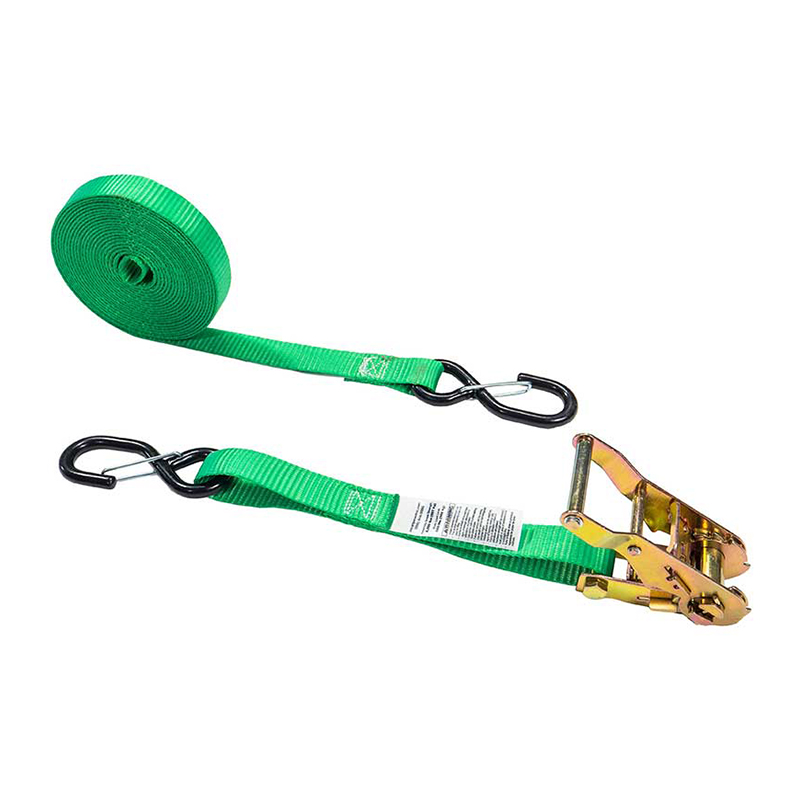
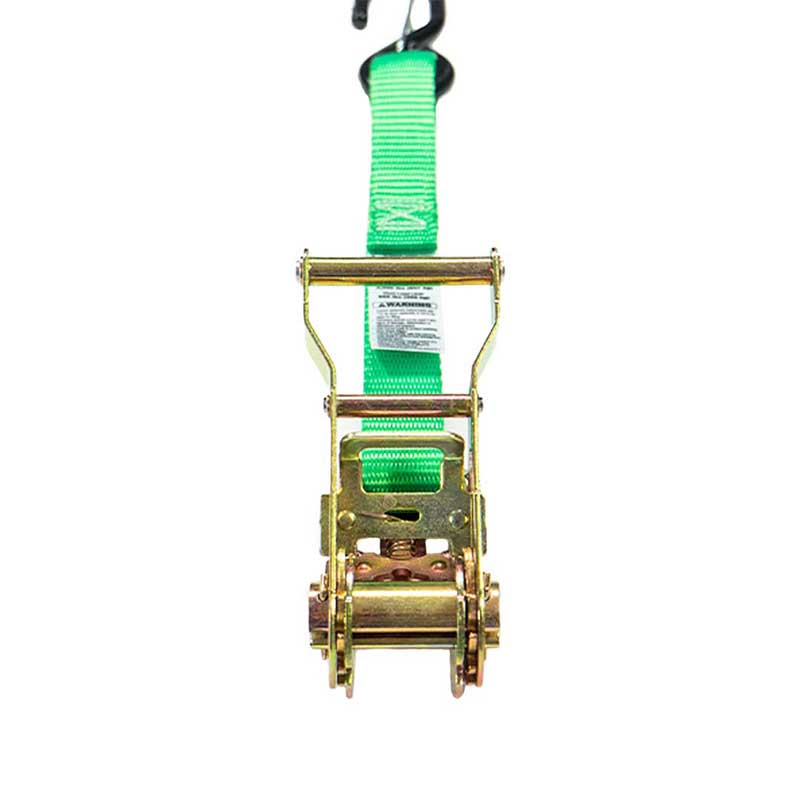 1''X 6' High Tenacity Motorcycle Ratchet Tie Down Strap With 12" Sewn LoopProduct Weight: 0.7kgView Product →
Most motorcycle damage caused by tie-downs is not structural. It is a chipped paint edge, a scuffed fork leg or a cracked fairing where a bare hook has bitten into something it should never have touched.
Soft loops cost very little and remove most of the risk of hook slip on bikes with narrow frames, which is why they belong in every trailer kit alongside the straps themselves.
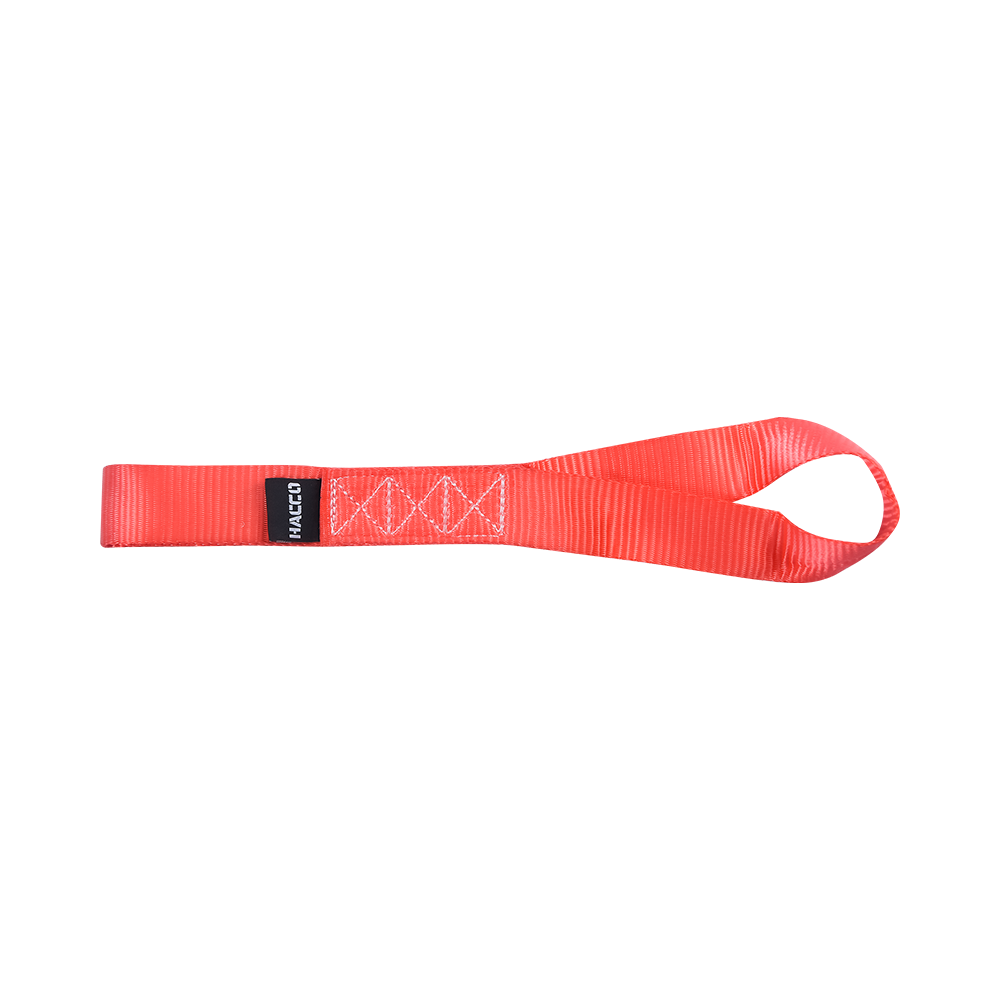 Cargo Soft Quick Anchor Loop Motorcycle Soft Loop Tie Down Straps*Contact us to learn more about our bespoke offerings.View Product →
For importers and distributors, the specification conversation usually starts with price per piece and ends with the four items that actually decide whether the product survives a season in the field.
Ask for 100 percent high-tenacity polyester with UV stabiliser rather than a polypropylene blend, and confirm the width tolerance on the roll. On the hardware side, ratchet buckles should be load tested as an assembly, not just as a casting, and plating thickness determines how the buckle looks after a winter of road salt.
A box-X stitch pattern with a defined stitch count and no skipped stitches is the cheapest insurance in the whole product. Equally important is the sewn-in label: lashing capacity, the standard the strap was made to, and a batch code that can be traced back to a production run.
European buyers expect EN 12195-2 markings, Australian buyers work to AS/NZS 4380, and North American catalogues generally quote a working load limit rather than a lashing capacity. Custom length, webbing colour and printed logo are routine at volume, and the same webbing specification carries across trucking and transportation applications, from motorcycle kits to flatbed load securing.
If you are still weighing buckle types for a mixed programme, a short read on what ratchet and cam buckle tie-down straps are and how they work is a useful two-minute refresher before the next specification meeting.
For most bikes, 25 mm (1 inch) webbing is enough. Move up to 35 mm or 50 mm for heavy touring machines or multi-purpose use. Length matters more than width: 1.8 to 3 m (6 to 10 ft) reaches the deck anchors on a flatbed, while 1.5 m suits a pickup bed or wheel chock.
Yes, for light and medium bikes held at four points. A 25 mm cam buckle strap typically carries a lashing capacity in the 150 to 250 daN band and is easier on fork seals than a ratchet, but it needs re-tensioning after the first few kilometres of travel.
Four is the working standard: two front straps angled forward and out, two rear straps angled backward and out. Two straps are acceptable only for a short, low-speed move with the front wheel locked in a chock.
Front: handlebar ends, triple clamp or lower fork legs. Rear: frame rails or swingarm. Avoid plastics, mudguards, brake lines and the exhaust, and never let one strap or one hook carry the whole load on its own.
Compress the front suspension by roughly one third of its travel. The bike should not be able to bounce, and the forks should not be bottomed out. Stop after 10 to 20 km and check tension again once the webbing has settled.
They can. Over-tightened ratchets can push oil past fork seals, and bare hooks chip paint on fork legs and frames. Soft loops at the contact points and a sensible compression target remove most of that risk.
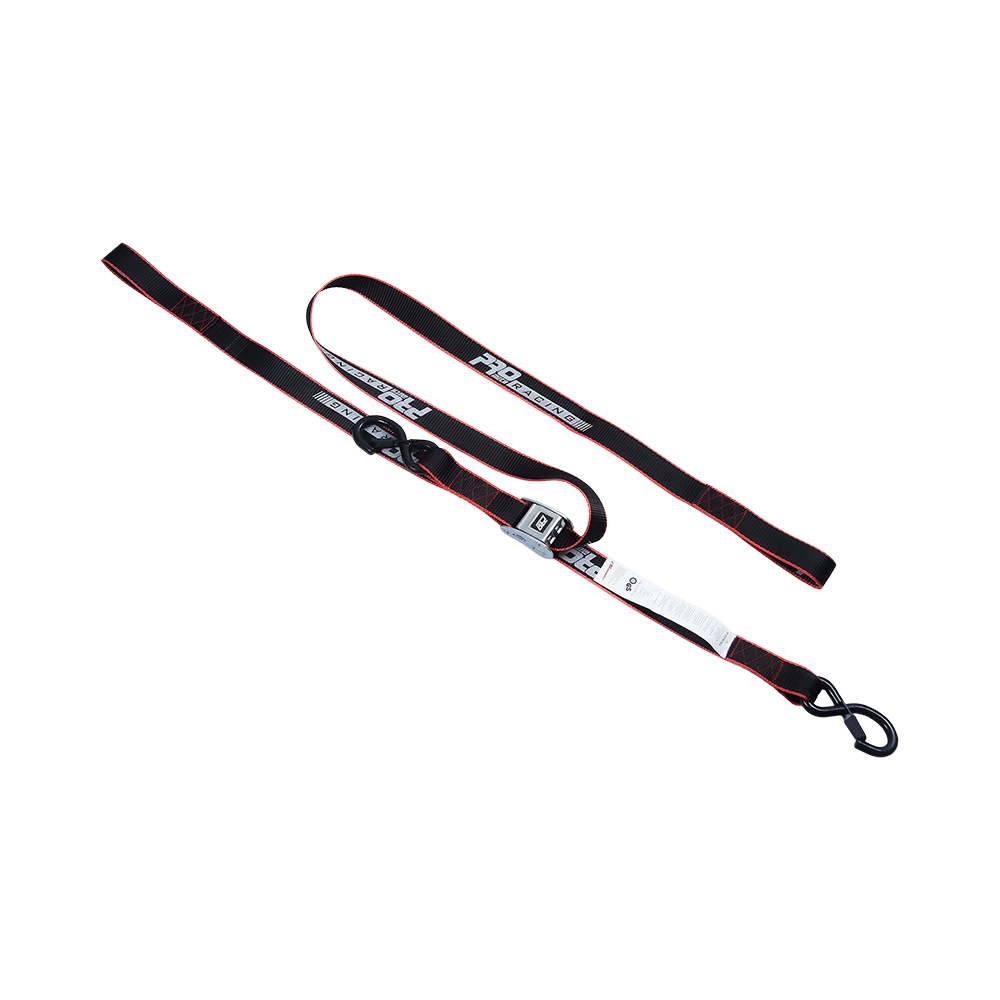
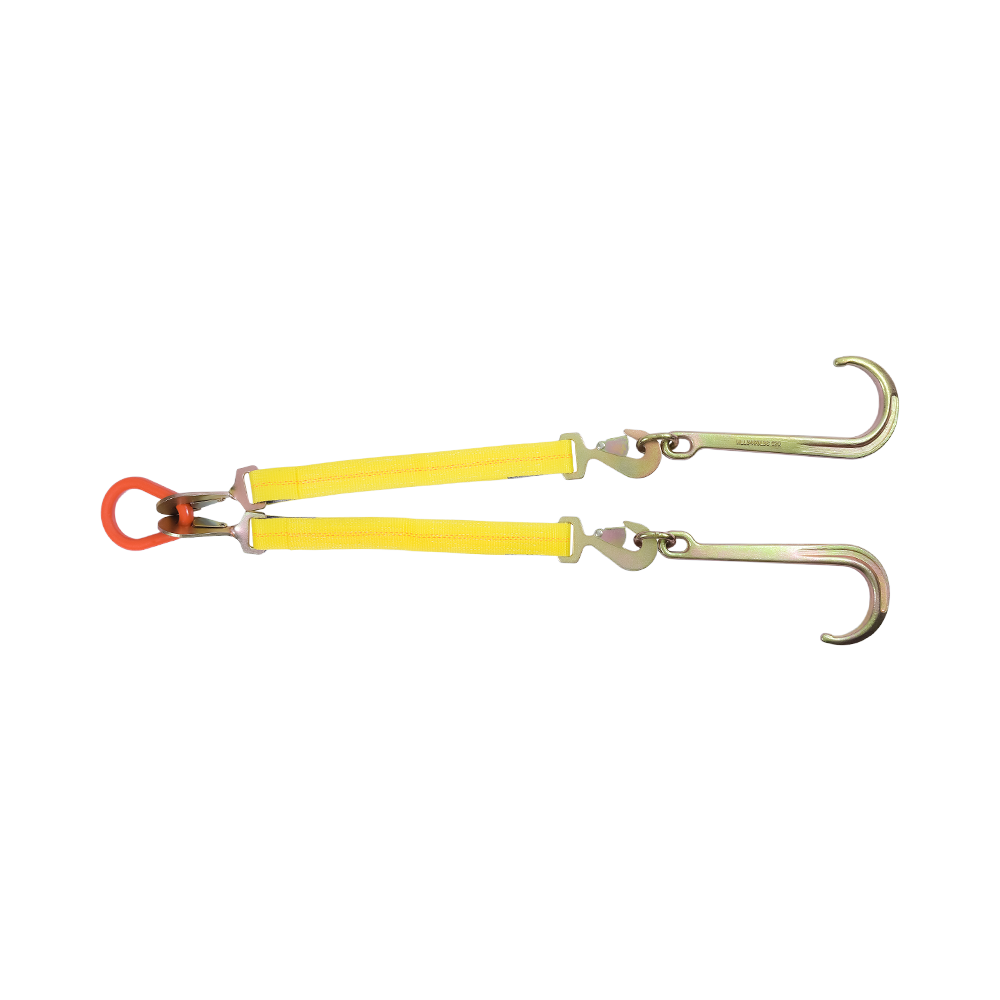

The company specialises in the field of logistics transportation,cargo control,lifting and hoisting products.


joe@forcerigging.com
+86-18650363763
No.469, Liansheng Road, Yinzhou District, Ningbo, Zhejiang Province, China.315111
Copyright © 2025 by Ningbo Force Auto Parts Co., Ltd. All Rights Reserved. China Ratchet Straps Manufacturers OEM/ODM Load Binding and Rigging Company


 English
 Español
 عربى
عربى 中文简体
中文简体