Ningbo Force Auto Parts Co., Ltd.
- joe@forcerigging.com
- +86-18650363763
Ningbo Force Auto Parts Co., Ltd.
A flatbed is loaded with a 20,000 lb skid. In the United States, the cargo securement rules ask for an aggregate working load limit of at least half that weight, which is 10,000 lb. If each 2 in ratchet strap is rated 3,333 lb, three straps add up to 9,999 lb, and that is not enough. The fourth strap is the one that puts the truck in compliance, and the number doing the deciding is the working load limit, not the 10,000 lb printed in large type on the webbing.
Working load limit (WLL) is the maximum load a strap, sling, chain, shackle, hook or anchor point is rated to carry in normal service. It is always smaller than the load that would break the product, and it is the only figure worth using when you plan a tie-down or a lift.
Content
A working load limit is a rated value, not a test result from the item in your hand. The manufacturer establishes it by testing the complete assembly, webbing plus stitching plus buckle plus end fittings, then divides the result by a safety factor and prints the answer on a label. It assumes four conditions: the product is new and undamaged, the load is a straight static pull, the temperature is normal for the material, and the equipment is used the way the standard expects.
| Term | What it tells you | Where you meet it |
|---|---|---|
| Working load limit (WLL) | The maximum rated load in normal service, with the safety factor already applied. This is the working figure. | Sling tags, chain, shackles, hooks, cargo tiedowns |
| Breaking strength or minimum breaking load | The load at which the product failed in a destructive test. Never a working figure. | Catalogues, test reports, marketing headlines |
| Lashing capacity (LC) | The EN 12195-2 rating for cargo lashings, linked to a standard hand force on the buckle handle. | European ratchet straps and load restraint systems |
| Safe working load (SWL) | An older term still found in legacy paperwork. The industry has largely moved to WLL. | Crane and rigging documents, old drawings |
| Safety factor | Breaking strength divided by WLL: about 2:1 for EN lashings, 4:1 for chain slings, 5:1 to 7:1 for synthetic slings. | Standards, inspection records, purchase specifications |
Every part of a system has its own WLL, and the assembly is limited by the lowest one. A 10,000 lb hook on a 3,333 lb strap does not create a 10,000 lb system; it creates a 3,333 lb system with an expensive hook.
The relationship is a division: WLL equals minimum breaking strength divided by the safety factor required by the standard the product is built to. The factor is not the same everywhere, because the consequences of failure are not the same everywhere. Lifting gear is derated heavily because a person may stand under the load. Cargo lashings carry a smaller factor because the load stays on the deck, but they are expected to absorb vibration and braking forces over thousands of miles.
A larger safety factor does not mean a stronger product. A 5 t chain sling with a 4:1 factor and a 5 t webbing sling with a 7:1 factor are both rated 5 t; the webbing simply starts from a higher breaking strength to get there. What the factor really measures is the reserve left for wear, edge cutting, ultraviolet exposure, dynamic loads and the inspection interval between checks.
WLL is established by testing the finished assembly, not the parts in isolation. A strap advertised with a 10,000 lb breaking strength is not simply webbing rated at 10,000 lb; it is webbing, thread, stitch pattern, buckle and hooks tested together, because an assembly fails wherever the load path is weakest.
Marking practices differ by market. Webbing slings built to EN 1492 carry a label with the WLL and a color code: 1 t purple, 2 t green, 3 t yellow, 5 t red, 8 t blue, 10 t orange. Ratchet straps built to EN 12195-2 show the LC, and that LC assumes a standard hand force of roughly 50 daN on the handle, so a cheater bar or two people pulling on one buckle pushes the strap past its rating. Chain is rated by grade and size together; the default table in 49 CFR 393.108 lists 3/8 in grade 70 transport chain at 6,600 lb when no manufacturer marking is available.
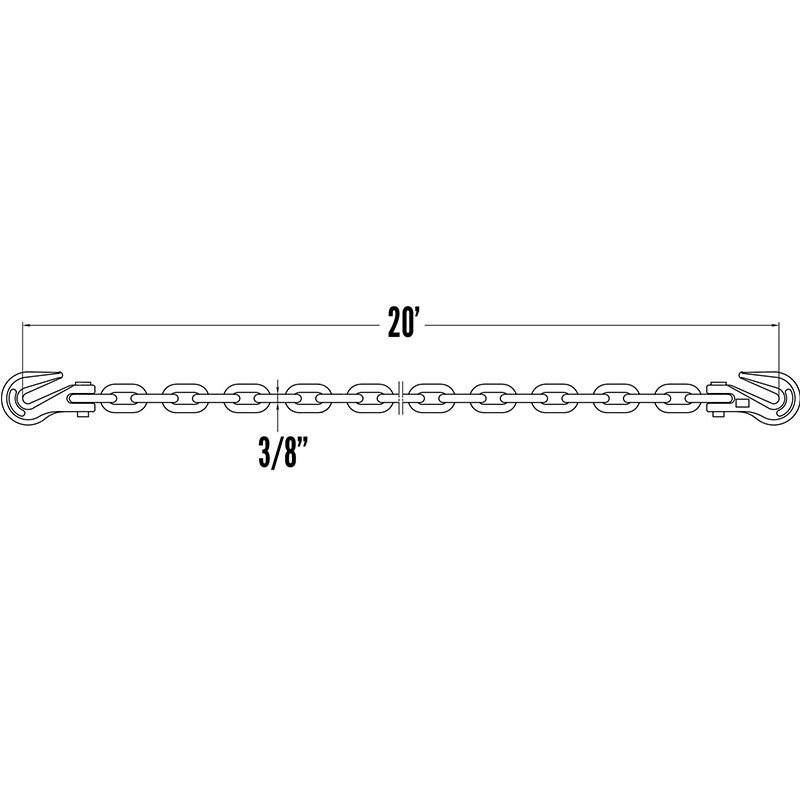 *Contact us to learn more about our bespoke offerings.View Product →
On the road, the working load limit becomes a number on a scale. Under 49 CFR 393.106(d), the aggregate WLL of all tiedowns must be at least 50 percent of the cargo weight, and 100 percent for commodities such as logs, dressed lumber, metal coils, intermodal containers, vehicles, large boulders and concrete pipe.
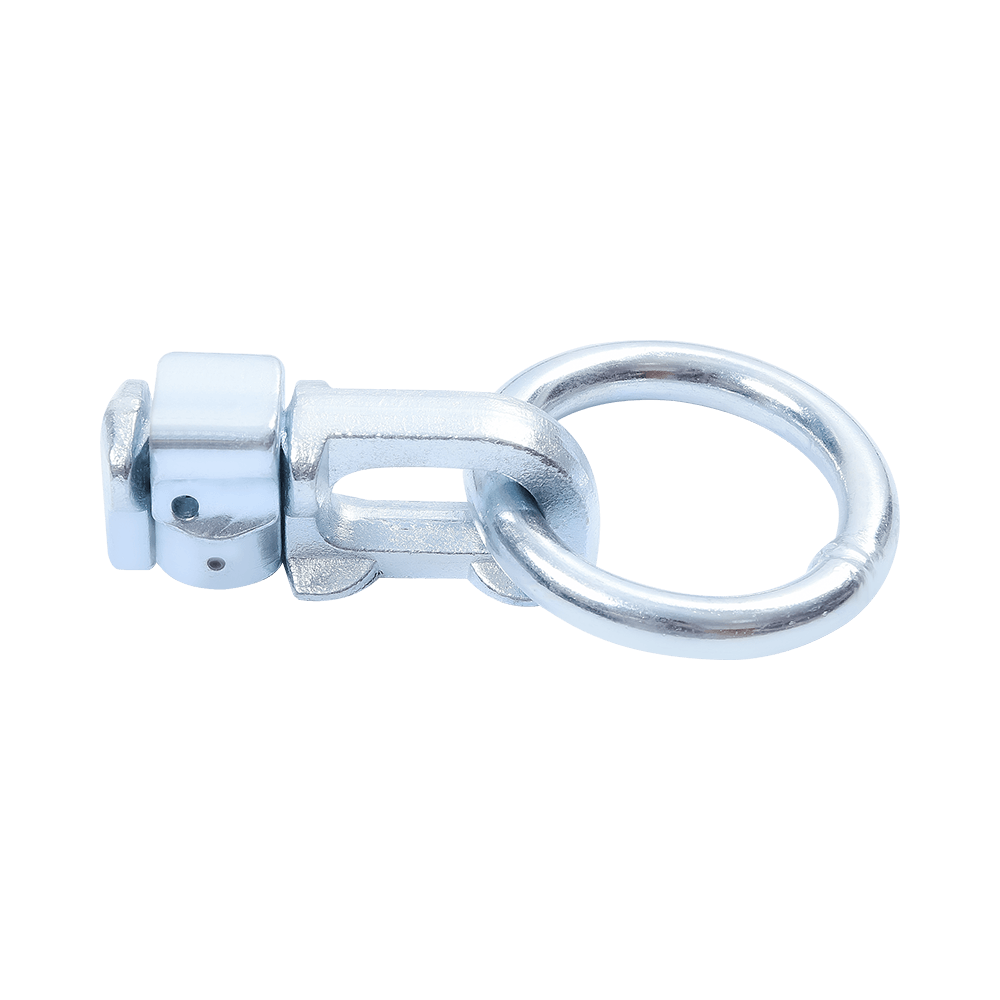
Run the arithmetic before loading. For a 20,000 lb load, the 50 percent rule asks for 10,000 lb of aggregate WLL. Two straps rated 3,333 lb are not close; three reach 9,999 lb, one pound short; four comfortably pass. The math changes again when the anchor points on the trailer are weaker than the straps, because E-track fittings, L-track studs and weld-on D-rings each carry their own rating, and the lowest number in the chain sets the system.
Edge protection belongs in the same calculation. Webbing that crosses a sharp steel corner can be cut part way through during a single trip, and a plastic, rubber or steel corner protector is far cheaper than the strap it saves. That is a routine consideration in trucking and transportation securement work, where the same straps are re-used daily.
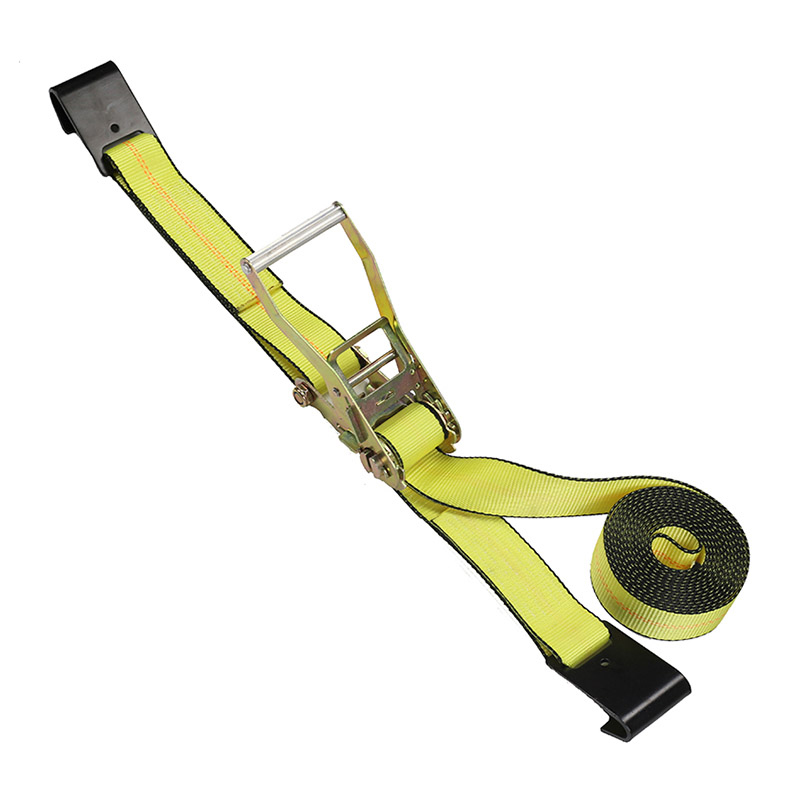
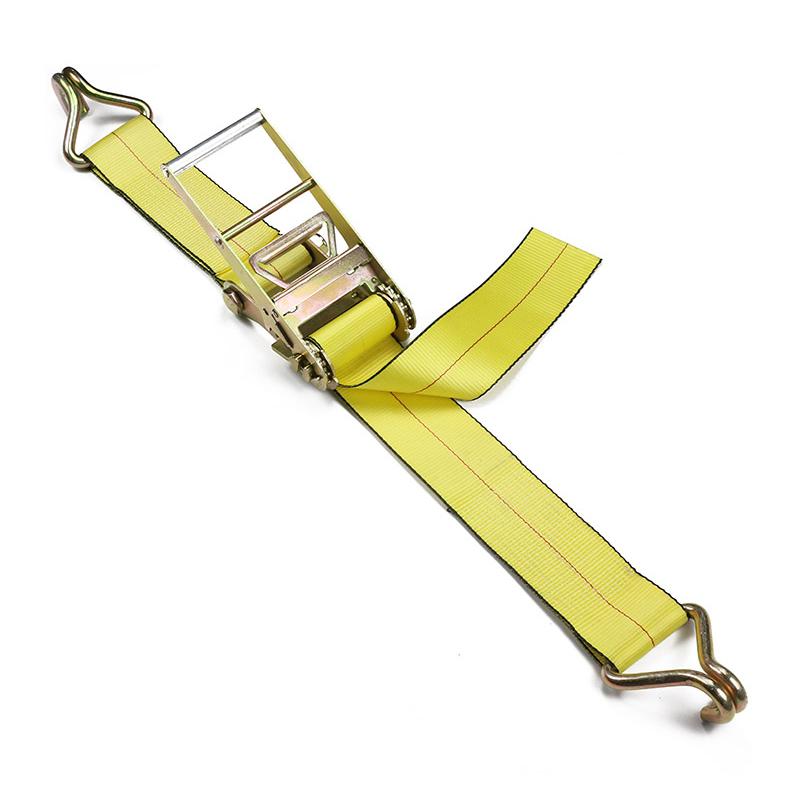
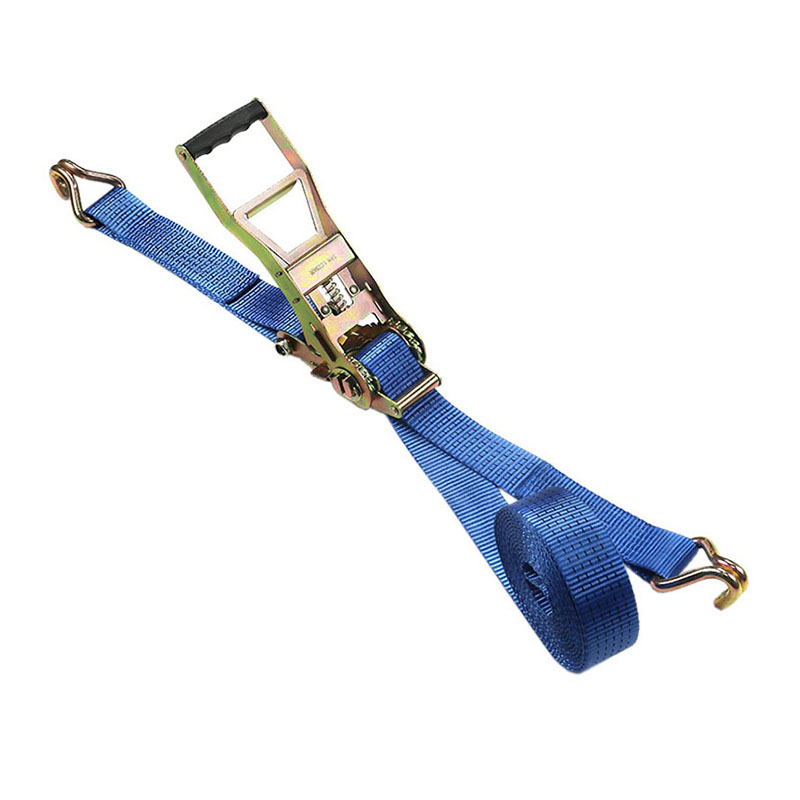
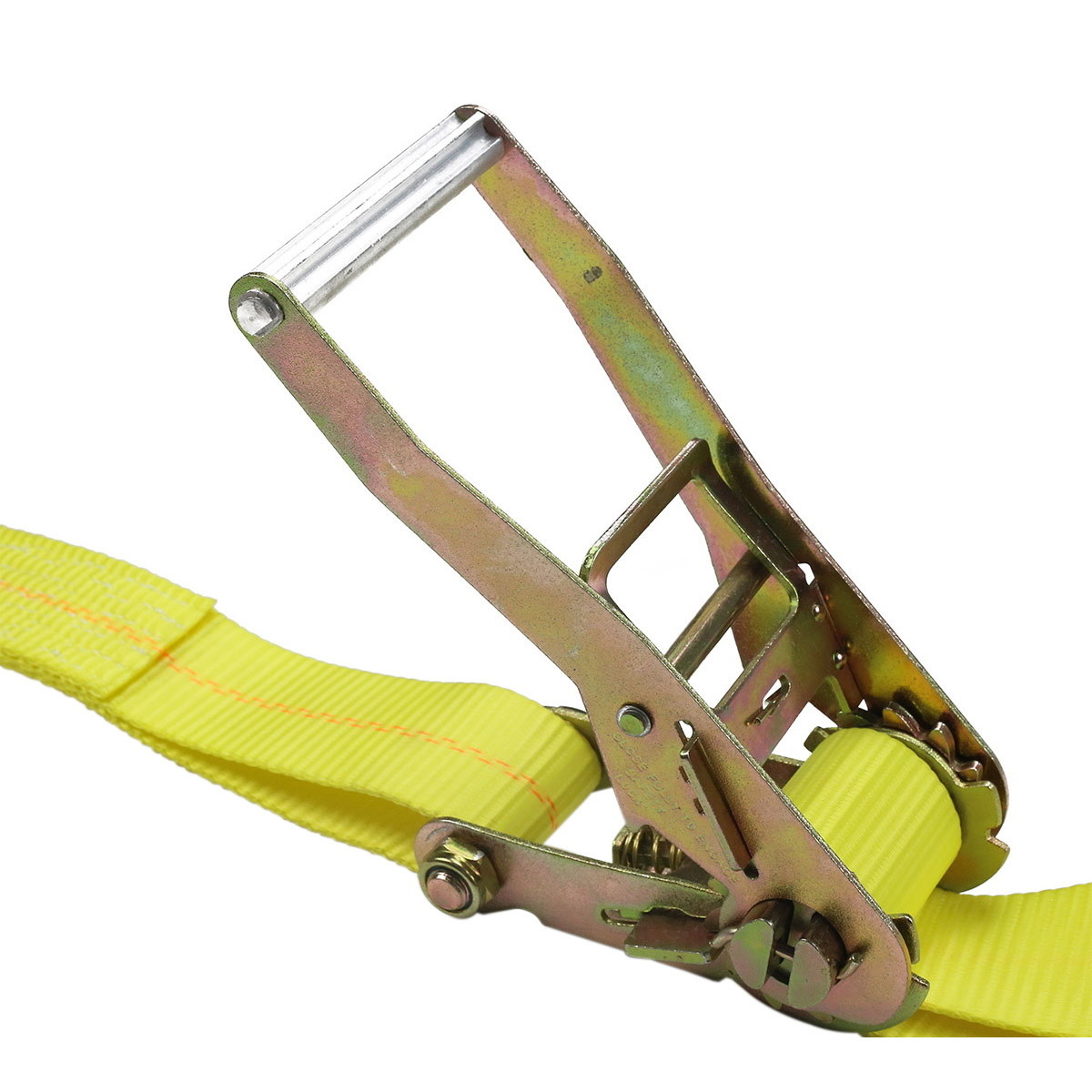 2inch 10000lbs Ratchet Straps for Efficient Cargo SecurementProduct Weight:1.5kgView Product →
The WLL on a sling tag is valid for a straight vertical pull. As soon as a leg moves away from vertical, the tension in that leg rises and the usable capacity falls. The standard angle factors are 1.00 at 90 degrees from horizontal, 0.87 at 60 degrees, 0.71 at 45 degrees and 0.50 at 30 degrees. A 5 t round sling used in a hitch at 45 degrees carries about 3.5 t per leg, and at 30 degrees only about 2.5 t.
Other factors trim the effective limit in the same way. Knots can cut rope strength substantially, sharp edges and abrasive grit damage webbing, ultraviolet exposure and chemicals degrade polyester over months, and a snubbed or swinging load can briefly exceed its static weight. Inspection criteria in ASME B30.9 include cuts, snags, broken stitching, heat or acid damage and a missing tag, and any of them puts the sling out of service regardless of the printed number. The same derating habits apply across rigging and lifting operations.
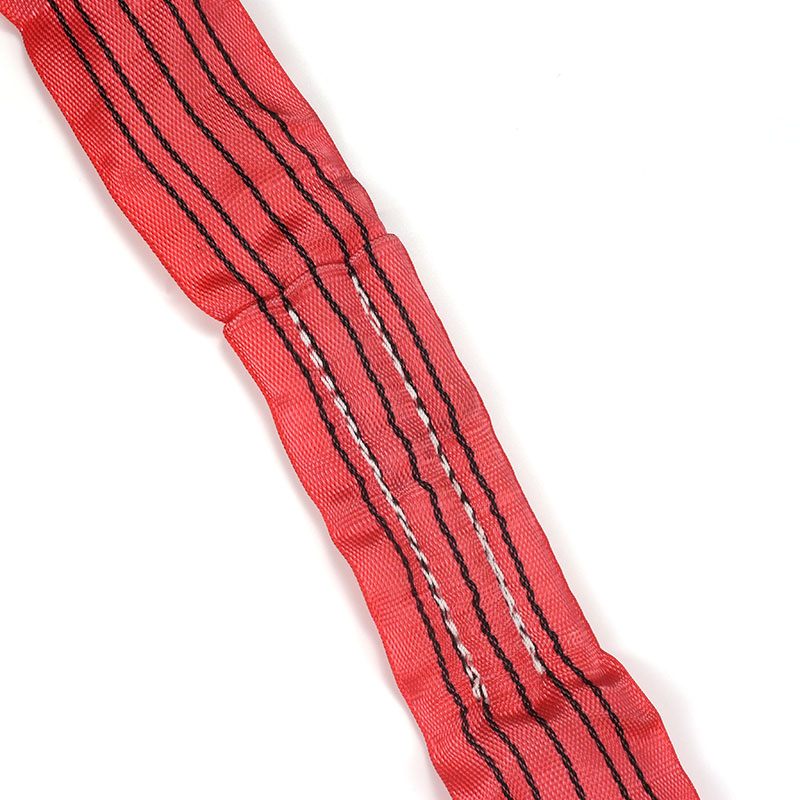 The 5T Round Webbing Sling Belt*Contact us to learn more about our bespoke offerings.View Product →
Most WLL problems are purchasing problems rather than field problems, and they are easy to avoid with four questions and one sample.
Ningbo Force Auto Parts has produced tie-down straps, round and flat webbing slings, and G70 and G80 chain assemblies since 2008, and marks the working load limit and the reference standard on the finished product so buyers can match documentation to hardware.
A working load limit is a promise made by a manufacturer and checked by a buyer. It is the breaking strength divided by a safety factor, marked on the product, and never larger than the weakest component in the system. Whether the job is a flatbed full of steel or a two-leg lift in a workshop, the safe routine is the same: read the WLL, apply the angle factor and the aggregate rule, and leave the breaking strength where it belongs, in the test report.
Breaking strength is the load that destroys the product in a test. The working load limit is that figure divided by a safety factor, so it is always the smaller number and the only one to plan with.
No. The 10,000 lb figure is usually breaking strength. If the strap's WLL is 3,333 lb, several straps are needed to meet the aggregate working load limit rule.
Yes. A leg rated 5 t vertically carries about 3.5 t at 45 degrees from horizontal and 2.5 t at 30 degrees, so the WLL must be multiplied by the angle factor.
In the United States the aggregate WLL of all tiedowns must be at least 50 percent of the cargo weight, and 100 percent for commodities such as logs, metal coils, intermodal containers and concrete pipe.
On a sewn-in label or tag for slings and tiedowns, and stamped or embossed on hardware such as shackles, hooks and chain. Without a marked WLL, treat the item as unrated.
No. Cuts, worn webbing, broken stitching, heat damage or acid burns take a sling out of service. The WLL applies only to equipment in sound condition.
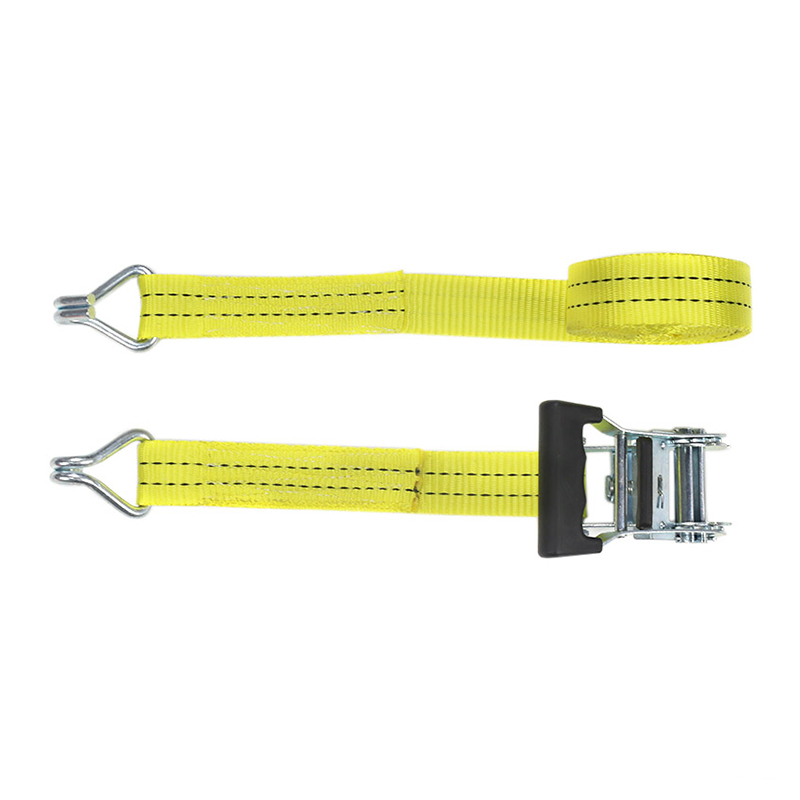


The company specialises in the field of logistics transportation,cargo control,lifting and hoisting products.


joe@forcerigging.com
+86-18650363763
No.469, Liansheng Road, Yinzhou District, Ningbo, Zhejiang Province, China.315111
Copyright © 2025 by Ningbo Force Auto Parts Co., Ltd. All Rights Reserved. China Ratchet Straps Manufacturers OEM/ODM Load Binding and Rigging Company


 English
 Español
 عربى
عربى 中文简体
中文简体