Ningbo Force Auto Parts Co., Ltd.
- joe@forcerigging.com
- +86-18650363763
Ningbo Force Auto Parts Co., Ltd.
The best heavy duty cargo straps for trucks and trailers in 2026 are ratchet-style polyester webbing straps rated to a Working Load Limit (WLL) of at least 3,333 lbs (1,500 kg), with J-hook or flat hook end fittings suited to the load type. Whether you are securing freight on a flatbed, loading a motorcycle onto a trailer, or transporting a boat, the right strap selection prevents load shift, equipment damage, and — most critically — road accidents. This guide covers the top 10 strap types by application, what specifications actually matter, and how to select the right configuration for your specific use case.
Content
Cargo shift is one of the leading causes of commercial vehicle accidents. According to road safety data, unsecured or improperly secured loads contribute to approximately 25,000 crashes and 90 fatalities annually in the United States alone. The Federal Motor Carrier Safety Administration (FMCSA) mandates specific tie-down requirements under 49 CFR Part 393, including minimum aggregate Working Load Limit rules based on cargo weight.
Choosing the correct tie down straps is therefore a regulatory and safety obligation — not optional. The wrong strap (wrong rating, wrong hook type, or degraded webbing) exposes drivers, cargo owners, and other road users to serious risk.
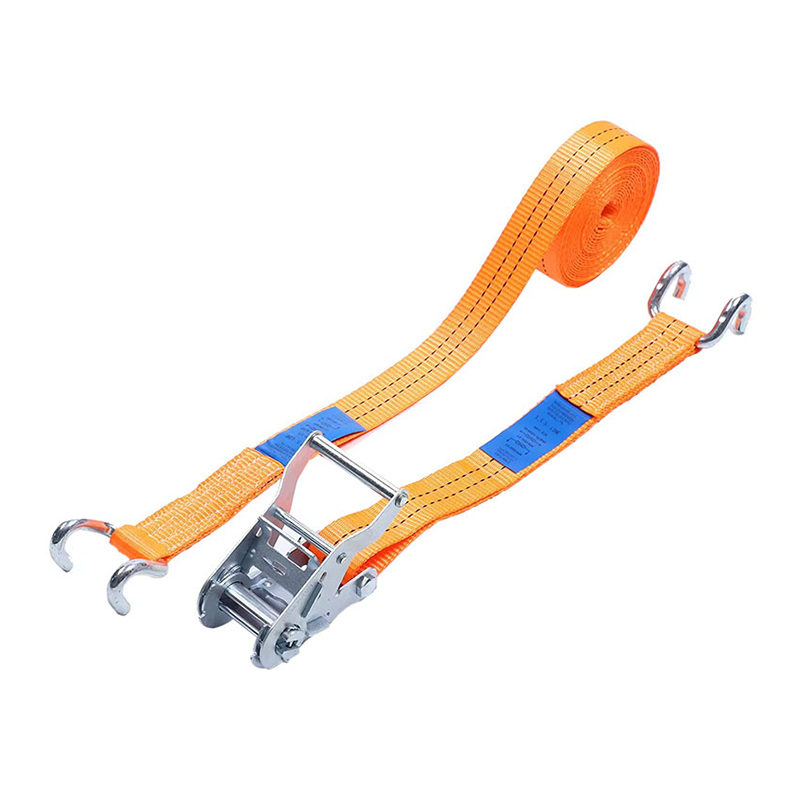
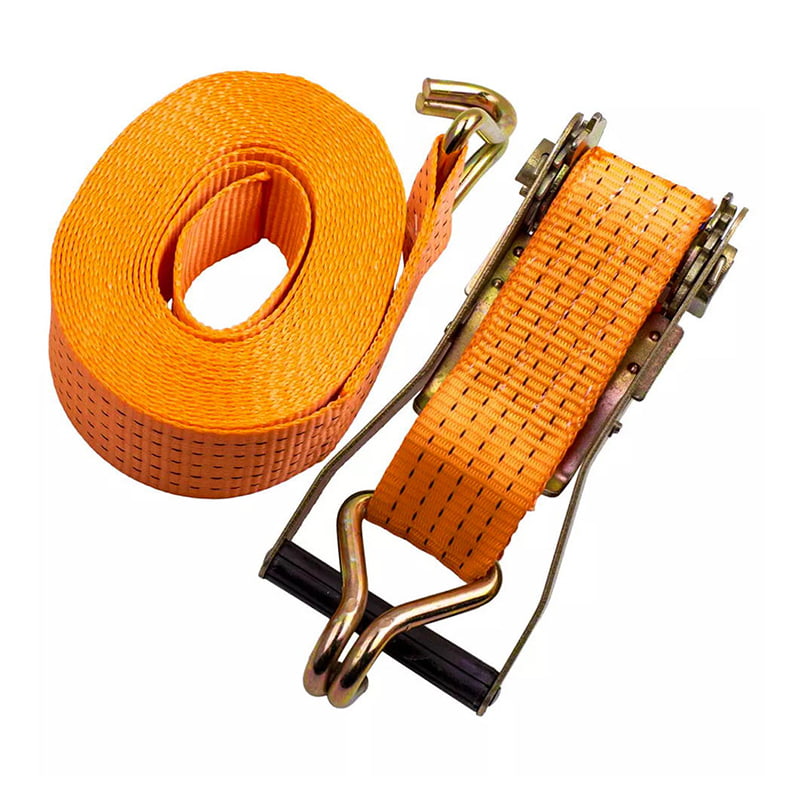
The workhorse of commercial freight. Heavy duty ratchet straps use a ratcheting mechanism to apply and maintain consistent tension, making them ideal for heavy, irregular, or vibration-prone loads. Standard configurations use 2-inch polyester webbing with J-hooks and a WLL of 3,333 lbs (1,500 kg). For heavier applications, 4-inch wide versions rated to 5,400 lbs (2,450 kg) WLL are the appropriate choice.
Flatbed cargo straps with flat (wire) hooks are specifically designed for use with flatbed trailers, where the hook must engage with the trailer's stake pockets or side rails without damaging the cargo or deck surface. Flat hooks distribute load over a wider contact area and are less likely to deform under tension compared to J-hooks in flat-bed applications. Common widths are 2 and 4 inches; WLL ranges from 1,667 lbs to over 5,000 lbs.
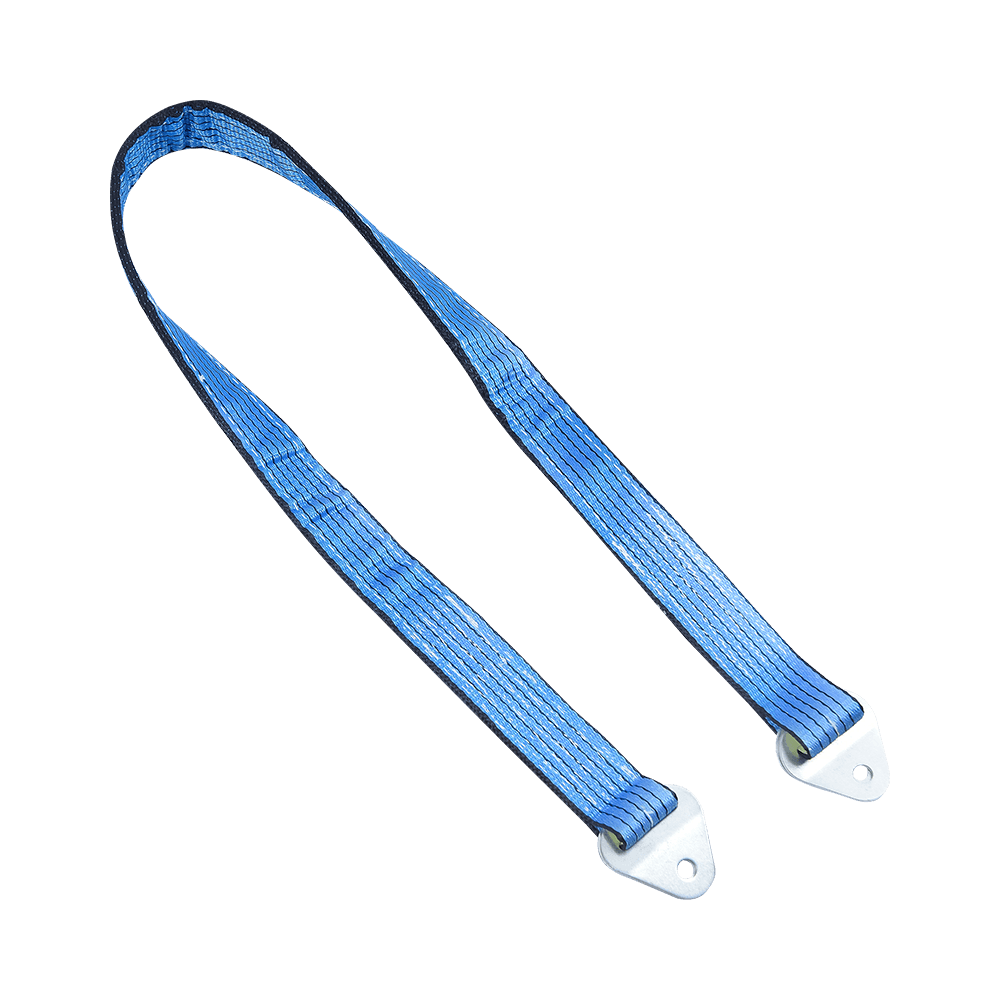
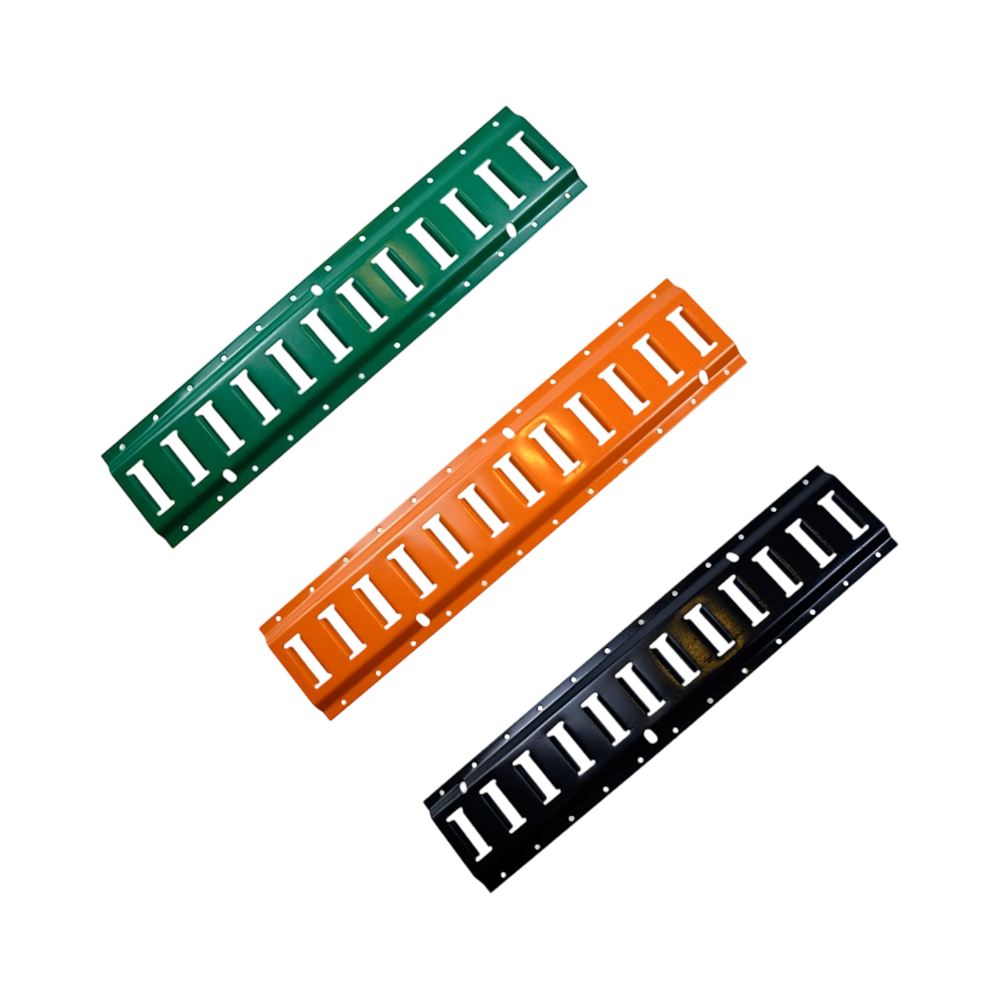
Truck cargo tie down straps fitted with E-track or L-track end fittings integrate with enclosed trailer and van body rail systems. The fittings slide and lock into the track at any position along the wall, allowing precise load positioning without fixed anchor points. This configuration is standard in moving vans, refrigerated trailers, and enclosed auto-transport units. WLL for 2-inch E-track straps is typically 3,333 lbs.
Motorcycle tie down straps are a specialized variant designed to secure two-wheeled vehicles without damaging soft parts, chrome surfaces, or bodywork. They use 1-inch to 1.5-inch soft loop ends or padded hooks to grip handlebars, frame tubes, or triple clamps safely. A typical 4-strap setup (2 front, 2 rear) achieves an aggregate securing force well above the motorcycle's weight — critical for trailer transport at highway speeds.
Boat tie down straps must resist UV degradation, saltwater exposure, and the specific load geometry of hull-to-trailer contact points. Wide, flat straps — typically 2 inches — are used across the hull with bow and stern lines securing longitudinal movement. Marine-grade polyester webbing retains over 90% of its tensile strength after extended UV exposure, compared to nylon which degrades significantly faster under sunlight.
Winch straps integrate with flatbed trailer winch bars, allowing the strap to be wound tightly around a spool-type tensioning mechanism rather than a ratchet. They are preferred for very heavy loads (construction equipment, steel coils, industrial machinery) where extremely high and consistent tension is required. Available in 4-inch widths with WLL ratings up to 5,400 lbs (2,450 kg) per strap.
Cam buckle straps use a friction-based cam mechanism instead of a ratchet, making them faster to apply and release — ideal for loads that require frequent repositioning or where over-tensioning is a risk (furniture, artwork, fragile equipment). WLL for 1-inch cam buckle straps is typically around 165–333 lbs; not suitable for heavy commercial freight but excellent for light cargo in enclosed trailers and vans.
Industrial load securing straps are purpose-built for oversized, overweight, or unusually shaped freight — including machinery, pipe bundles, structural steel, and wind turbine components. These are typically 3–4 inches wide with breaking strengths up to 20,000 lbs (9,000 kg) and WLL up to 6,600 lbs (3,000 kg). They comply with EN-12195-2 (Europe) and WSTDA-T-1 (North America) standards for lashing equipment.
Polyester tie down straps are the most widely used material in cargo securing applications. Polyester offers low elongation (typically 2–3% at WLL), excellent resistance to UV, moisture, acids, and alkalis, and a high strength-to-weight ratio. Compared to polypropylene straps, polyester maintains its rated strength across a wider temperature range (-40°C to +100°C) — a critical advantage for year-round commercial transport operations.
Tow straps are designed for vehicle recovery and towing rather than cargo securing, but they frequently appear on work trucks and trailers as part of a complete load management kit. Quality recovery straps use nylon webbing (for its elasticity, which absorbs snatch loads) and are rated by breaking strength rather than WLL — typically 20,000–30,000 lbs breaking strength for 3-inch versions. Do not use recovery straps as cargo tie-downs; the materials and geometry are incompatible with static cargo securing requirements.
| Strap Type | Typical Width | WLL (lbs) | Primary Use | Standard |
|---|---|---|---|---|
| Heavy Duty Ratchet Strap | 2–4 in | 3,333–5,400 | General flatbed freight | WSTDA-T-1 |
| Flatbed Cargo Strap (flat hook) | 2–4 in | 1,667–5,400 | Flatbed trailers | WSTDA-T-1 |
| Truck E-Track Strap | 2 in | 3,333 | Enclosed trailers / vans | WSTDA-T-1 |
| Motorcycle Tie Down | 1–1.5 in | 500–900 | Motorcycles / ATVs | WSTDA-T-1 |
| Boat Tie Down Strap | 2 in | 1,000–3,333 | Boat trailers | WSTDA-T-1 / AS/NZ 4380 |
| Winch Strap | 4 in | 5,400 | Heavy equipment / flatbed | WSTDA-T-1 |
| Cam Buckle Strap | 1–2 in | 165–833 | Light cargo / furniture | WSTDA-T-1 |
| Industrial Load Securing Strap | 3–4 in | Up to 6,600 | Oversized / heavy industry | EN-12195-2 |
| Polyester Tie Down Strap | 1–4 in | 500–6,600 | All-purpose transport | WSTDA / EN / AS-NZ |
| Tow / Recovery Strap | 2–3 in | N/A (break strength rated) | Vehicle recovery only | SAE J2056 |
FMCSA regulations (49 CFR 393.100–393.136) specify that the aggregate WLL of all tie-down devices must be at least 50% of the total cargo weight for loads under 10,000 lbs, and equal to the cargo weight for loads over 10,000 lbs. Here is a practical calculation framework:
The webbing material has a direct impact on strap performance, lifespan, and suitability for specific environments. Polyester tie down straps are the industry benchmark for most commercial applications:
Every compliant heavy duty cargo strap must be labeled with key safety data. Understanding these labels helps buyers verify what they are purchasing:
Even the best heavy duty ratchet straps degrade over time. Proper care dramatically extends service life and prevents in-service failure:
Ningbo Force Auto Parts Co., Ltd. offers a versatile range of tie down straps, including cam buckle, ratchet buckle, winch, automatic, and tow straps, among others. Constructed from high-strength polyester tie down straps webbing with durable buckles and hooks, these products comply with American, European, and Australian standards.
Available in 1–4 inch widths with tensile strengths up to 5,000 kg or even 10 tons, they are ideal for logistics, transportation, construction, and outdoor applications including boat tie down straps, motorcycle tie down straps, and flatbed cargo straps. All ratchet straps are rigorously tested for safety, labeled with Working Load Limit (WLL), and meet WSTDA-T-1, EN-12195, and AS/NZ 4380 standards, ensuring secure cargo transport.
Ningbo Force provides tailored solutions to meet unique customer needs, backed by WSTDA membership and a commitment to quality across every strap configuration — from standard truck cargo tie down straps to specialized industrial load securing straps for heavy transport applications.


The company specialises in the field of logistics transportation,cargo control,lifting and hoisting products.


joe@forcerigging.com
+86-18650363763
No.469, Liansheng Road, Yinzhou District, Ningbo, Zhejiang Province, China.315111
Copyright © 2025 by Ningbo Force Auto Parts Co., Ltd. All Rights Reserved. China Ratchet Straps Manufacturers OEM/ODM Load Binding and Rigging Company


 English
 Español
 عربى
عربى 中文简体
中文简体