Ningbo Force Auto Parts Co., Ltd.
- joe@forcerigging.com
- +86-18650363763
Ningbo Force Auto Parts Co., Ltd.
Quick Answer
Installing an E-Track system in a cargo trailer takes 2–4 hours and requires basic hand tools. Mount horizontal or vertical steel rails to the trailer wall studs using lag bolts rated for the track's load capacity, space rails every 16–24 inches for full coverage, then snap in your E-Track accessories — straps, hooks, and dividers — tool-free as needed. Done correctly, a properly installed enclosed trailer track system supports up to 5,000 lbs per anchor point and transforms a bare trailer into a fully organized, load-securing workspace.
Content
Before investing time and hardware into installation, it's worth understanding why the E-Track has become the dominant enclosed trailer track system across commercial transport, moving companies, and recreational hauling. The answer comes down to three practical advantages that rope hooks, d-rings, and floor loops simply can't match.
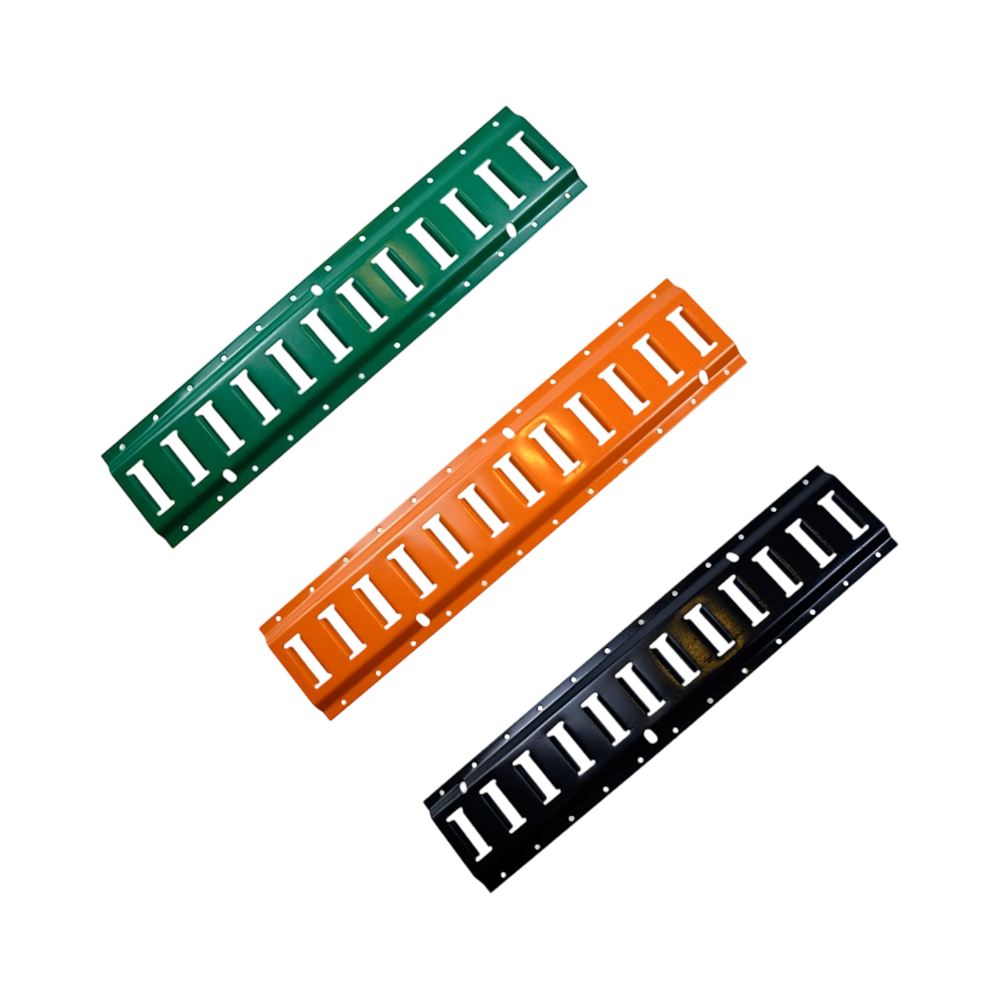
The standardized oval slots along every rail allow accessories to be positioned at any point along the track's length — not just at pre-drilled fixed points. This flexibility is critical when load dimensions change from trip to trip.
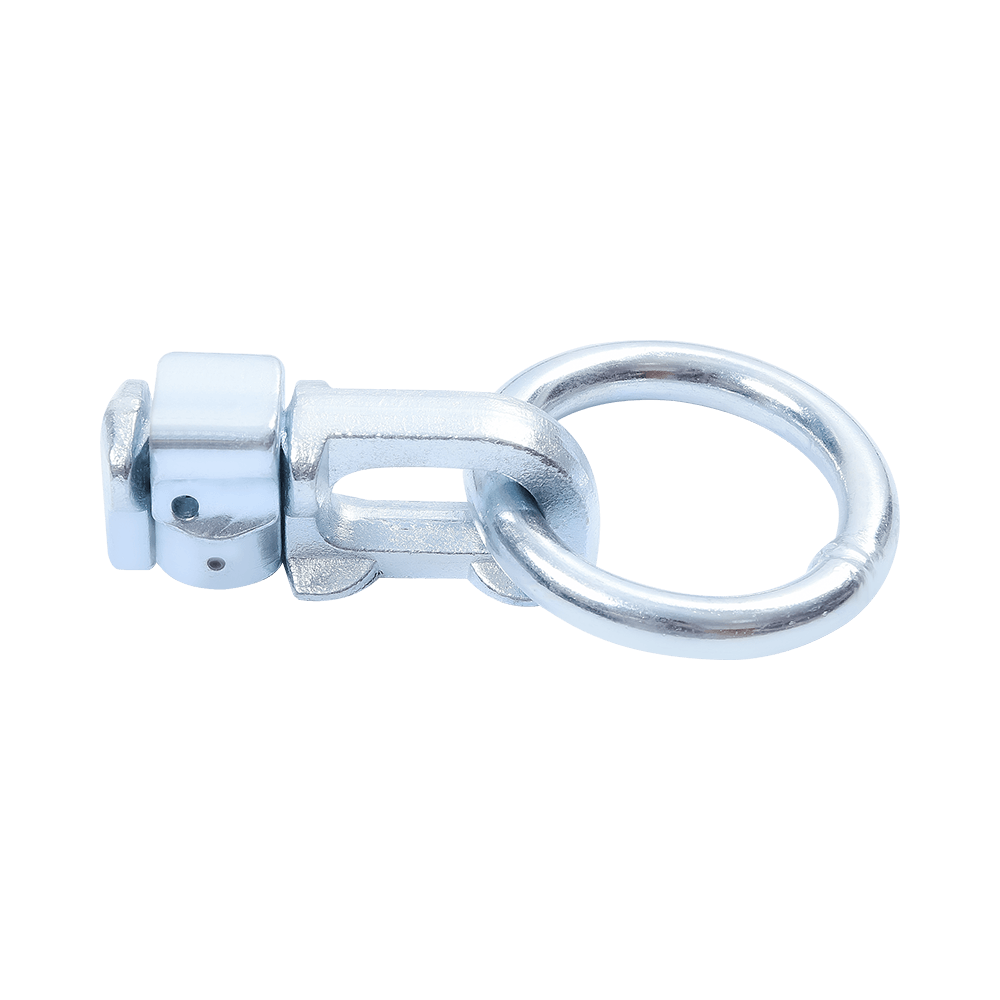
Adjustable E-Track hooks, rings, and strap anchors snap into the rail slots and rotate 360° without tools. Swapping a strap anchor for a chain hook takes under 10 seconds at the loading dock — a meaningful time saving across hundreds of loads annually.
Quality trailer load securing tracks carry a working load limit of 5,000 lbs per anchor point when properly mounted to structural framing. This exceeds the capacity of most standard welded d-rings and makes E-Track suitable for palletized goods, equipment, and furniture alike.
For professionals hauling mixed loads — equipment one week, furniture the next — an E-Track system for cargo trailers delivers a level of versatility that fixed anchor systems cannot replicate. The investment in installation pays for itself quickly in reduced load damage and faster securing times.
A clean, organized installation starts with having everything staged before you pick up a drill. Rushing to source missing hardware mid-install leads to misaligned rails and compromised anchor strength. Here's what a complete installation kit looks like:
Standard E-Track rails come in 5 ft and 10 ft lengths. For a typical 16-ft enclosed trailer, two runs of 10 ft horizontal track per wall (staggered at 18" and 42" from the floor) provides near-complete wall coverage while leaving room for a top rail if enclosed trailer storage rails are also desired for overhead organization.
Follow these steps in sequence for a secure, properly aligned installation. Skipping the planning phase (steps 1–2) is the most common cause of misaligned rails and off-center load forces that reduce the system's effective strength.
Use a stud finder or magnetic tool to locate every vertical framing member along both side walls and the front wall. Mark each stud centerline with a pencil. In most enclosed cargo trailers, studs are spaced 16" on center, though 24" spacing is also common in lighter trailers. Every lag bolt must land in a stud — bolts driven into wall sheathing only will not hold rated load.
Decide whether you're running horizontal rails (most common for cargo trailer tie-down systems), vertical rails, or a combination. For horizontal cargo trailer tie-down configurations, mount the lower rail at 18–20" from the floor and the upper rail at 40–48" — this covers the majority of load heights for furniture, equipment, and pallets. Mark a level horizontal line at your chosen heights using a tape measure and torpedo level before touching the drill.
Hold the E-Track rail against the wall, aligning its mounting holes with your stud marks. Use a pencil through the mounting holes to transfer drilling locations onto the wall. Remove the rail and drill pilot holes at each mark using a bit slightly smaller than your lag bolt diameter. Pilot holes prevent the wood from splitting and make driving the final bolts significantly faster and more accurate.
Position the rail over the pilot holes. Insert a lag bolt with flat washer and lock washer through each mounting hole. Drive bolts in gradually, alternating between ends to prevent the rail from bowing or torquing out of alignment. Final torque should be firm but not excessive — over-tightening can deform the rail's slot geometry and interfere with accessory engagement. Check alignment with your level after the first two bolts are partially set.
When two rail sections meet end-to-end, use a joining bracket or ensure the rail ends overlap at a stud to maintain structural continuity. The slot pattern must align at the junction so accessories can slide smoothly from one section to the next without catching. A 1/8" gap between rail ends is acceptable and accommodates thermal expansion without distorting alignment.
For maximum cargo securing flexibility, add E-Track rails along the trailer floor running front-to-back. Floor track allows dividers and pallet stops to be repositioned lengthwise, which is particularly valuable when securing cargo that shifts during braking. Use carriage bolts through the floor decking rather than lag bolts when mounting to floor joists, and countersink bolt heads flush with the surface to avoid trip hazards.
Before hauling, attach your E-Track accessories and apply a firm pull test to each anchor point — approximately 150–200 lbs of hand pressure in the direction the load would apply force. Check for any bolt movement, rail flexion, or slot deformation. Any movement under hand pressure indicates a bolt missed the stud framing and must be relocated. Never rely on sheathing-only anchors for actual load securing.
There is no single "correct" E-Track layout — the optimal configuration depends on what you haul. The chart below shows how rail coverage requirements vary across common cargo trailer applications, and why over-installing rail early costs far less than retrofitting later.
Typical Rail Coverage Needed by Application (% of Wall Space)
Coverage recommendations based on typical load securing requirements; actual needs vary by cargo dimensions and weight distribution.
The real power of an E-Track system for cargo trailers lies in its accessory ecosystem. Once the rails are mounted, users can configure the trailer for entirely different loads in minutes by swapping fittings. Here's a reference table of the most common E-Track accessories and their applications:
| Accessory | Function | Best For | Rotation |
|---|---|---|---|
| Strap Anchor | Fixed tie-down point for ratchet straps | General cargo, equipment | 360° |
| Adjustable E-Track Hook | Hooks onto load rings or frames directly | Motorcycles, ATVs | 360° |
| Rope Tie-Off | Knotted rope anchor point | Flexible or irregular cargo | Fixed |
| Cargo Bar Socket | Accepts load bar ends for load separation | Pallets, freight | 360° |
| Chain Anchor | High-load chain attachment | Heavy machinery, vehicles | 360° |
All standard E-Track accessories are cross-compatible with any correctly dimensioned E-Track rail, regardless of manufacturer. This interoperability is intentional — the slot geometry is a standardized specification that ensures adjustable E-Track hooks, strap anchors, and cargo bar sockets from any compliant supplier will fit any compliant rail.
Most E-Track installation failures trace back to a small number of avoidable errors. Understanding what goes wrong — and why — helps you avoid costly rework or, more seriously, a load-securing failure during transit.
Bolting rails to sheathing only reduces anchor strength by up to 80%. Always verify every bolt location with a stud finder and conduct a pull test before relying on any anchor point.
E-Track rails are directional — the slots have a specific top and bottom. Installing a horizontal rail upside-down prevents accessories from locking correctly and can cause hook release under load vibration.
Short rail runs with large gaps between sections limit where accessories can be positioned. Plan for continuous coverage along working wall sections — gaps greater than 12" between rail ends reduce effective flexibility significantly.
Even a 2° off-level rail creates misaligned load forces that concentrate stress unevenly across mounting bolts. Rails that look approximately level by eye can be significantly off — always use a spirit or torpedo level.
A properly installed E-Track system requires minimal maintenance, but periodic inspection protects both your cargo and your investment. Build these checks into your pre-trip and quarterly routines:
Corrosion-resistant finishes (galvanized or powder-coated steel) significantly extend maintenance intervals for trailer load securing tracks used in wet or outdoor environments. For enclosed trailer storage rails used in temperature-controlled environments, standard zinc-plated finishes perform well for 5–10 years between replacements under normal use.
From a 1,000 m² startup in 2008 to a 30,000 m² modern production facility in 2025, Ningbo Force Auto Parts Co., Ltd. has spent nearly two decades engineering and manufacturing cargo securing solutions for global transport markets. Today the company delivers 12 million pieces annually, serving customers across transportation, agriculture, construction, and energy sectors.
As a China OEM E-Track system for cargo trailer manufacturer and ODM E-Track manufacturer, Ningbo Force provides full OEM and ODM customization — from standard enclosed trailer track systems to application-specific configurations. The product range covers tie-down straps, hardware, lifting slings, tarps, and corner protectors, with all products certified to CE, S-mark, GS, and ISO 9001:2015 standards.
CE, S-mark, GS, and ISO 9001:2015 certifications covering E-Track rails, cargo trailer tie-down systems, and associated hardware — ensuring compliance with international transport safety standards.
Equipped with advanced production facilities and a dedicated R&D team driving continuous product innovation. Steel E-Track rails are manufactured to standardized slot geometry ensuring cross-compatibility with all compliant accessories.
As a WSTDA member, Ningbo Force actively participates in industry standard development and fosters safe, eco-conscious logistics solutions — supporting buyers who demand traceable, responsibly manufactured load securing hardware.
The company's E-Track system portfolio supports cargo loads up to 5,000 lbs per anchor point, with 360° rotating fittings that accommodate the full range of securing angles required for equipment, furniture, and palletized goods in professional transport applications.



The company specialises in the field of logistics transportation,cargo control,lifting and hoisting products.


joe@forcerigging.com
+86-18650363763
No.469, Liansheng Road, Yinzhou District, Ningbo, Zhejiang Province, China.315111
Copyright © 2025 by Ningbo Force Auto Parts Co., Ltd. All Rights Reserved. China Ratchet Straps Manufacturers OEM/ODM Load Binding and Rigging Company


 English
 Español
 عربى
عربى 中文简体
中文简体