Ningbo Force Auto Parts Co., Ltd.
- joe@forcerigging.com
- +86-18650363763
Ningbo Force Auto Parts Co., Ltd.
Short answer: yes, with conditions. Polyester ratchet straps are a sound choice for rain, damp air, and general outdoor hauling because polyester webbing absorbs very little water and resists rot and mildew better than many natural fibers. They are not immune to weather. Sunlight, road salt, sharp edges, and contaminated ratchet mechanisms are the usual reasons a strap fails early.
For buyers, “weather resistant” should be treated as a specification, not a promise. The purchase decision comes down to webbing material, hardware coating, edge protection, standard compliance, and the inspection routine behind the strap.
Content
A ratchet strap is a system: polyester webbing, stitching, a ratchet buckle, hooks or end fittings, and sometimes a protective sleeve. Weather resistance fails at the weakest part. UV-stable webbing on a rusted buckle is still a maintenance problem; a well-coated buckle on abraded webbing is still a load risk.
| Exposure | What usually happens | What to specify or check |
|---|---|---|
| Rain and damp | Polyester absorbs little water and resists rot; nylon can absorb more moisture and stretch when wet. | 100% high-tenacity polyester webbing; dry before storage. |
| UV and sunlight | The main outdoor aging factor for synthetic webbing; fading, chalking, surface fuzz, and strength loss can follow. | UV-stabilized webbing where offered; store out of direct sun; inspect color and surface condition. |
| Road salt | Attacks metal hardware more than the polyester fiber; pitting, stiff ratchets, and corroded springs are common. | Zinc plating, powder coating, or stainless parts where justified; rinse and dry after winter use. |
| Heat | Normal transport heat is usually not the main issue; exhaust contact and hot metal are. | Route straps away from exhausts and hot surfaces; use a sleeve where contact is possible. |
| Abrasion | Cuts and edge wear reduce capacity faster than rain in many real hauling jobs. | Corner protectors, wear sleeves, and smooth load edges. |
For a common 2-inch flatbed specification, start with high-tenacity polyester webbing and coated hardware, then confirm the working load limit against the load and anchor points.
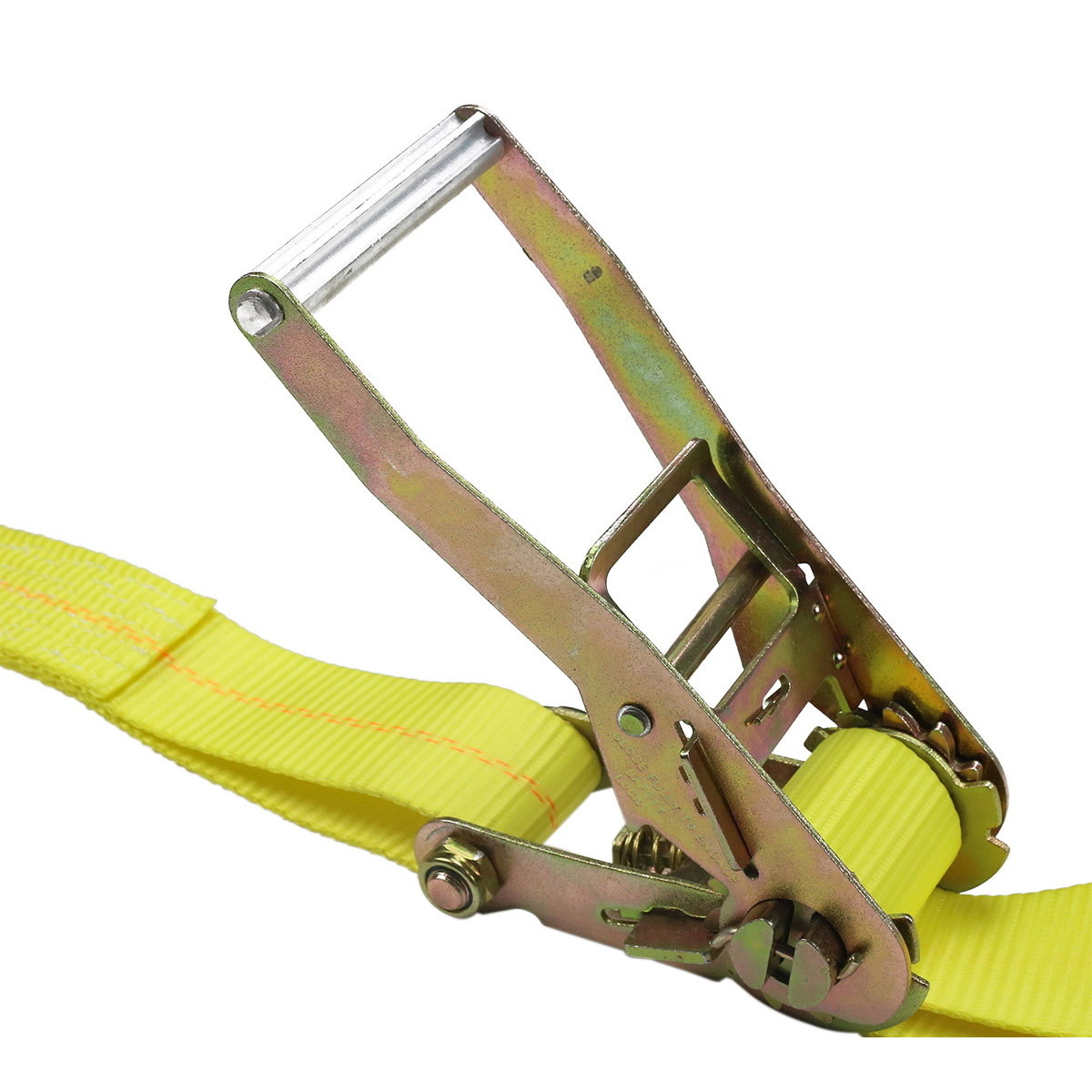 2-Inch 10,000 lb Polyester Ratchet StrapsHeavy-duty 2-inch ratchet straps with high-tenacity polyester webbing and a 3,333 lb working load limit for flatbed cargo securement.View Product →
Polyester is a default webbing material for cargo restraint for a reason. Its moisture regain is low—typically around 0.4% under standard textile conditions, compared with roughly 4% for nylon—so it does not swell or lose as much strength in wet service. That does not mean a soaked strap should be packed away wet. Grit and moisture trapped in the ratchet can cause corrosion and sticky operation.
The chart uses typical textile moisture-regain figures, not a pass/fail test for a finished strap. The practical takeaway: rain alone is usually not the deciding failure factor for polyester. UV exposure, hardware corrosion, and abrasion deserve more attention.
Sunlight is the weather factor that deserves the most respect. Industry tie-down guidance commonly treats UV as the main outdoor aging risk for synthetic webbing because repeated exposure can fade, stiffen, and weaken the fibers. A strap that looks dry is not automatically a strap that is safe.
Road salt is a hardware problem. It accelerates corrosion on hooks, ratchet teeth, and springs; a stiff ratchet can feel engaged while failing to lock under load. Heat from exhausts, hot metal, or asphalt is a contact risk. Cold is less of a fiber problem for polyester than for water-absorbing nylon, but frozen grit can jam the mechanism and ice can hide cuts.
Abrasion is often the real killer. A weather-resistant strap rubbed over a sharp steel edge will fail faster than a dry strap protected by a sleeve or corner protector. Fleet operators in trucking and transportation cargo control should treat edge protection as part of the weather plan, not an accessory.
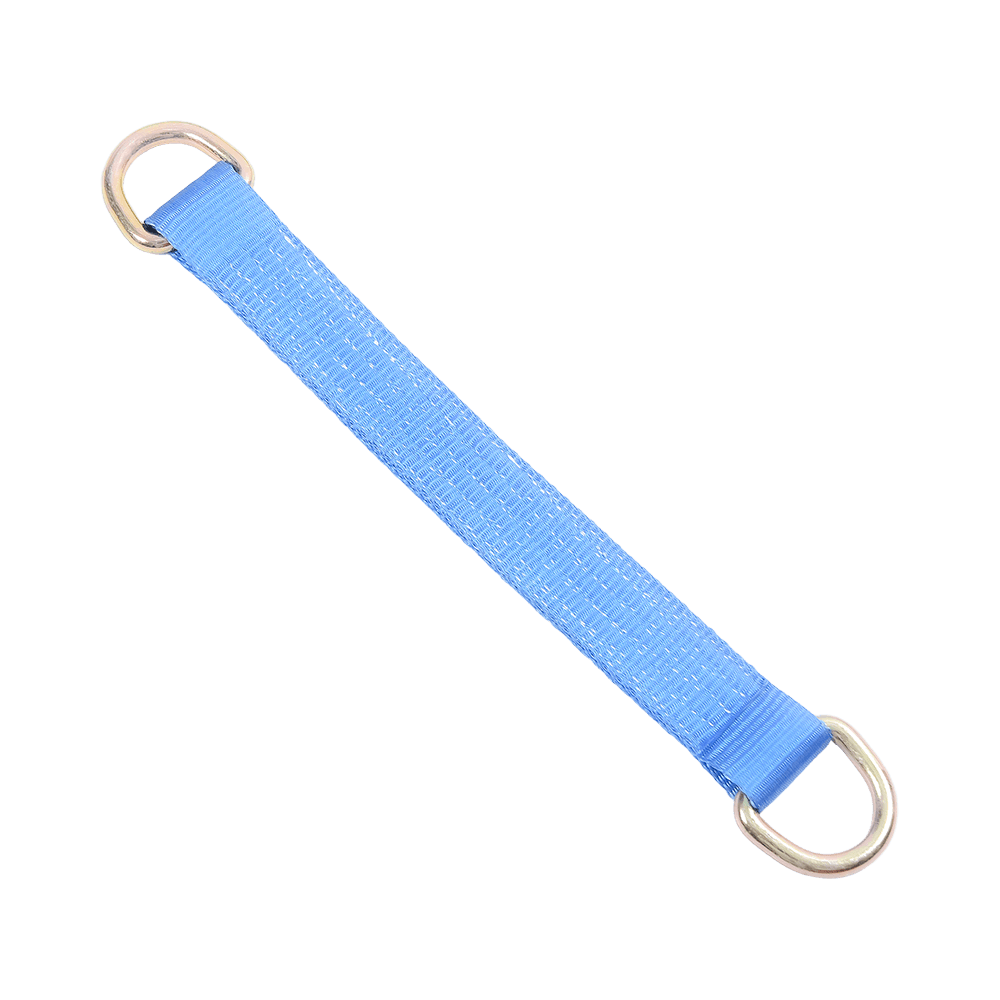
 Axle Protective Sleeve Ratchet Tie Down with D-RingRatchet tie-down assembly with a wear-resistant axle sleeve and rotating D-ring, designed to reduce friction damage at strap-to-metal contact points.View Product →
The safest buying approach is to specify the assembly, not just the webbing. Use this checklist:
A 50 mm, 5 t polyester ratchet strap is a common heavy-duty EU specification; for US flatbed work, 2-inch 10,000 lb straps are common. Buyers sourcing from a manufacturer should confirm that the supplier can produce the target standard, coating, and customized length rather than treating “weather resistant” as a catalogue label.
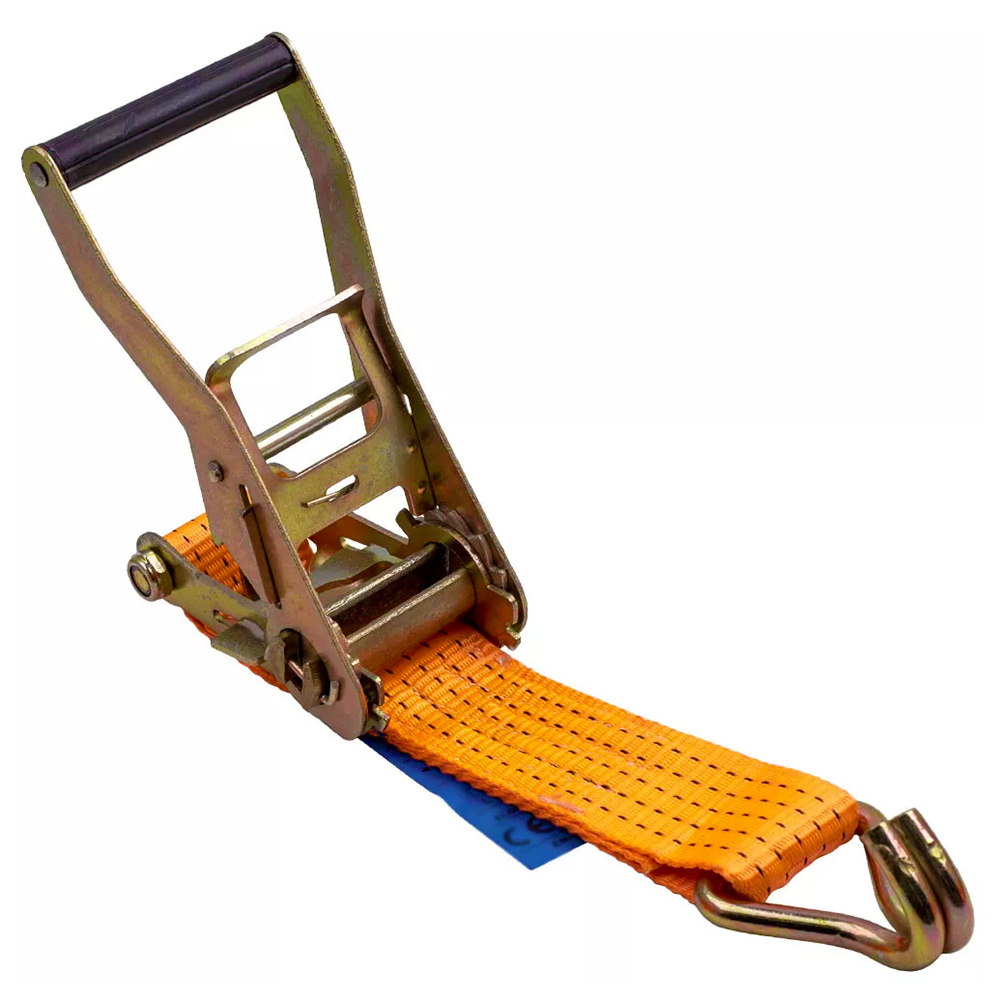 50 mm 5 t Polyester Ratchet Lashing StrapHeavy-duty EU-style cargo lashing strap with 50 mm polyester webbing, ratchet tensioning, and a 2,500 kg working load limit for transport loads.View Product →
Weather resistance is maintained, not installed. Inspect before each trip and after wet or salty runs. Look for cuts, burns, UV glazing, broken stitching, bent hooks, corrosion pitting, and ratchet slippage. Replace the strap if any load-bearing part is damaged; do not downgrade it to a light-duty job.
For a practical storage method, see this guide to storing ratchet straps correctly between jobs.
They are water-resistant, not waterproof. Polyester webbing absorbs little water and resists rot, but hardware and stitching still need drying and inspection.
Wet polyester generally retains strength well; the bigger risks are trapped moisture, grit, and rust in the ratchet. Dry and clean after use.
Not for long-term storage. Sunlight, rain, and temperature cycles age webbing and hardware. Store indoors, out of direct sun.
High-tenacity polyester is the common choice for heavy-duty cargo straps because it balances low moisture regain, strength, and cost. UV stabilization and hardware coating matter too.
Rinse salt, dry fully, check for cuts, fraying, fading, and broken stitching, inspect hooks and ratchet teeth, and replace any damaged load-bearing part.
Yes, 2-inch polyester ratchet straps are widely used for flatbed and trailer cargo when the working load limit matches the load and anchor points. Confirm the label and standard.

The company specialises in the field of logistics transportation,cargo control,lifting and hoisting products.


joe@forcerigging.com
+86-18650363763
No.469, Liansheng Road, Yinzhou District, Ningbo, Zhejiang Province, China.315111
Copyright © 2025 by Ningbo Force Auto Parts Co., Ltd. All Rights Reserved. China Ratchet Straps Manufacturers OEM/ODM Load Binding and Rigging Company


 English
 Español
 عربى
 中文简体