Ningbo Force Auto Parts Co., Ltd.
- joe@forcerigging.com
- +86-18650363763
Ningbo Force Auto Parts Co., Ltd.
You pull into a yard with a flatbed loaded and a rain squall coming in. The last thing you need is three feet of loose strap tail whipping in the wind while you crank down a ratchet. Automatic retractable ratchet straps address that exact problem: unused webbing winds back into the housing instead of hanging loose. The short answer is that they combine a conventional ratchet tensioner with a spring-loaded spool. The ratchet gear and pawl still hold the load; the spring only manages slack. That distinction matters when you are comparing straps for daily fleet work versus occasional weekend hauling.
Below, we break down the mechanism, the parts that fail, and the buying points that separate a useful retractable strap from a frustrating one.
Content
Inside the housing, the webbing is wound around a drum. A coiled retraction spring is connected to that drum and stores energy as you pull the strap out. When you let go, the spring winds the drum backward and pulls the loose tail in. The ratchet gear sits on the same shaft. A spring-loaded pawl engages the gear teeth, so the drum can turn one way under tension and locks when you stop cranking. The release lever lifts the pawl, letting the drum reverse. Better designs add a deceleration element to slow the retraction speed and reduce hook snap-back.
This is the same basic layout described in cargo securement training materials and in EN 12195-2 guidance for tensioning devices. The key point is that the spring does not create tension. It only takes up slack. Tension comes from the ratchet handle turning the drum and the pawl locking the gear.
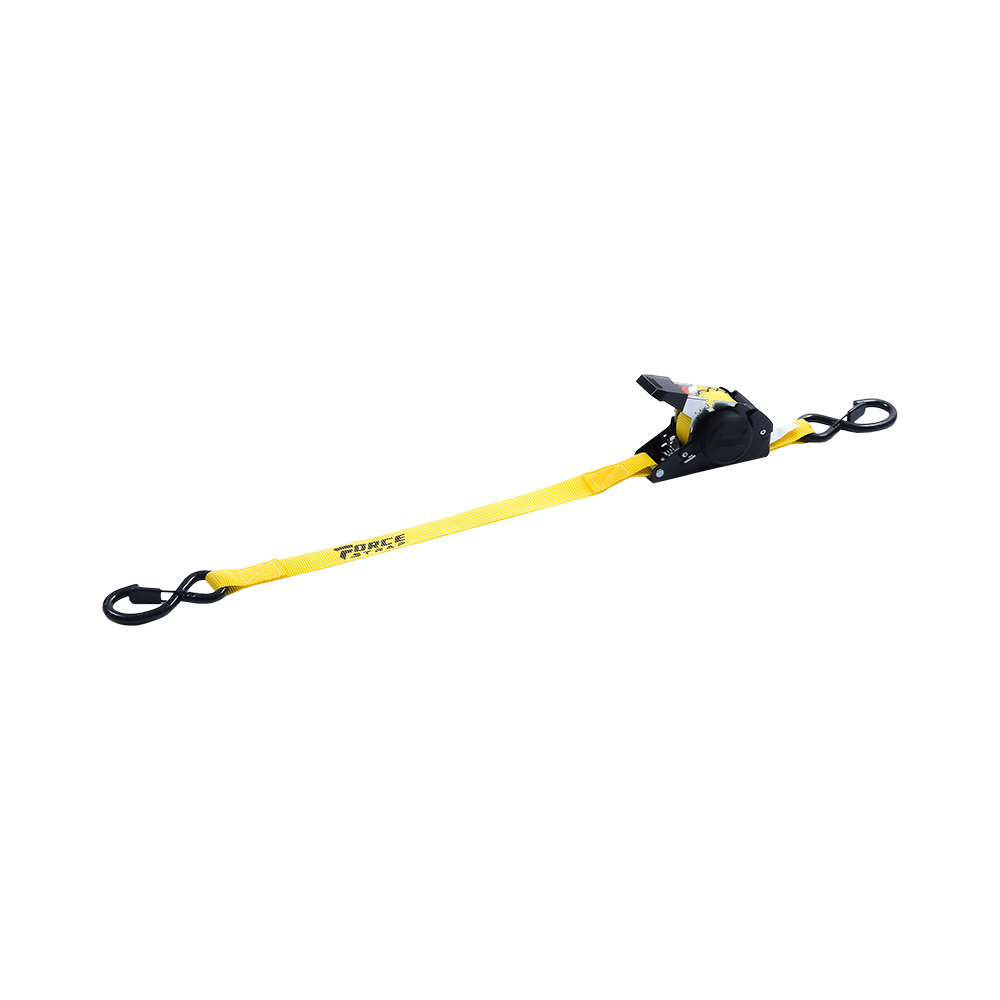
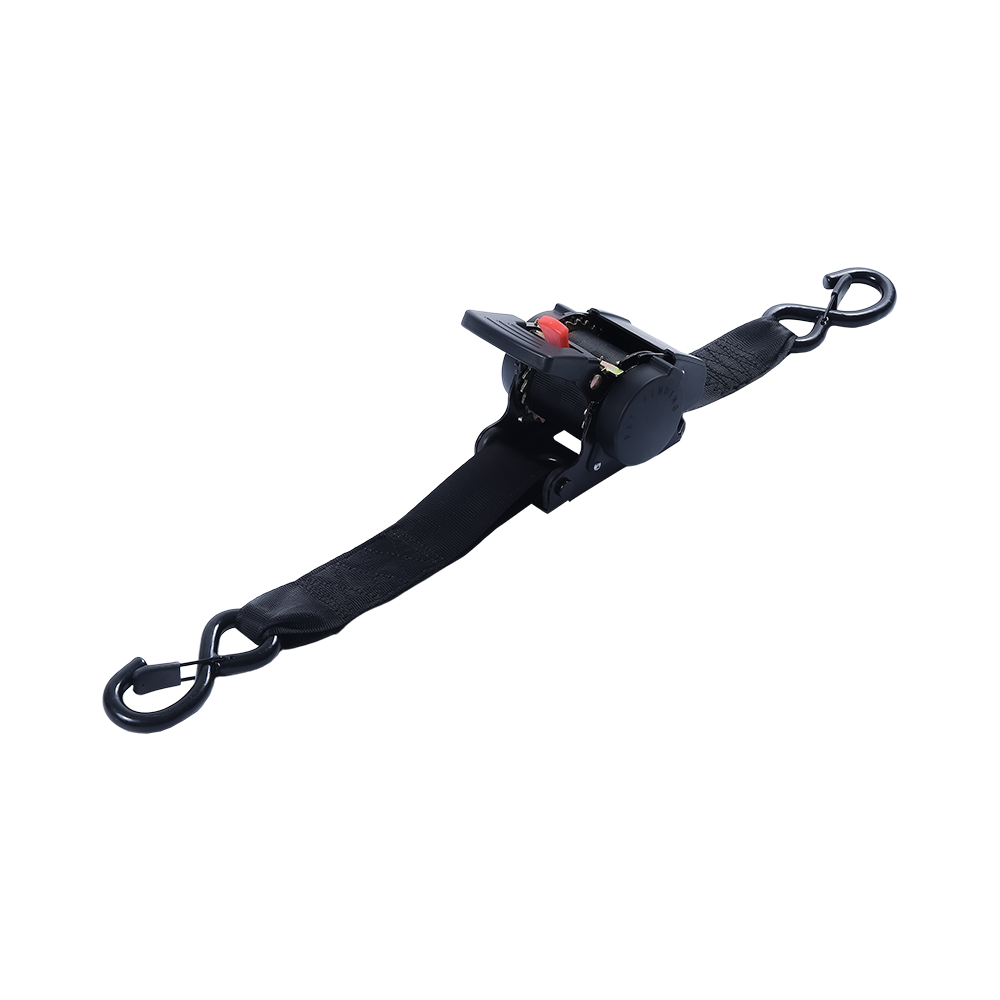
 2-Inch Auto Retractable Cargo Lashing Strap with Safety S HookA 10 ft, 2 in auto-retractable cargo strap with constant-tension slack take-up, one-button release and a safety-lock S hook for transport securing.View Product →
When a retractable strap feels stiff, slow, or refuses to lock, the problem is usually in one of the parts below. Use this table as a shop-floor inspection checklist.
| Component | What it does | Inspection point |
|---|---|---|
| Housing | Protects the spool and spring from road spray and debris | Cracks, bent cover, packed dirt around the drum |
| Spring-loaded spool | Stores webbing and rewinds the loose tail | Slow or no retraction; uneven winding |
| Ratchet gear | Provides locking points for tension | Worn teeth; rust; missing teeth |
| Pawl | Engages the gear to hold the drum | Weak spring; rounded tip; does not click |
| Release lever | Lifts the pawl to release tension | Bent lever; sticking pivot |
| Polyester webbing | Carries the load; should be high-tenacity polyester | Cuts, abrasion, UV fading, knots |
| Hooks and end fittings | Connect to anchor points | Bent hooks; missing safety latches; corrosion |
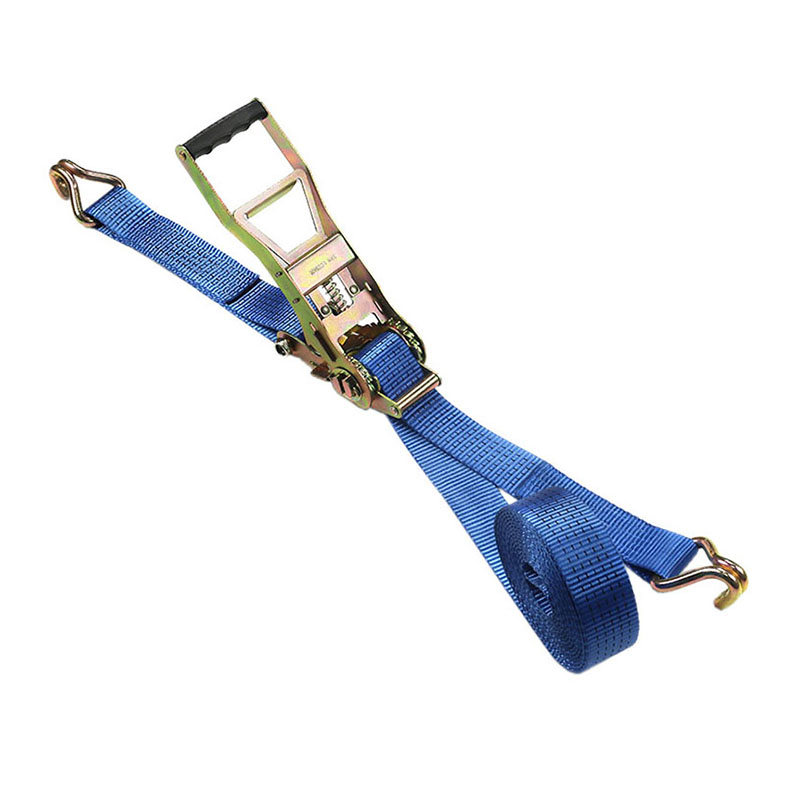
The terms get mixed up in listings, so separate them before you buy. A self-retracting strap manages slack. A self-tensioning strap tries to maintain tension as the load settles. A standard ratchet strap does neither automatically: you manage the tail and re-check tension yourself.
| Feature | Standard ratchet strap | Automatic retractable | Self-tensioning |
|---|---|---|---|
| Loose tail management | Manual; tail must be tied or tucked | Spring rewinds loose webbing | Depends on design; may still have a tail |
| Tension maintenance | Manual re-check | Manual re-check | Designed to compensate for load settling |
| Typical best use | General cargo; low-cost fleets | Frequent stop-and-go hauling; rental trailers; ATV/UTV | Loads that compress or shift predictably |
| Inspection focus | Webbing, ratchet, hooks | Spring, spool, pawl, deceleration | Tensioning mechanism and travel range |
A self-retracting strap is not automatically a self-tensioning strap. If your load compresses in transit, you still need to check tension. For a broader primer, see this guide to cargo ratchet straps.
The diagram below shows the layout you would see if you cut the housing open. The spring stores energy as the webbing pulls out; the ratchet gear and pawl hold the drum; the release lever lifts the pawl so the spring can rewind the tail.
The retraction spring changes how you handle the tail, not how you secure the load. Treat it like any ratchet strap when it comes to working load limit and anchor points.
For flatbed and trailer work, the applicable rules matter. In the U.S., FMCSA 393.110 sets aggregate working load limit requirements for cargo securement. In Europe, EN 12195-2 covers lashing straps and their marking. Follow the label on the strap and the rules for your route. For a fleet-level view, see our trucking and transportation page.
Most automatic retractable straps are sold by width, working load limit, and end fitting. Width is the quickest filter.
| Nominal width | Typical application | Buying note |
|---|---|---|
| 1 inch (25 mm) | ATV, UTV, motorcycle, roof rack, light cargo | Compact housing; check hook size for small anchor points |
| 2 inch (50 mm) | Flatbed trailers, car haulers, equipment, general cargo | Most common retractable size; confirm WLL and hook type |
| 3 inch (75 mm) | Heavy equipment, steel, large flatbed loads | Bulkier housing; check retraction spring strength |
| 4 inch (100 mm) | Heavy haul and large machinery | Usually standard ratchet, not retractable; verify availability |
For light-duty auto retractables, a 2-inch adjustable auto-retractable cargo lashing strap with a safety sleeve is a common starting point. It gives you the tail control of a retractable with a familiar 2-inch hook and ratchet interface.
 700 kg Automatic Self-Retractable Ratchet Tie-Down StrapA lightweight 3 m, 1 in retractable tie-down with 350 kg working load limit, automatic tensioning and double-locking for smaller cargo-securing tasks.View Product →
For smaller loads, a 700 kg automatic self-retractable tie-down strap is easier to handle and less bulky in a toolbox. Match the working load limit to the load, not to the size of the housing.
Retractable straps fail in predictable places. The spring is usually the first thing to weaken, followed by the pawl and the webbing near the drum.
Retractable straps are still wear items. If the housing is cracked, the spring is weak, or the gear teeth are rounded, replace the unit. A rebuild is rarely cost-effective for a standard cargo strap.
Automatic retractable straps rewind loose webbing with a spring-loaded spool. Self-tensioning straps are designed to maintain tension as a load settles. A retractable strap still needs a manual tension check.
Yes, when sized correctly. Retractable ratchets are available in 2-inch and larger widths with working load limits comparable to standard ratchet straps. Check the label and the aggregate WLL rules for your load.
Support the hook, lift the release lever to disengage the pawl, and let the spring retract the webbing slowly. Keep hands away from the spool and do not let the hook snap back.
Yes. E-track-compatible retractable straps use an E-track fitting instead of a hook. Confirm the fitting style and track rating before mixing components.
For most flatbed and utility trailers, 2-inch straps are the common choice. Match the working load limit to the cargo weight and follow the applicable securement standard.
Service life depends on use, road exposure, and storage. Inspect the spring, pawl, gear, and webbing before each use. Replace the unit if retraction is weak, the lock slips, or the webbing is damaged.

The company specialises in the field of logistics transportation,cargo control,lifting and hoisting products.


joe@forcerigging.com
+86-18650363763
No.469, Liansheng Road, Yinzhou District, Ningbo, Zhejiang Province, China.315111
Copyright © 2025 by Ningbo Force Auto Parts Co., Ltd. All Rights Reserved. China Ratchet Straps Manufacturers OEM/ODM Load Binding and Rigging Company


 English
 Español
 عربى
 中文简体