Ningbo Force Auto Parts Co., Ltd.
- joe@forcerigging.com
- +86-18650363763
Ningbo Force Auto Parts Co., Ltd.
E-Track systems are the industry benchmark for cargo securement in freight transportation — providing rated anchor points, flexible strap compatibility, and tool-free load adjustment that no fixed ring or bolt-down solution can match. If you manage a fleet, operate a cargo van, or ship palletized goods, understanding how E-Track tie down systems work — and why DOT cargo securement regulations increasingly point toward them — directly impacts your safety record, liability exposure, and operational efficiency.
This guide covers the engineering behind E-Track rails, real-world load data, comparisons with alternative systems, installation best practices, and answers to the questions real operators search for every day. Whether you are sourcing E track tie down straps, evaluating an E track cargo straps upgrade, or specifying ratchet straps for E-Track in a fleet procurement brief, the evidence below will sharpen your decision.
Content
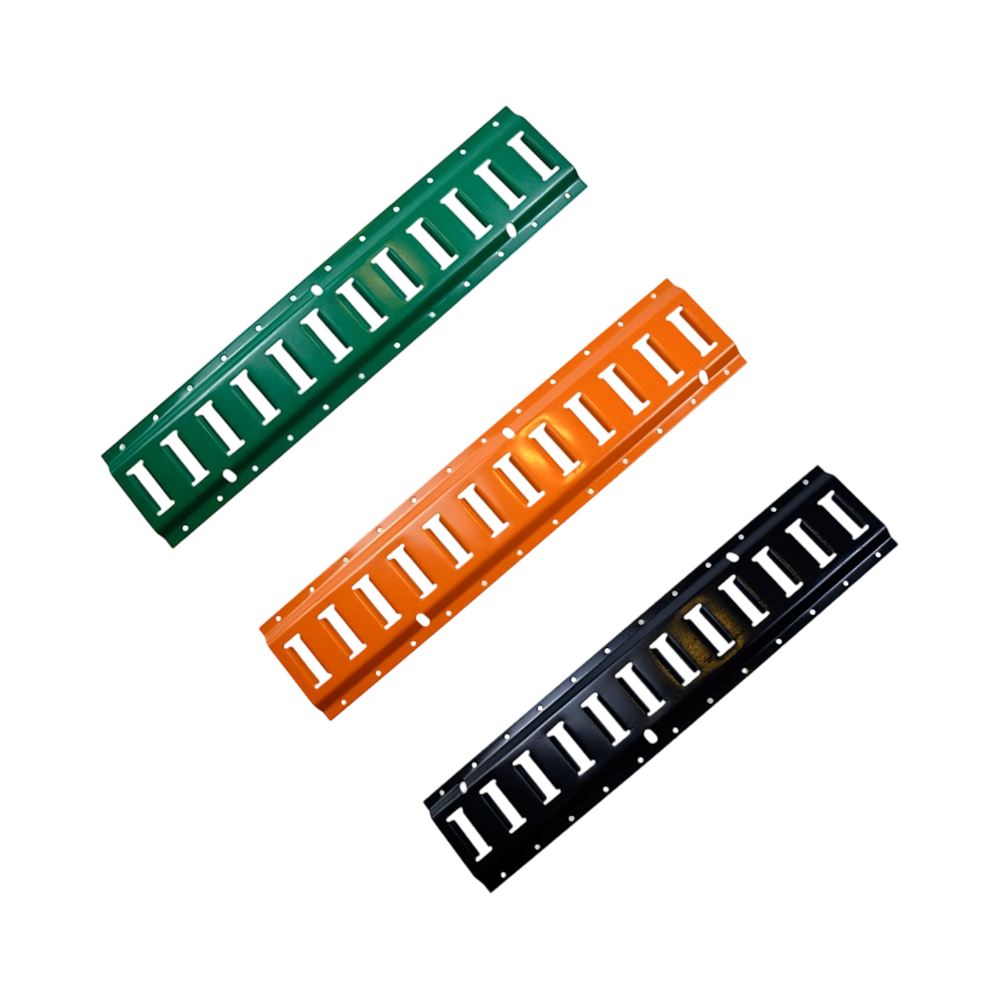
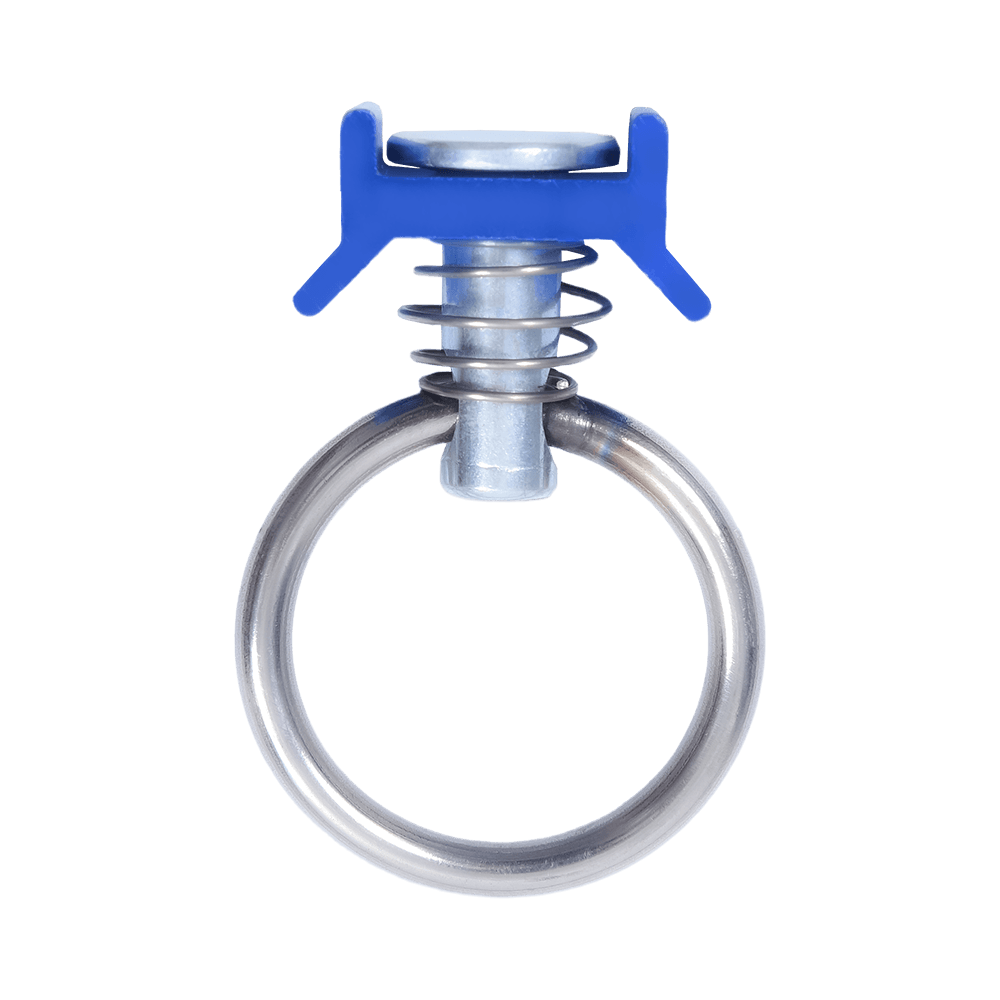
An E-Track system consists of galvanized or powder-coated steel rails — typically 2 inches wide — stamped with standardized oval slots at regular intervals (usually every 2 inches). These slots are the key: they accept a wide family of spring-loaded fittings including E track strap hooks, ratchet buckles, winch anchors, rope rings, and divider posts. The fitting snaps in with a quarter-turn, locks under load, and releases by hand without tools.
Rails mount horizontally along trailer walls, vertically on side posts, or on the floor — giving operators a reconfigurable tie-down grid rather than a fixed set of anchor points. The E track tie down anchor points are rated individually; commercial-grade steel rails commonly achieve 5,000 lbs working load per slot, with ultimate breaking strength exceeding 10,000 lbs under controlled lab conditions. This load capacity, combined with 360-degree rotating fittings, means a single rail installation can secure a furniture load one day and a pallet of industrial equipment the next — without any hardware change.
Cargo Anchor Working Load Comparison (lbs per point)
Working load ratings (lbs per anchor point) across common cargo securement systems. E-Track leads with 5,000 lbs per slot under standard commercial-grade steel rail specifications. D-Ring systems are competitive but fixed in position, reducing flexibility for varied cargo profiles. Bolt-down ring anchors typically rate below 2,000 lbs and are not repositionable without drilling.
The Federal Motor Carrier Safety Administration (FMCSA) cargo securement rules under 49 CFR Part 393 require that tie-down assemblies prevent forward, rearward, lateral, and vertical movement during transit. The number of tie-downs required scales with cargo weight and length — meaning a 10-foot load under 1,100 lbs needs at least one tie-down, while a 20-foot load over 10,000 lbs may need four or more. Critically, each tie-down must be attached to a rated anchor point, and that anchor must be capable of resisting forces equal to half the cargo's weight in any direction.
E-Track's slot-based architecture satisfies this requirement more efficiently than fixed anchor systems because operators can position anchor points precisely under the load's center of gravity. A misaligned fixed ring can create diagonal strap angles that reduce effective holding force by 15–30% compared to a perpendicular pull. With an E track tie down anchor, the fitting slides to the optimal position before the strap is tensioned — a practical advantage that directly improves compliance and reduces cargo shift incidents.
According to FMCSA data, cargo shift and spill incidents account for a meaningful share of large-truck crashes. Proper securement is not optional — it is a regulated safety requirement, and E track cargo straps paired with quality rails represent one of the most auditable, standardized ways to meet those requirements across mixed-cargo fleets.
Operators selecting a cargo control system frequently compare E-Track, D-Ring, and L-Track. Each has distinct strengths; the right choice depends on cargo type, load variability, and installation environment.
| Feature | E-Track | D-Ring | L-Track |
|---|---|---|---|
| Working Load (per point) | 5,000 lbs | 3,300 lbs | 2,500 lbs |
| Repositionable | Yes (tool-free) | No | Yes (tool-free) |
| Accessory Ecosystem | Largest | Limited | Moderate |
| Installation Complexity | Moderate | Low | Moderate |
| Corrosion Resistance | High (galvanized/powder) | Moderate | High |
| Best For | Mixed cargo, trailers, vans | Fixed cargo, flatbeds | Aircraft, specialty cargo |
System Performance Radar: E-Track vs D-Ring vs L-Track
Radar chart scoring five performance dimensions across E-Track, D-Ring, and L-Track systems on a 0–10 relative scale. E-Track dominates in load rating, flexibility, and accessory availability — the three dimensions that matter most for mixed-cargo and multi-stop operations. D-Ring systems score higher on installation ease but are permanently fixed and lack a comparable accessory ecosystem. L-Track performs well in corrosion resistance and moderate flexibility but has a narrower fitting standard with fewer widely available strap types.
Ratchet straps for E-Track combine a polyester webbing strap with a mechanical ratchet buckle and an E-Track–specific spring-loaded end fitting. The fitting's two tabs straddle the rail's oval slot and rotate 90 degrees to lock — a design that prevents pull-out under load while allowing one-hand release. The ratchet mechanism itself multiplies hand force: a typical 3-inch wide ratchet strap generates between 2,500 and 5,000 lbs of breaking strength from a 40–60 lb winding effort. This mechanical advantage is why E-Track ratchet straps are preferred for heavy equipment, pallets, and construction material loads.
Webbing material matters as much as the fitting. High-tenacity polyester, rated at 750–900 denier, resists UV degradation, moisture absorption, and chemical exposure better than nylon alternatives. When sourcing adjustable cargo straps for E-Track systems, look for webbing that meets EN 12195-2 (European) or WSTDA TS-1 (North American) standards — both specify minimum break strength, elongation limits, and edge binding requirements. CE and GS certifications on the hardware assembly confirm that the buckle and fittings have been independently tested.
Strap Tension Build-Up vs Ratchet Handle Turns (3" Ratchet Strap)
Approximate tension curve for a standard 3-inch ratchet strap on an E-Track fitting. Tension builds non-linearly — the first three turns take up webbing slack with relatively low force gain, while turns 6 through 10 produce the steepest tension increase. Operators should always apply a minimum of 6 full ratchet turns and visually confirm webbing engagement before releasing the handle. Over-tightening beyond rated working load can crush fragile cargo or fatigue the webbing over repeated cycles.
Correct installation is the foundation of a safe E-Track cargo securement system. Improperly mounted rails can delaminate from trailer walls or pull free under dynamic braking loads, turning a safety system into a projectile hazard. The following process reflects industry best practices for wall-mount horizontal rail installation in cargo vans and dry van trailers.
Floor-mount E-Track follows the same fastener logic but uses countersunk flat-head bolts to keep the rail surface flush with the floor. For refrigerated trailers with composite walls, consult the trailer manufacturer's load attachment specifications before drilling — some composite panels require backing plates to distribute fastener load across a larger area.
E-Track system adoption has grown consistently across multiple freight segments over the past decade. Last-mile delivery, LTL consolidation, and specialty cargo hauling all show increased E-Track specification rates as fleet operators recognize the compliance, efficiency, and damage-reduction benefits of flexible cargo control systems.
E-Track System Adoption Rate by Freight Sector (2024 Industry Survey Estimate, %)
Estimated E-Track system adoption rates across major freight sectors based on 2024 industry survey data. Last-mile delivery and furniture transport lead adoption, driven by high cargo variability and the need for frequent strap repositioning between stops. Construction and agriculture sectors show lower adoption partly due to flatbed and open-trailer use cases where fixed chain-and-binder systems remain common. Energy and manufacturing sectors are showing rising interest as equipment transport safety standards tighten globally.
Not all E track cargo straps are engineered equally. When procuring straps — whether for a single vehicle or bulk fleet sourcing — the following specifications determine whether a strap will perform safely over its service life.
When evaluating heavy duty E track tie down straps suppliers — particularly from manufacturing regions known for volume production — request independent test reports, not just label claims. Reputable OEM E-Track cargo straps manufacturers will provide batch-level test documentation as part of their quality delivery package.
E-Track Ratchet Strap Working Load Limit by Webbing Width
Working Load Limits (WLL) for E-Track ratchet straps by webbing width, based on standard industry ratings. The relationship is approximately linear — each additional half-inch of webbing width adds roughly 250–330 lbs of WLL. Fleets hauling mixed cargo should stock both 2-inch and 3-inch straps, as the wider option provides significantly more margin for equipment and pallet loads. Always verify the WLL label on the physical strap, as manufacturing tolerances and hardware configurations can shift the rating from these nominal values.
One of E-Track's most practical attributes is its adaptability across vehicle types. A system configured for a 53-foot dry van trailer uses the same fitting standard as a 9-foot cargo van upfit — meaning operators who run mixed fleets can standardize their strapping inventory across all vehicles. This compatibility reduces procurement complexity, simplifies driver training, and lowers the risk of mis-matched hardware in the field.
For cargo vans (Ford Transit, Mercedes Sprinter, RAM ProMaster, and similar platforms), a typical upfit places two horizontal rails on each side wall at mid-height, plus a floor track running the length of the cargo area. This six-rail configuration creates a grid of anchor points capable of securing loads from a single piece of furniture to a full van of boxed goods. The E track cargo securement safety guide approach for vans emphasizes that all anchor points must be rated higher than the single-strap WLL — never assume a self-tapping screw into sheet metal is sufficient.
In 48- and 53-foot trailers, E-Track is commonly installed on sidewalls (horizontal), rear posts (vertical), and occasionally on the floor near the nose for forward-motion restraint. Vertical E-Track on rear posts enables load dividers and vertical strap runs — useful for floor-to-ceiling securing of tall items. Many LTL carriers specify horizontal E-Track as standard on new trailer builds, a practice that has contributed to measurable reductions in cargo damage claims in fleet studies.
Fleets and distributors sourcing E track ratchet straps wholesale or looking for a trailer tie down straps bulk supplier should evaluate potential partners on more than unit price. Quality consistency, certification coverage, production capacity, and technical support capability all determine the total cost of ownership over a supply relationship.
Ningbo Force Auto Parts Co., Ltd. has grown from a 1,000 m² startup in 2008 to a 30,000 m² modern production base delivering over 12 million pieces annually. As a China OEM E-Track system manufacturer and ODM cargo straps manufacturer, the company holds CE, S-mark, GS, and ISO 9001:2015 certifications — covering the primary quality frameworks required for North American, European, and Australian market access. WSTDA membership provides additional alignment with North American cargo securement industry standards.
For procurement teams evaluating E track straps supplier China factory options, key questions to ask include: Can the supplier provide batch-level tensile test reports? What is the lead time for custom webbing lengths or hook configurations under OEM specifications? Does the quality management system cover incoming raw material inspection, in-process controls, and outgoing product testing? These questions distinguish volume manufacturers who can sustain consistent quality at scale from those who meet initial sample standards but drift on production runs.
Beyond regulatory compliance, the financial case for E-Track systems rests on measurable cargo damage reduction. Industry logistics studies have found that improperly secured cargo causes between 8% and 15% of in-transit product damage claims in LTL and last-mile operations. Each claim carries direct costs (product replacement, customer credit) and indirect costs (driver downtime, claim administration, insurance premium increases). Fleets that upgrade from fixed-ring or rope-loop systems to rated E-Track cargo control systems consistently report claim rate reductions within the first year of operation.
Illustrative Cargo Damage Claim Rate Trend After E-Track System Adoption (Indexed: Month 0 = 100)
Illustrative trend of cargo damage claim rate (indexed at 100 at installation month) following E-Track system adoption in a mixed-cargo last-mile operation. The decline is steepest in months 2–6 as drivers build proficiency with repositionable strap placement and ratchet tensioning technique. By month 12, claim rates in comparable fleet studies typically show a 35–55% reduction versus the pre-upgrade baseline. These operational gains compound through lower insurance costs and improved customer satisfaction scores over the following fiscal years.
An E-Track system is only as reliable as its maintenance program. Rail corrosion, fastener loosening, and webbing degradation are the three most common failure modes — all preventable with a structured inspection routine.
Document inspection findings and keep service records per vehicle. In the event of a cargo claim or DOT inspection, maintenance records demonstrating regular strap retirement and rail inspection are significant supporting evidence of due diligence.
Q1: What is an E-Track system used for?
E-Track systems are steel slotted rails mounted in trailers, cargo vans, and trucks to provide adjustable anchor points for securing cargo during transport. They accept ratchet straps, rope rings, and load dividers, making them suitable for furniture, equipment, pallets, and other freight types.
Q2: How do E-Track tie down straps work?
E-Track tie down straps have spring-loaded end fittings that insert into the oval slots on the rail and lock with a quarter-turn. The ratchet buckle tensions the webbing to secure cargo. To release, the ratchet lever is lifted and the fitting tabs are squeezed to disengage from the slot.
Q3: How much weight can E-Track hold?
Standard commercial-grade E-Track rails are rated at 5,000 lbs working load per anchor slot. The total system capacity depends on the number of active anchor points, the strap WLL, and correct fastener installation into structural members. Always confirm the rating on your specific rail and fastener configuration.
Q4: What is the difference between E-Track and D-Ring?
D-Rings are fixed anchor points welded or bolted permanently in one location; E-Track allows fittings to be positioned anywhere along the rail length. E-Track accommodates more strap types and accessories, while D-Rings are simpler for consistent, fixed-position tie-down applications like flatbed chains.
Q5: How do you install E-Track in a trailer?
Locate structural ribs or cross members in the trailer wall, mark a level line for rail height, pre-drill fastener holes every 12–16 inches, and secure the rail with 3/8-inch Grade 5 carriage bolts torqued to 25–30 ft-lbs. Always fasten into structural members — not just the skin panel — to achieve rated holding strength.
Q6: Can E-Track be used in vans and trucks?
Yes. E-Track is widely used in cargo vans (Transit, Sprinter, ProMaster) and box trucks. Side-wall horizontal rails at mid-height plus a floor track create a grid of anchor points for varied loads. The same fitting standard applies across vehicle types, simplifying fleet-wide strap standardization.
Q7: What straps fit E-Track rails?
Any strap with a standard E-Track spring-loaded end fitting will fit. This includes ratchet straps, cam buckle straps, rope rings, winch hooks, and load bar end fittings. Strap widths from 1 inch to 4 inches are available with compatible fittings. Verify that the fitting type (single-stud or double-stud) matches your rail slot size before ordering in bulk.
Q8: Are E-Track systems universal?
The E-Track slot dimension (1.25 inches × 0.625 inches) is an industry-standard specification shared across most manufacturers, making fittings largely interchangeable between rails from different brands. However, heavy-duty specialty rails with non-standard slot spacing or sizes exist — always confirm fitting compatibility before mixing brands in a single system.
Q9: Are E-Track straps safe for heavy loads?
When matched correctly to load weight and rail rating, E-Track ratchet straps are well suited for heavy loads. Use 3-inch or 4-inch wide straps with WLLs at or above your per-strap load calculation. Confirm that the rail's anchor point rating and fastener installation support the total load, and never use straps with visible damage or without visible WLL labels.
Q10: What is the best tie down system for cargo vans?
For cargo vans with variable loads, a combination of horizontal side-wall E-Track rails and a floor E-Track channel provides the highest flexibility. Pair them with 2-inch and 3-inch ratchet straps with E-Track fittings for mixed cargo. This setup outperforms fixed-ring configurations for last-mile and multi-stop operations because anchor points can be repositioned between deliveries without tools.


The company specialises in the field of logistics transportation,cargo control,lifting and hoisting products.


joe@forcerigging.com
+86-18650363763
No.469, Liansheng Road, Yinzhou District, Ningbo, Zhejiang Province, China.315111
Copyright © 2025 by Ningbo Force Auto Parts Co., Ltd. All Rights Reserved. China Ratchet Straps Manufacturers OEM/ODM Load Binding and Rigging Company


 English
 Español
 عربى
عربى 中文简体
中文简体