Ningbo Force Auto Parts Co., Ltd.
- joe@forcerigging.com
- +86-18650363763
Ningbo Force Auto Parts Co., Ltd.
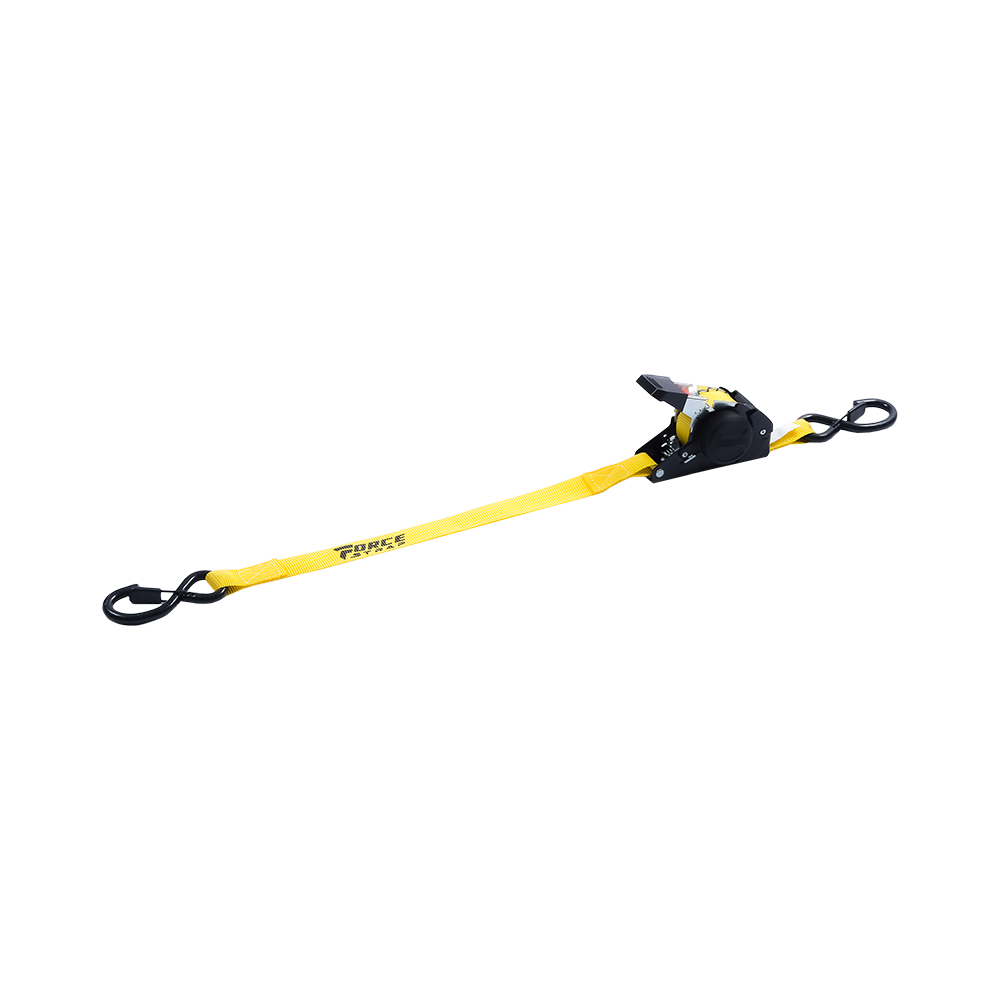
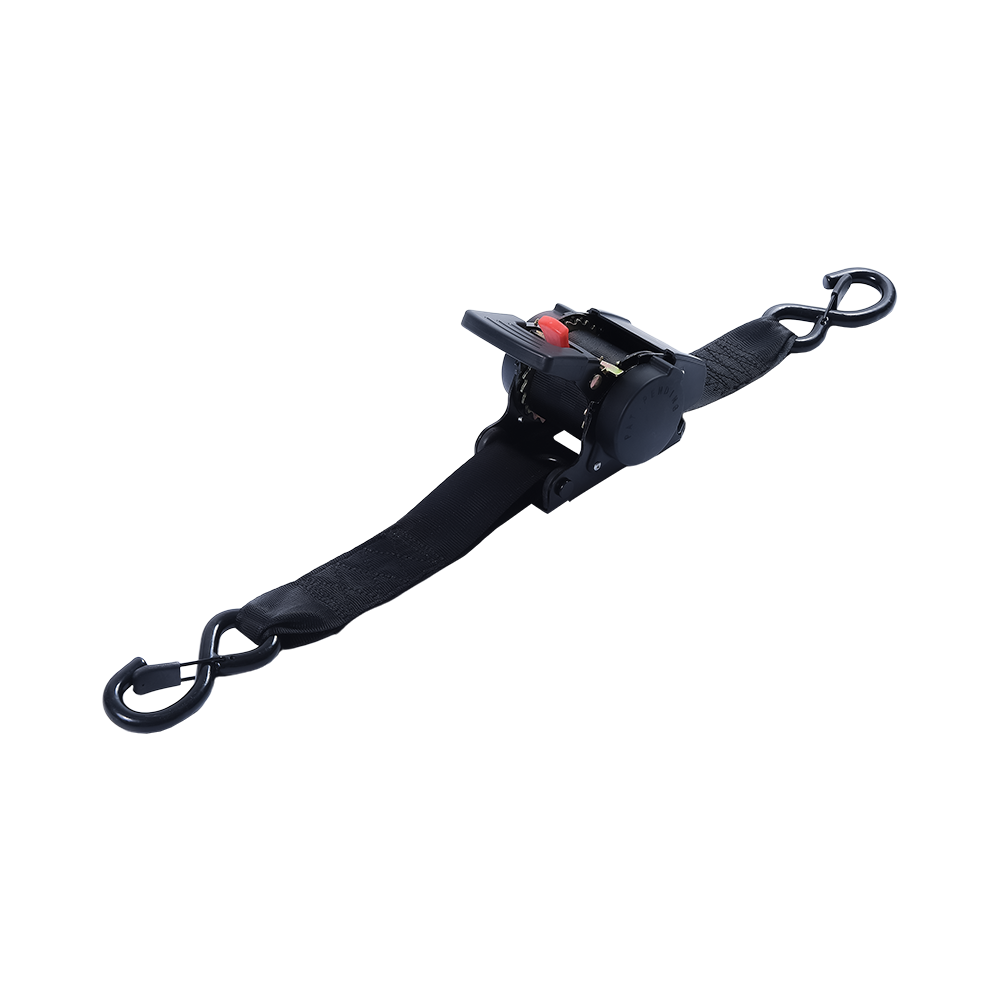
Automatic retractable ratchet straps outperform manual ones in three critical areas: speed of deployment, consistency of tension, and storage convenience. Where a manual ratchet strap requires coiling, threading, and repeated handle cycles to tighten, an automatic retractable model self-winds the excess webbing, applies pre-set tension with minimal effort, and retracts cleanly into its housing when not in use. For daily-use truck operators, fleet drivers, and cargo professionals, this difference translates into measurable time savings and fewer securing errors per shift. This article breaks down exactly where and why automatic retractable ratchet straps deliver a practical advantage.
Content
Time-on-task studies from logistics operations consistently show that securing a single cargo point with a manual ratchet strap takes between 90 and 150 seconds when accounting for strap retrieval, uncoiling, threading, and tensioning. The equivalent task with automatic retractable ratchet straps typically takes 30 to 50 seconds — a reduction of 40–65%.
For a driver who secures and releases an average of eight tie-down points per load, twice per day, that efficiency gain amounts to roughly 25–40 minutes saved daily. Over a 250-day working year, that approaches 150 hours of recovered productive time per driver.
Figure 1 — Average Time to Secure One Cargo Point (seconds)
Based on field observations across general freight and flatbed cargo operations
The functional differences between automatic and manual designs go beyond speed. The table below summarizes performance across the key dimensions that matter to cargo operators.
| Feature | Automatic Retractable | Manual Ratchet |
|---|---|---|
| Tensioning method | Spring or auto-tension mechanism | Manual handle cycling |
| Webbing retraction | Automatic wind-back | Manual coiling required |
| Typical WLL | 500–3,500 kg | 500–10,000 kg |
| Tension consistency | High — spring-regulated | Variable — operator-dependent |
| Over-tensioning risk | Low | Moderate to high |
| Storage footprint | Compact — self-contained housing | Bulky — loose webbing |
| Cold-weather usability | Good — fewer hand operations | Reduced — stiff webbing, small handle |
| Best application | Frequent use, light-medium cargo | Infrequent use, very heavy loads |
Retractable ratchet straps with auto tension use a calibrated spring mechanism inside the retractor housing. When the strap is pulled out and hooked to an anchor point, the spring maintains continuous inward pull on the webbing. As the load settles during transit — which happens within the first 10–15 minutes of highway driving — the spring automatically takes up the slack, keeping tension within the intended operating range without driver intervention.
This is a significant advantage. Studies on cargo load behavior show that manual ratchet straps lose 15–25% of their initial tension within the first 30 minutes of road travel due to webbing creep and load settling. With an auto-tensioning mechanism, this loss is compensated continuously, keeping the load securely positioned throughout the journey.
Interactive: Tension Retention Over Time — Auto vs. Manual
Drag the slider to see how tension changes during a 120-minute journey.
Time: 0 min
A common misconception is that retractable designs sacrifice load capacity for convenience. In practice, heavy-duty retractable ratchet straps for cargo are engineered to meet or exceed the same WLL standards as manual equivalents in the same weight class, with ratings commonly ranging from 1,500 kg to 3,500 kg WLL for 50 mm webbing variants.
These straps are well-suited for the following cargo categories:
For loads exceeding 3,500 kg per tie-down point, manual ratchet straps with heavy-duty ratings remain the appropriate choice, as the retractor spring mechanism in automatic designs is not engineered for sustained loads at that scale.
| Webbing Width | Typical WLL | Break Strength | Common Cargo |
|---|---|---|---|
| 25 mm (1 in) | 250–500 kg | 750–1,500 kg | Bicycles, luggage, light tools |
| 38 mm (1.5 in) | 1,000–1,500 kg | 3,000–4,500 kg | Motorcycles, small machinery |
| 50 mm (2 in) | 2,000–3,500 kg | 6,000–10,500 kg | ATVs, pallets, construction loads |
Truck tool boxes, underbody compartments, and cab storage areas have finite space. Compact automatic ratchet straps for trucks solve a persistent storage problem: manual ratchet straps, when not in use, form bulky, tangled bundles that consume disproportionate storage space and take time to untangle before use.
A compact retractable unit self-winds the webbing into its housing automatically. A typical 4.5-meter retractable strap stowed in its housing occupies roughly 60–70% less volume than the same strap manually coiled. For a truck carrying six strap sets, that difference can free up the equivalent of a full toolbox drawer.
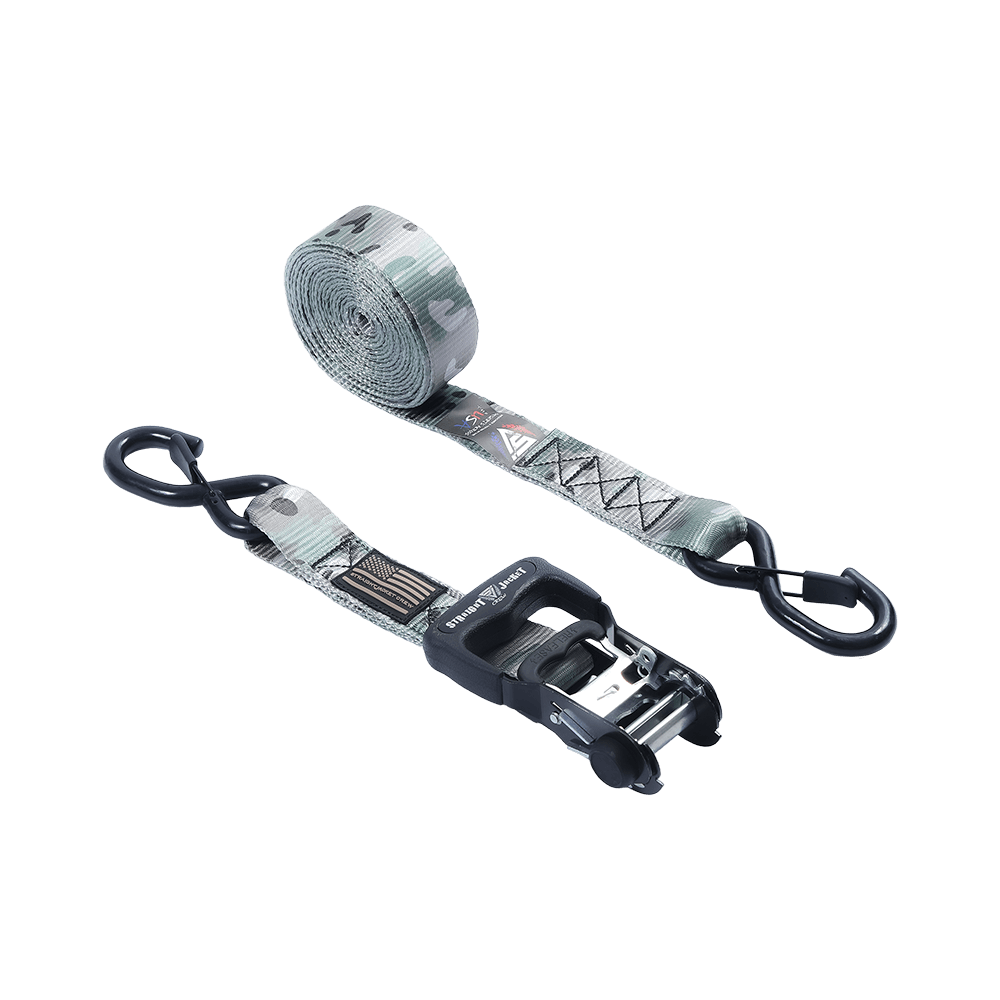
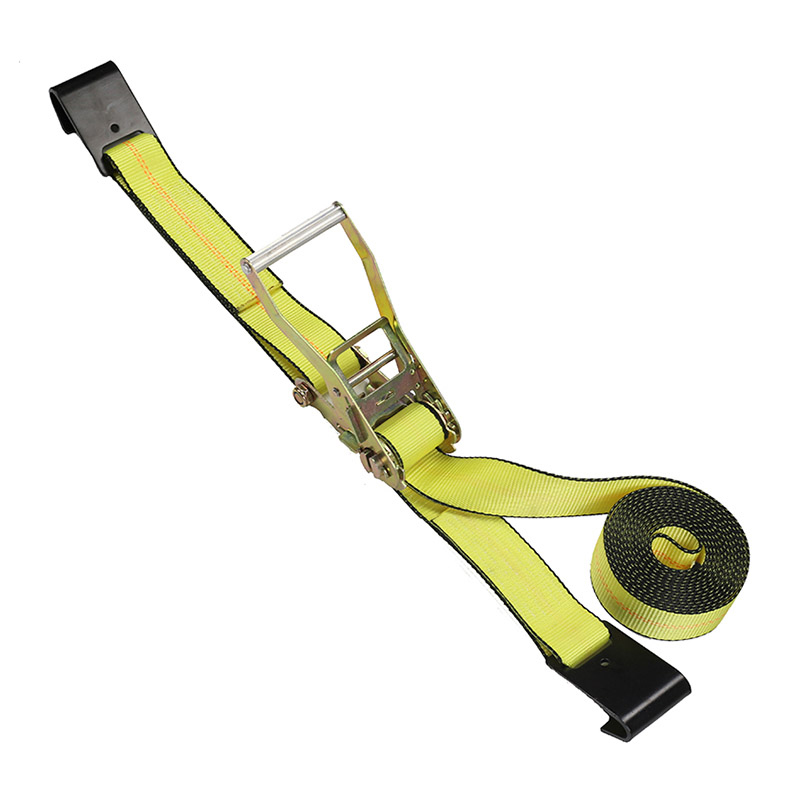
Manual ratchet straps require the operator to correctly thread the webbing, cycle the handle to the correct tension, and then properly fold and lock the handle to prevent accidental release. Each of these steps is a potential failure point — particularly for occasional users, fatigued operators, or workers in cold or wet conditions.
Automatic retractable ratchet straps reduce the number of manual steps to two: hook the strap to an anchor point and pull to tension. The auto-locking mechanism engages without a separate locking action. This simplification directly reduces the rate of improperly secured loads.
Interactive: Steps Required to Secure One Cargo Point
Click a strap type to view its securing steps.
Webbing degradation is the most common reason for strap replacement, and the majority of it occurs not during use but during storage and handling. Manual straps left loose in truck beds are exposed to UV radiation, abrasion from tools, contamination from fuel and chemicals, and mechanical damage from being driven over or caught in doors.
The retractor housing of an automatic strap physically shields the webbing from all of these exposure sources when not deployed. Field maintenance records from fleet operators suggest that retractable strap webbing lasts 30–50% longer before requiring replacement compared to manually stored equivalents used in the same conditions.
Figure 2 — Estimated Webbing Service Life: Auto Retractable vs. Manual (months, daily use)
Estimated average across mixed outdoor/truck-bed storage conditions
Automatic retractable designs are the better choice for most regular cargo applications, but there are specific scenarios where manual ratchet straps remain the more appropriate tool:
Retractable units require the same webbing inspections as manual straps, plus additional checks on the retractor mechanism itself.
Maintenance Checklist — Click to Mark Complete
0 / 8 completed
Q1: Are automatic retractable ratchet straps approved for DOT-regulated cargo transport?
Yes, provided the straps meet the required WLL for the cargo being transported and comply with applicable regulations such as FMCSA 49 CFR Part 393 in the US or equivalent national standards. Always verify the strap's WLL rating and ensure the aggregate WLL across all tie-downs meets regulatory minimums for your load weight.
Q2: Can the retractor spring wear out over time?
Yes. Retractor springs are rated for a finite number of extension and retraction cycles, typically 5,000–15,000 cycles depending on the design. Signs of spring fatigue include slow retraction, failure to fully wind back webbing, or a noticeably weaker pull. When this occurs, replace the unit — the spring is generally not a serviceable component in field conditions.
Q3: Do retractable ratchet straps work in freezing temperatures?
Most retractable straps function adequately down to -20°C, but retraction speed slows as spring tension increases in cold conditions. Polyester webbing maintains most of its rated strength in cold weather. Avoid using straps that have ice buildup inside the retractor housing — warm them in a cab before deployment to restore normal function.
Q4: How do I know when a retractable strap needs to be replaced?
Replace immediately if any of the following are present: cut or frayed webbing, the auto-lock no longer holds under manual pull-back testing, hook deformation, housing cracks near the spool, or the WLL label is illegible. Do not attempt to repair damaged straps — the cost of a strap is negligible compared to the cost of a load-shift incident.
Q5: What is the correct strap angle for maximum holding force?
The optimal strap-to-load angle is between 30° and 60° relative to the load surface. At very shallow angles (under 15°), the vertical component of the holding force — which prevents the load from lifting or shifting — becomes very small, reducing effective restraint. Positioning anchor points to maintain a 45° average angle across all straps provides the best balance of horizontal and vertical restraint forces.

The company specialises in the field of logistics transportation,cargo control,lifting and hoisting products.


joe@forcerigging.com
+86-18650363763
No.469, Liansheng Road, Yinzhou District, Ningbo, Zhejiang Province, China.315111
Copyright © 2025 by Ningbo Force Auto Parts Co., Ltd. All Rights Reserved. China Ratchet Straps Manufacturers OEM/ODM Load Binding and Rigging Company


 English
 Español
 عربى
عربى 中文简体
中文简体