Ningbo Force Auto Parts Co., Ltd.
- joe@forcerigging.com
- +86-18650363763
Ningbo Force Auto Parts Co., Ltd.
Properly used tie down straps are the single most effective tool for preventing cargo shift, damage, and road hazards during long-distance transportation. When applied correctly — with appropriate working load limits, correct strap angles, and verified anchor points — tie down straps can restrain loads experiencing forces of up to 3× their static weight under hard braking or cornering. The key is not simply owning straps, but understanding how to select, position, tension, and inspect them for every load type and journey.
According to the Federal Motor Carrier Safety Administration (FMCSA), unsecured or improperly secured cargo contributes to approximately 25,000 accidents and 90 fatalities per year on U.S. roads. This guide walks through every practical step — from strap selection to final inspection — so that your cargo arrives safely regardless of distance or road conditions.
Content
Not all tie down straps are built for the same purpose. Selecting the wrong type for your load is one of the most common causes of cargo failure during transit. The four primary categories cover virtually all long-distance transport scenarios.
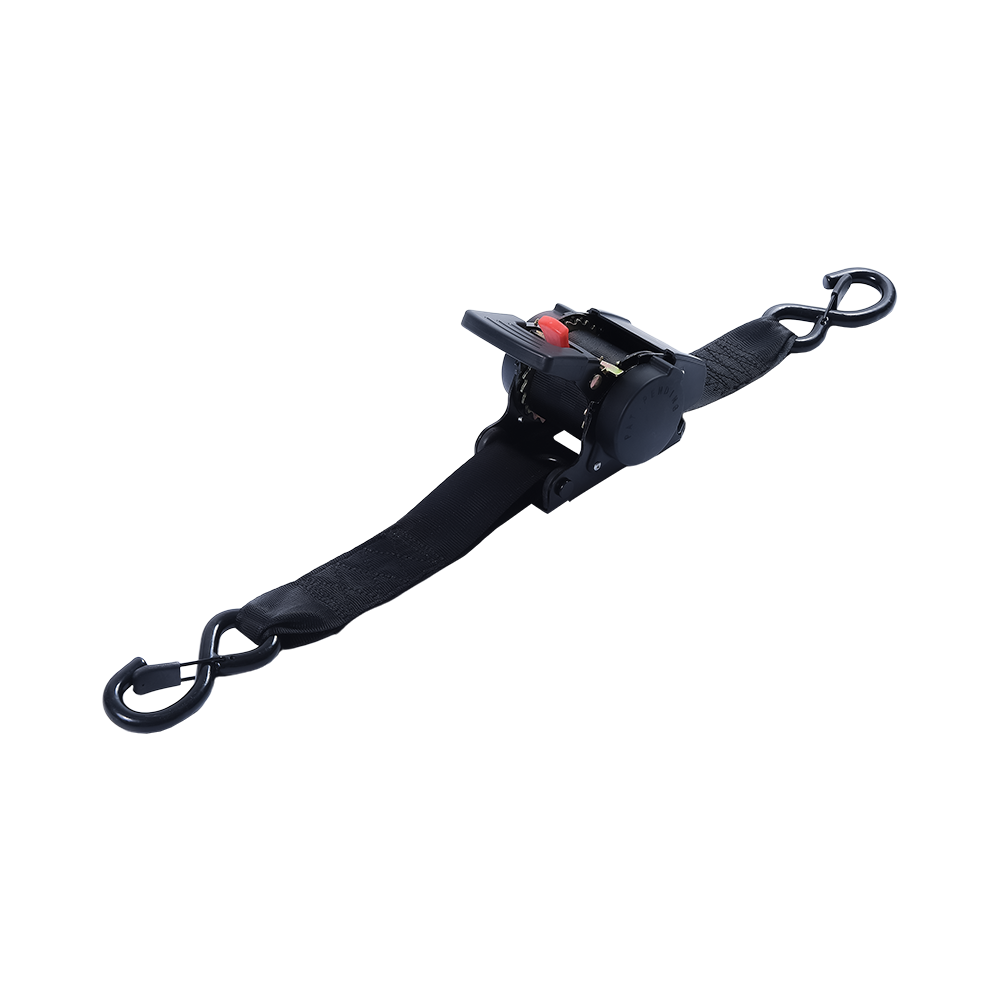
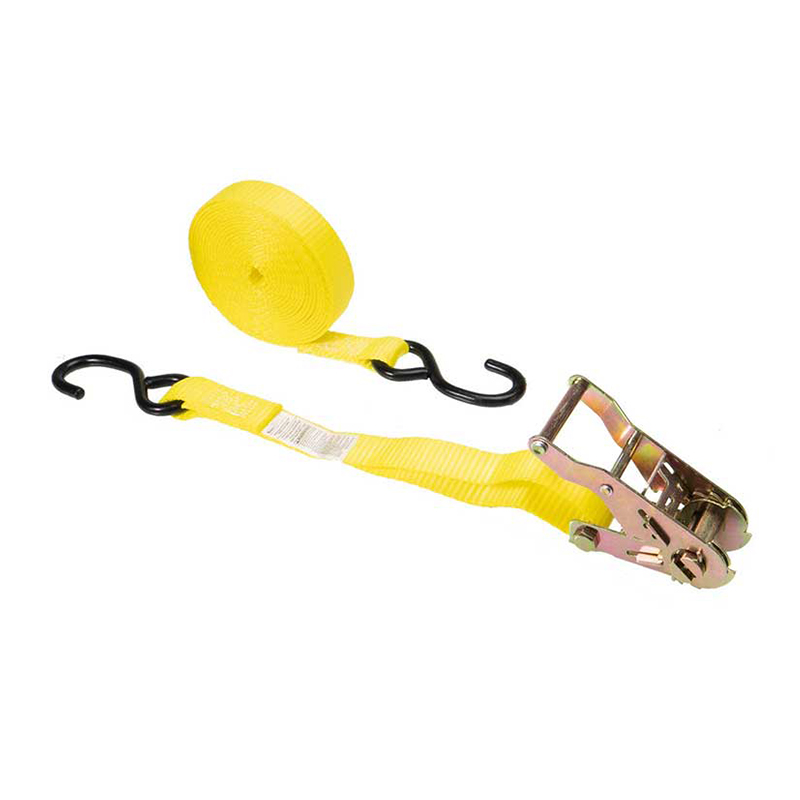
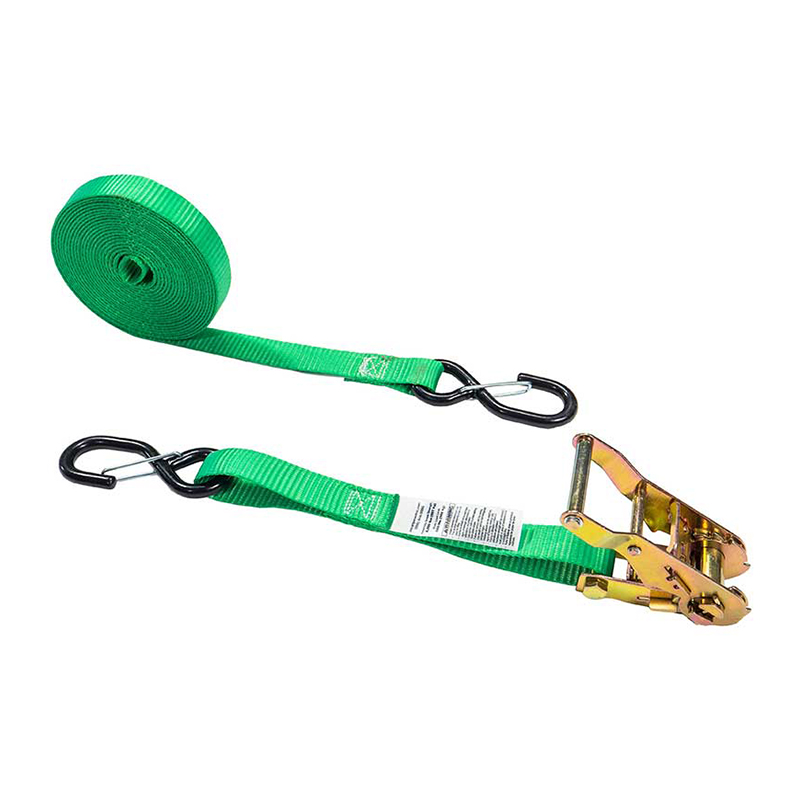
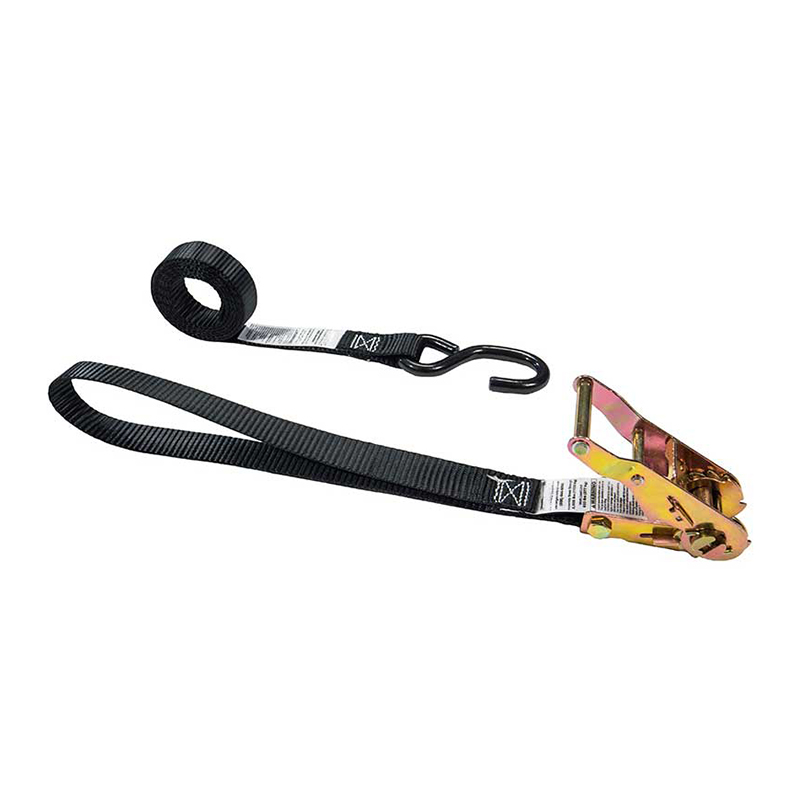
Ratchet straps use a mechanical ratcheting mechanism to generate and maintain high tension. They are the standard choice for heavy or dense cargo — machinery, ATVs, motorcycles, lumber, and palletized goods. A standard 2" ratchet strap has a working load limit (WLL) of 3,333 lbs and a break strength of 10,000 lbs. The ratchet mechanism holds tension without slippage, making these ideal for long hauls where vibration can loosen cam buckle systems.
Cam buckle straps use a friction-based cam to hold strap tension and are best suited for lighter or fragile loads — furniture, appliances, bicycles, and soft goods — where over-tensioning could cause damage. Typical WLL ranges from 500 to 1,500 lbs. They are faster to apply than ratchet straps but should not be used on heavy loads or high-vibration routes where tension maintenance is critical.
Winch straps are flat webbing straps fed through a winch bar mounted on flatbed trailer rails. They are the dominant choice in commercial flatbed trucking, designed for continuous-duty use with WLLs typically ranging from 5,400 to 6,600 lbs per strap. Winch straps require proper winch bar installation and are not suitable for pickup truck beds without adapters.
These straps connect to E-track or L-track rail systems installed in enclosed trailers, cargo vans, and box trucks. The track system provides flexible anchor points along the full length of the vehicle, allowing precise positioning for varied load configurations. WLL is typically 1,500–3,300 lbs per strap, with the track system itself rated for corresponding loads.
Every tie down strap sold in the U.S. and EU must display its working load limit (WLL), which represents the maximum force the strap is rated to restrain under normal use. Break strength — the force at which the strap will fail — is typically 3× the WLL, providing a built-in safety factor.
| Strap Width | Typical WLL | Break Strength | Common Applications |
|---|---|---|---|
| 1 inch | 500 lbs | 1,500 lbs | Bicycles, light furniture, small boxes |
| 1.5 inch | 1,000–1,500 lbs | 3,000–4,500 lbs | Motorcycles, appliances, lumber bundles |
| 2 inch | 3,333 lbs | 10,000 lbs | ATVs, equipment, pallets, vehicles |
| 3 inch | 5,400 lbs | 16,200 lbs | Heavy machinery, construction equipment |
| 4 inch | 6,666–10,000 lbs | 20,000–30,000 lbs | Oversized loads, commercial flatbed |
A critical rule: the aggregate WLL of all straps used must equal at least 50% of the total cargo weight per FMCSA regulations (49 CFR Part 393). For a 6,000 lb load, you need a minimum combined WLL of 3,000 lbs — achievable with two 2" ratchet straps at 3,333 lbs WLL each, providing substantial safety margin.
Correct application technique is what separates effective cargo restraint from a false sense of security. Follow these steps for every load before departing on a long-distance route.
The number of straps required is determined by both regulatory minimums and load geometry. FMCSA 49 CFR Part 393 establishes the following minimums for highway transport in the United States:
These are legal minimums. Best practice for long-distance transport on interstates or mountain routes is to use 1.5–2× the regulatory minimum to account for vibration-induced tension loss and the dynamic forces of sustained highway driving. For a 20-foot load on a flatbed, regulations require 3 straps; professional drivers typically use 4–6.
Different cargo shapes and materials require different strap routing strategies. Generic over-the-top tensioning is not appropriate for all loads.
Use 4-point tie down with straps attached to the frame or designated tow points — never to handlebars, bodywork, or exhaust. For motorcycles, compress the suspension slightly with front straps so the bike stands upright under tension. Use 2" ratchet straps with a minimum 3,333 lb WLL for motorcycles and 4 straps per axle for full vehicles.
Wrap straps around the full pallet footprint, not just individual boxes. Use double-loop configurations or pallet wrap combined with straps for loose or stacked goods. A standard 48"×40" pallet loaded to 2,000 lbs requires a minimum of 2 ratchet straps crossing the load diagonally plus pallet wrap, or 4 straps in a 2×2 grid pattern for heavy or tall stacks.
Cylindrical loads can roll under tension, making straight over-the-top strapping insufficient. Use chocks or blocking between round loads plus strap configurations that prevent lateral rolling. Binder chains combined with web straps are the professional standard for pipe bundles and log loads on flatbeds.
Use cam buckle straps rather than ratchets to prevent over-tensioning. Place foam padding, moving blankets, or rubber strap protectors between the webbing and all contact surfaces. For glass, art, or electronics, consider lashing to a purpose-built crate first, then securing the crate — this distributes strap forces across a rigid structure rather than directly onto the fragile item.
Understanding failure modes is as important as knowing correct technique. These are the most frequently cited causes of cargo shifting or loss during long-distance transport:
Tie down straps are safety-critical equipment and must be maintained accordingly. A strap that looks intact visually may have lost significant tensile strength through UV exposure, chemical contact, or hidden webbing damage.
Store straps loosely coiled or on hooks — never kinked or tightly wound for extended periods. Keep away from direct sunlight, fuel, solvents, and battery acid. Most manufacturers recommend retiring polyester web straps after 3–5 years of regular use, or immediately after any load where the strap was subjected to a shock load (sudden jerk at or near WLL). Commercial carriers are required to remove from service any strap with webbing damage visible to the naked eye.
The working load limit (WLL) is the maximum load a strap is designed to safely restrain under normal operating conditions — it is the number you calculate against when securing cargo. Break strength is the force at which the strap will catastrophically fail and is typically 3× the WLL, providing a safety factor for dynamic forces like braking and road vibration. You should never load a strap anywhere near its break strength; always use the WLL as your operational ceiling and select straps with WLLs that collectively meet or exceed the required restraint force for your cargo.
Yes, provided the strap type and hardware match the anchor systems available. However, straps used regularly on outdoor flatbed loads experience significantly higher UV exposure and should be inspected more frequently — at least monthly for commercial use — and retired sooner than straps used exclusively in enclosed trailers. If straps show any fading, stiffness, or surface cracking from UV, retire them regardless of age; UV-degraded polyester webbing can lose 25–40% of rated strength before visible failure.
Yes, over-tensioning is a real risk, particularly with cam buckle straps on fragile or compressible cargo. For ratchet straps on rigid loads (machinery, vehicles), tighten until there is no webbing sag and the strap resists hand pressure — this is typically sufficient. Do not attempt to achieve maximum ratchet travel on every load; over-tensioning compressible items like wood pallets or foam-packed goods can cause structural damage and paradoxically reduce effective restraint as the cargo deforms. For fragile items, use a torque-limited cam buckle strap or specify a maximum tension in your loading procedure.
In the U.S., FMCSA 49 CFR Part 393 governs cargo securement for commercial vehicles, specifying minimum strap counts, WLL requirements, and anchor point standards. For private non-commercial transport, individual state laws apply, though most mirror FMCSA standards. Certain specialized cargo — hazardous materials, oversized loads, and livestock — require additional restraint systems beyond standard web straps and may require permits. Always verify jurisdiction-specific requirements for commercial hauls; non-compliance can result in fines of $16,000 or more per violation under federal DOT enforcement.
Industry best practice and FMCSA guidelines recommend the first re-inspection within the first 50 miles or 1 hour of travel, whichever comes first. After that, re-check tension every 150–200 miles on highway routes, or after any significant road event such as rough pavement, emergency braking, or loading changes. Cargo can lose 20–30% of initial strap tension through material compression and vibration within the first hour of travel — catching this early prevents progressive load shift that compounds over long distances.
Most commercial tie down straps use polyester webbing, which offers excellent strength-to-weight ratio, low stretch (less than 3% at WLL), good UV resistance, and resistance to most fuels and dilute acids. Nylon webbing is used in some applications where elasticity is beneficial (towing), but its 10–15% stretch under load makes it unsuitable for rigid cargo restraint on long hauls where load movement must be minimized. Polypropylene straps are cheaper but significantly weaker and degrade faster under UV — they are not recommended for highway or long-distance transport. For most applications, polyester ratchet straps are the definitive choice for long-distance cargo security.

The company specialises in the field of logistics transportation,cargo control,lifting and hoisting products.


joe@forcerigging.com
+86-18650363763
No.469, Liansheng Road, Yinzhou District, Ningbo, Zhejiang Province, China.315111
Copyright © 2025 by Ningbo Force Auto Parts Co., Ltd. All Rights Reserved. China Ratchet Straps Manufacturers OEM/ODM Load Binding and Rigging Company


 English
 Español
 عربى
عربى 中文简体
中文简体