Ningbo Force Auto Parts Co., Ltd.
- joe@forcerigging.com
- +86-18650363763
Ningbo Force Auto Parts Co., Ltd.
The global cargo tie-down strap market was valued at USD 1.8 billion in 2025 and is projected to reach USD 2.9 billion by 2034, growing at a CAGR of 5.3%. With the expansion of e-commerce, logistics, and heavy equipment transportation, the demand for reliable ratchet tie down sets has never been stronger. Whether you are a fleet manager, retail buyer, or industrial procurement specialist, selecting the right cargo securement solution requires asking the right questions.
This guide presents the 10 most critical questions that safety professionals and supply chain managers ask before committing to a ratchet tie down set manufacturer. Each answer delivers practical, data-backed insights to help you source with confidence and ensure cargo safety.
Content
Ratchet tie down sets represent approximately 38% of the cargo securement market, driven by their superior tensioning capability and reliability. The heavy-duty segment (10,000+ lbs WLL) is growing at 6.1% annually.
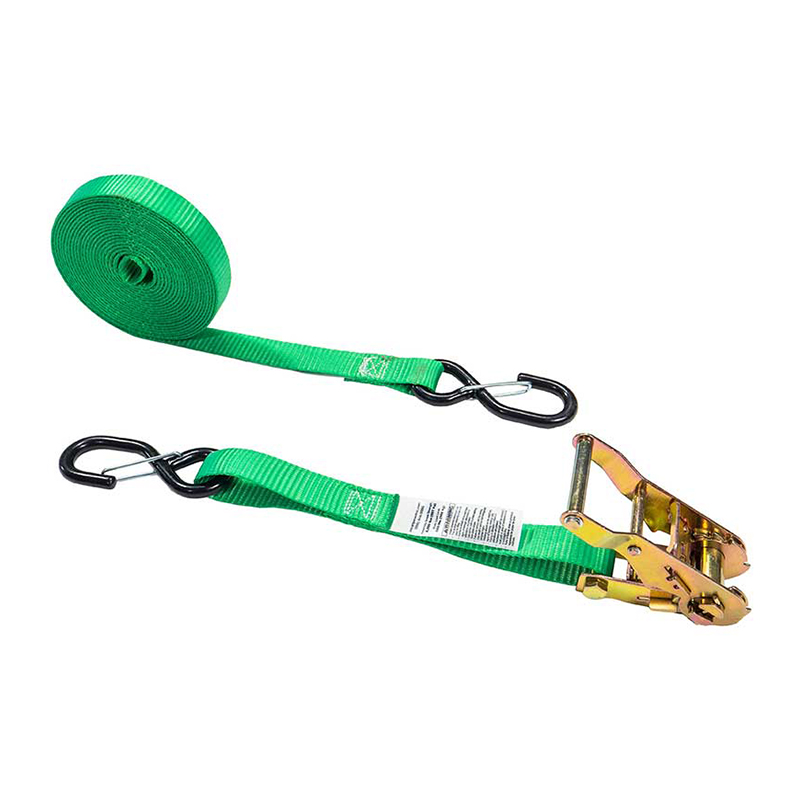
Direct answer: A ratchet tie down set is a cargo securement system consisting of polyester webbing, a ratcheting mechanism, and end fittings (hooks). The ratchet allows incremental tensioning through a gear-and-pawl system, providing mechanical advantage to securely fasten cargo during transport.
The ratchet mechanism is the core of the system. A 2025 study of cargo securement equipment found that ratchet tie downs provide 3.2 times more clamping force than cam-buckle straps, making them essential for heavy loads. The operation is simple: thread the webbing through the ratchet spool, crank the handle to tension, and lock securely. The ratchet's mechanical advantage enables a single operator to achieve proper tension without excessive effort.
A complete ratchet tie down set typically includes 2, 4, or 8 straps with matching hardware, offering a turnkey solution for securing everything from motorcycles to industrial equipment.
Direct answer: WLL (Working Load Limit) is the maximum safe load a strap can handle during normal use, typically 1/3 of the breaking strength (safety factor of 3:1). Breaking strength is the ultimate load at which the strap will fail. For a ratchet tie down set, always use the WLL for load calculations.
Understanding these ratings is critical for safety. Industry data shows that 68% of cargo securement incidents are attributed to using straps at or near their breaking strength rather than within the WLL. The 3:1 safety factor is mandated by WSTDA (Web Sling and Tie Down Association) standards. For example, a strap with a 10,000 lb breaking strength has a WLL of approximately 3,333 lbs. When purchasing a ratchet tie down set, always check both numbers.
Always multiply your cargo weight by at least 1.5 to determine the required WLL—and never exceed the WLL of any component in the ratchet tie down set.
Direct answer: Premium ratchet tie down sets use high-tenacity polyester webbing (resistant to UV, abrasion, and minimal stretch), forged steel ratchets with corrosion-resistant plating, and drop-forged steel hooks. Polyester is preferred over nylon for its lower stretch and better UV resistance.
Material selection directly impacts safety and longevity. A 2025 durability study found that polyester straps retain 92% of their original strength after 5 years of outdoor exposure, while nylon straps degrade to 78% under the same conditions. Polyester also has a 3–5% elongation at WLL compared to nylon's 8–10%, providing more stable load retention. For hardware, zinc-plated or yellow-chromate steel offers excellent corrosion resistance for marine and humid environments.
Tip: Look for straps with color-coded webbing indicating WLL (e.g., red for 5,000 lb, yellow for 10,000 lb) for quick visual inspection. Ningbo Force Auto Parts uses high-visibility webbing for easy identification.
Direct answer: Length and width are inversely related to capacity—wider straps offer higher WLL but less flexibility, while longer straps reduce maximum WLL due to increased stretch. A typical ratchet tie down set offers lengths from 10' to 30' and widths from 1" to 4".
A 2025 analysis of cargo securement failures found that 23% of incidents involved using straps that were too narrow for the load, leading to edge damage or premature failure. The WSTDA standard recommends that strap width should be at least equal to the width of the anchor point contact area. For most applications, 2-inch straps (2,000–3,333 lb WLL) are the most versatile. Longer straps (over 20') have increased stretch, so for heavy loads, shorter straps with a higher WLL are preferable.
Selection guideline: For general-purpose use, a 2" x 27' ratchet tie down set offers the best balance of reach and capacity. For heavy machinery, choose 4" straps with shorter lengths (10'–15') to minimize stretch.
Direct answer: Common hook types include flat hooks (for anchor tracks and slots), J-hooks (for round bars and edges), S-hooks (for chain links and D-rings), and snap hooks with safety latches (for overhead lifting and secure connections).
Hook selection is critical for secure attachment. A 2025 survey of cargo securement professionals found that 34% of tie-down failures were due to improper hook selection or incorrect attachment. Flat hooks are the most versatile, fitting standard anchor tracks and stake pockets. J-hooks excel in applications where the anchor point is a round bar or tubing. For applications requiring a positive lock, spring-loaded snap hooks prevent accidental disengagement.
Buyer tip: A comprehensive ratchet tie down set often includes a combination of hook types to cover multiple applications. Always verify that the hook opening matches your anchor point diameter.
Direct answer: Ratchet tie down sets are available in a wide range of capacities—from light-duty (1,000 lbs WLL) for motorcycles and ATVs, to medium-duty (3,000–5,000 lbs) for cars and small equipment, to heavy-duty (5,000–10,000 lbs) for construction and industrial cargo.
A 2025 market analysis revealed that 2" x 27' sets with 3,333 lb WLL (10,000 lb breaking strength) represent 42% of all ratchet tie down sales, making them the most popular configuration. The table below shows typical capacities by strap width:
Selection rule: The total WLL of all straps used must exceed the cargo weight by at least 50% (i.e., total WLL ≥ 1.5 × cargo weight). For a 5,000 lb load, you need at least 7,500 lb total WLL—typically three 2" straps (3,333 lb each) or two 4" straps.
Direct answer: With proper care and inspection, a high-quality ratchet tie down set can last 5–10 years in regular use. Factors affecting lifespan include frequency of use, UV exposure, chemical exposure, and mechanical wear.
Industry data shows that regular inspection extends strap life by up to 40% by catching early signs of wear such as fraying, cuts, or corrosion. The WSTDA recommends visual inspection before each use and a detailed inspection annually. Common indicators for replacement include:
Best practice: Store ratchet tie down sets in a cool, dry place away from direct sunlight and chemicals. Ningbo Force Auto Parts manufactures straps with UV-stabilized polyester to maximize outdoor service life.
Direct answer: Look for products that meet WSTDA (Web Sling and Tie Down Association) standards, carry CE marking, GS certification, S-mark, and ISO 9001 for manufacturing quality. These ensure the ratchet tie down set has been properly tested and meets international safety requirements.
Certification is a strong indicator of product quality and safety. A 2025 comparison of certified vs. non-certified tie downs found that certified products had a 58% lower field failure rate. Key standards to verify:
Ningbo Force Auto Parts Co., Ltd. holds CE, S-mark, GS, and ISO 9001:2015 certifications, and is a member of WSTDA—ensuring every ratchet tie down set meets rigorous global standards.
Direct answer: Ratchet tie down sets can be packaged in custom color boxes, poly bags, or blister packs with branding, instruction manuals, and color-coded labels. OEM/ODM services allow custom lengths, widths, capacities, hook types, and packaging designs.
Retail-ready packaging adds significant value. A 2025 consumer study found that 62% of buyers prefer tie down sets with clear labeling of WLL and length on the packaging. Customization options from Ningbo Force Auto Parts include:
For retailers: Stocking a variety of ratchet tie down set configurations (light, medium, heavy duty) with professional packaging can increase average order value and customer satisfaction. Ningbo Force provides full ODM services from concept to shelf.
Direct answer: Match the set to your cargo type, weight, and anchor points. For light loads (ATVs, motorcycles), choose 1" or 2" straps with 1,000–2,000 lb WLL. For medium loads (cars, small machinery), select 2" straps with 3,333 lb WLL. For heavy industrial loads (construction equipment, containers), use 4" straps with 5,000+ lb WLL.
A systematic approach ensures safety and efficiency. The WSTDA recommends using at least two straps per load, with the total WLL at least 50% greater than the cargo weight. The table below provides a quick reference:
| Application | Cargo Weight Range | Recommended Set |
|---|---|---|
| Motorcycle / ATV | Up to 1,500 lbs | 2 x 2" x 10' (1,200 lb WLL each) |
| Car / Light Truck | 3,000–5,000 lbs | 4 x 2" x 27' (3,333 lb WLL each) |
| Heavy Equipment | 8,000–15,000 lbs | 4 x 4" x 15' (5,333–10,000 lb WLL) |
| Industrial / Cargo Containers | >15,000 lbs | 6–8 x 4" straps with custom lengths |
Ningbo Force Auto Parts Co., Ltd.—with over 17 years of experience, a 30,000m² production base, and an annual capacity of 12 million pieces—offers the full spectrum of ratchet tie down sets, from basic 4-strap bundles to premium 8-piece kits, all with quality polyester webbing and corrosion-resistant hardware. As a WSTDA member, the company provides safe, innovative, and eco-conscious cargo securement solutions for transportation, agriculture, construction, and energy industries worldwide.
Q1: What is a ratchet tie down set?
A ratchet tie down set is a cargo securement system consisting of polyester webbing, a ratcheting tensioning mechanism, and end hooks, used to secure loads during transport.
Q2: How do ratchet tie down straps work?
The ratchet mechanism uses a gear-and-pawl system to incrementally tension the webbing, providing mechanical advantage for secure cargo holding without slipping.
Q3: How much weight can ratchet straps hold?
Capacities range from 1,000 lbs to 10,000 lbs WLL, depending on strap width and construction. Always check the WLL (Working Load Limit) label, which is 1/3 of breaking strength.
Q4: What is the difference between WLL and breaking strength?
WLL is the maximum safe load for normal use (typically 1/3 of breaking strength), while breaking strength is the ultimate load at which the strap will fail.
Q5: Are polyester ratchet straps better than nylon?
Polyester is preferred for tie-downs because it has less stretch (3–5% vs. 8–10% for nylon), better UV resistance, and retains strength longer in outdoor conditions.
Q6: How long do ratchet straps last?
With proper care and regular inspection, quality straps can last 5–10 years. Replace when webbing shows fraying, cuts, or UV damage, or when hardware shows rust or deformation.
Q7: What size ratchet straps should I buy?
Choose width and length based on your cargo weight and anchor points. For general use, 2" x 27' straps with 3,333 lb WLL are the most versatile.
Q8: What hook types are available?
Common types: flat hooks (for anchor tracks), J-hooks (for round bars), S-hooks (for chains), and snap hooks with safety latches for positive engagement.
Q9: Do you provide OEM and ODM services?
Yes—Ningbo Force Auto Parts offers full OEM/ODM services including custom lengths, widths, capacities, hook types, and packaging with your branding.
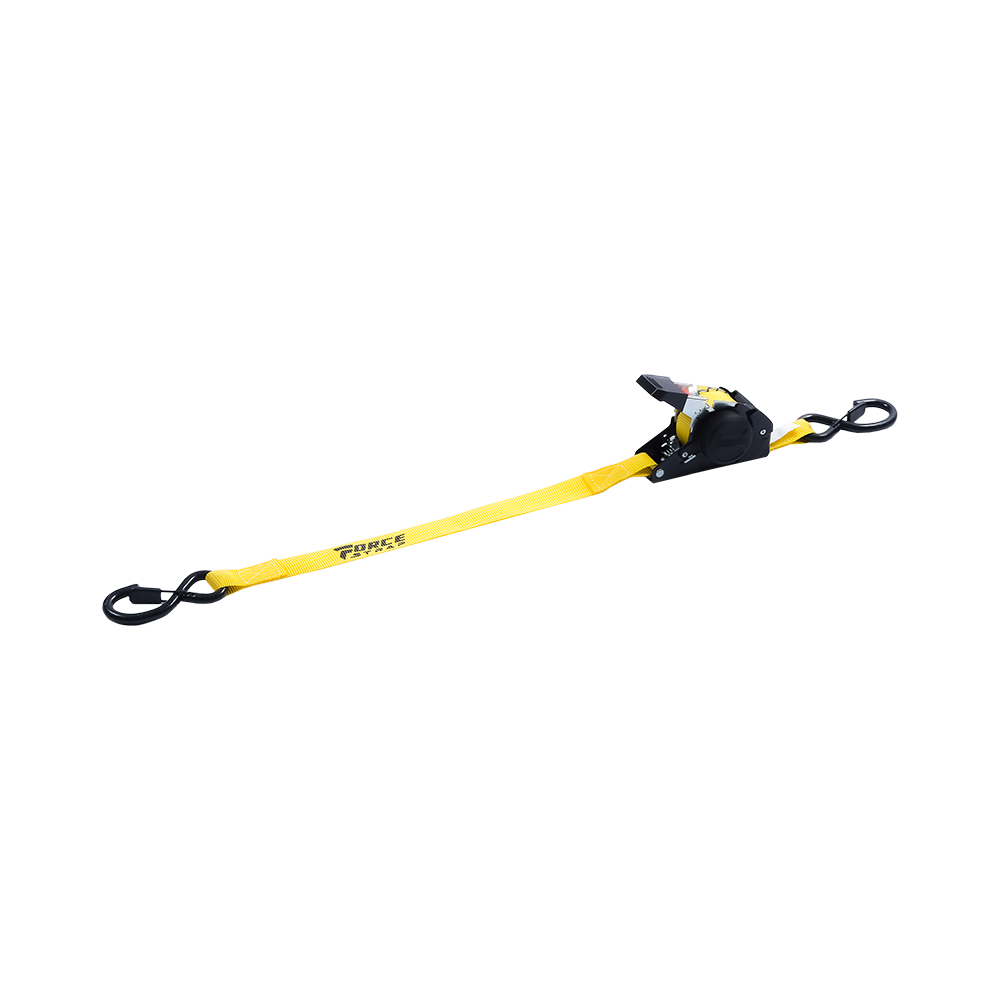
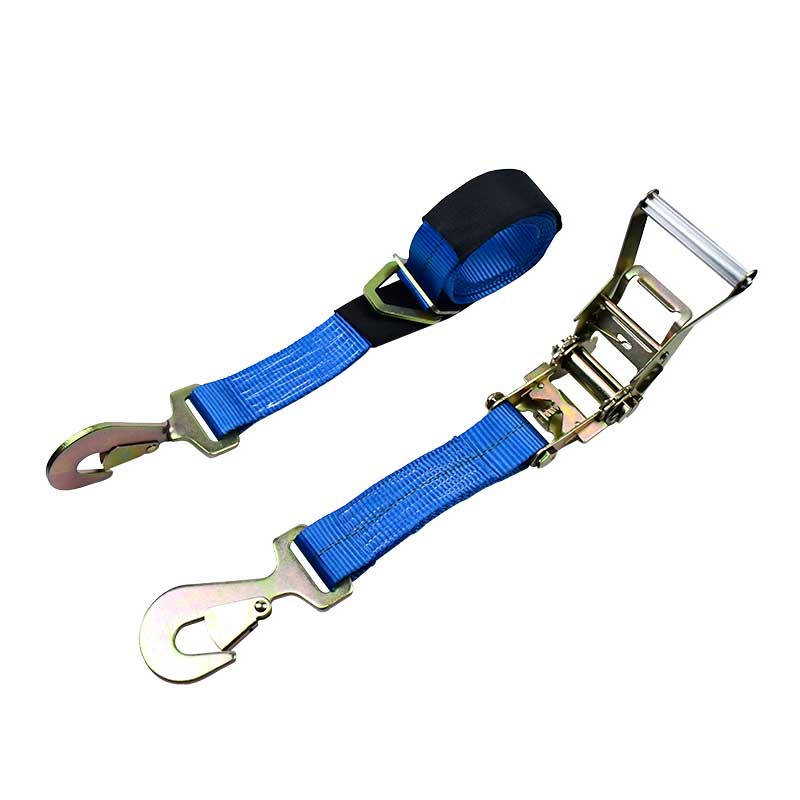
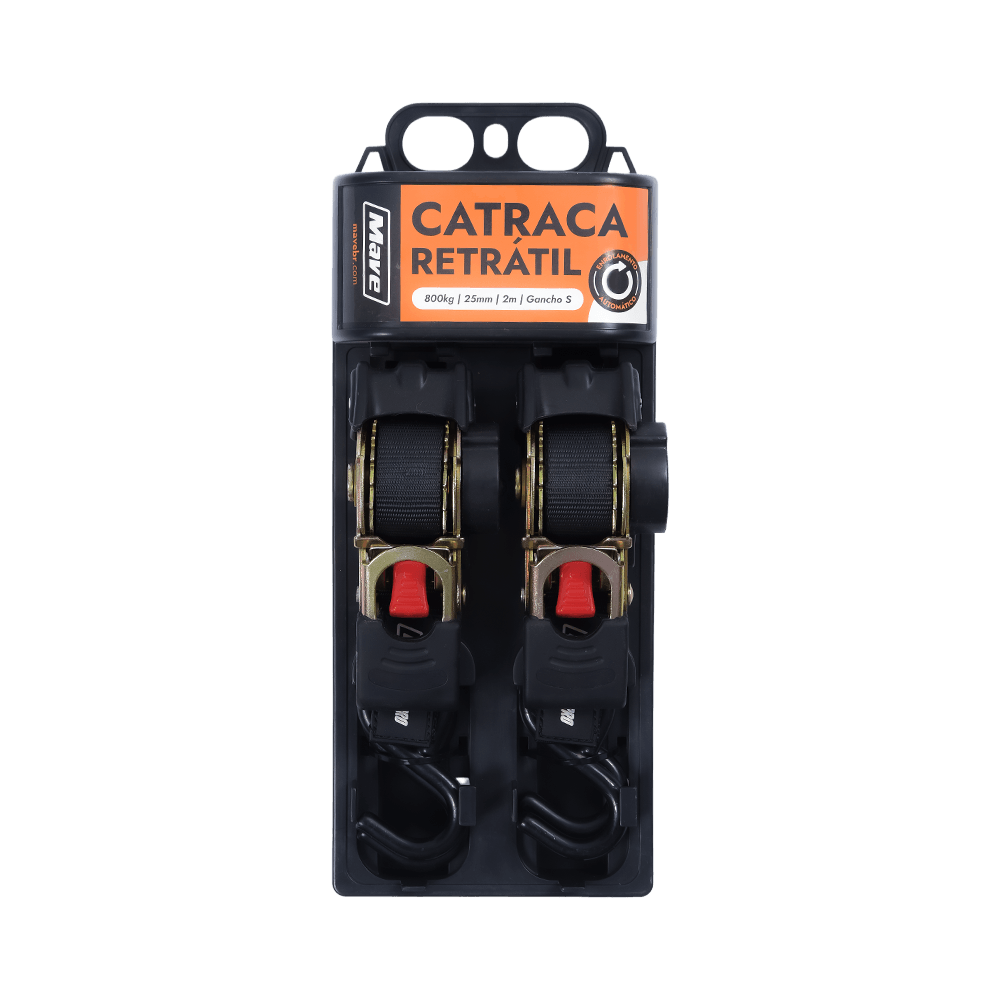
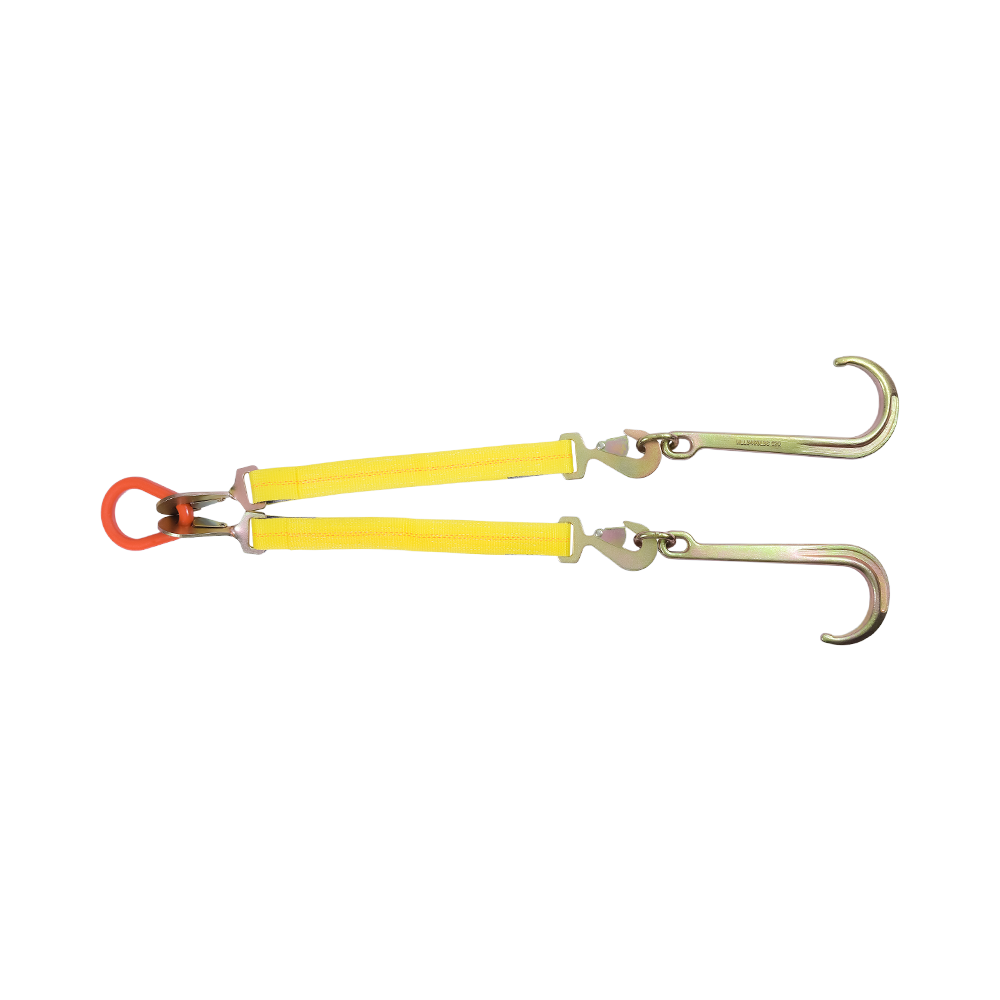

The company specialises in the field of logistics transportation,cargo control,lifting and hoisting products.


joe@forcerigging.com
+86-18650363763
No.469, Liansheng Road, Yinzhou District, Ningbo, Zhejiang Province, China.315111
Copyright © 2025 by Ningbo Force Auto Parts Co., Ltd. All Rights Reserved. China Ratchet Straps Manufacturers OEM/ODM Load Binding and Rigging Company


 English
 Español
 عربى
عربى 中文简体
中文简体